It is a common question this time of year. Corn silage continues to grow in popularity based on yield, harvest window, energy density and consistency. Cows thrive under consistency. The hope is that this year’s corn silage when opened and fed is positive for milk production and overall feed costs, causing little or no disruption in maintaining consistency from one year to the next. The quality and consistency of forages in many ways determines the bottom line for the year.

Many factors influence the consistency and quality of each year’s corn silage before it gets to the cow: hybrid selection, emergence, soil fertility, disease pressure, harvest maturity/timing, chop length, kernel processing, packing density, inoculation, sealing, time in storage, face management and more. Most, if not all of those mentioned, can be addressed proactively.
Growing environment
One factor not mentioned, yet highly impactful to corn silage, is the impact of growing environment such as moisture, heat units and solar radiation. Their impacts are unique in the two primary growth stages of the corn plant; both vegetative (forage production) and reproductive (grain production). Ideally, the growing environment produces a highly digestible grass plant with high grain yields. In general, adequate moisture, adequate heat units and high solar radiation during the vegetative stage and adequate to above-average moisture, adequate heat units and high solar radiation in the reproductive stage will optimize both stages of growth. Every growing season is different. How can the outcome of the growing environment be mitigated year to year providing the highest consistency and quality possible from one corn silage crop to the next?
One opportunity to optimize consistency for the grain fraction of corn silage is storage time. When possible, most farms strive to have carryover inventories. They provide a hedge against adverse yields from one year to the next. They also can optimize overall ruminal starch availability and total tract digestibility. Assuming that the rate of starch digestion is proportional to solubility of protein in the grain, it appears to plateau at five to six months in corn silage, based on mean solubility levels summarized over four years from DairyOne labs (Figure 1).
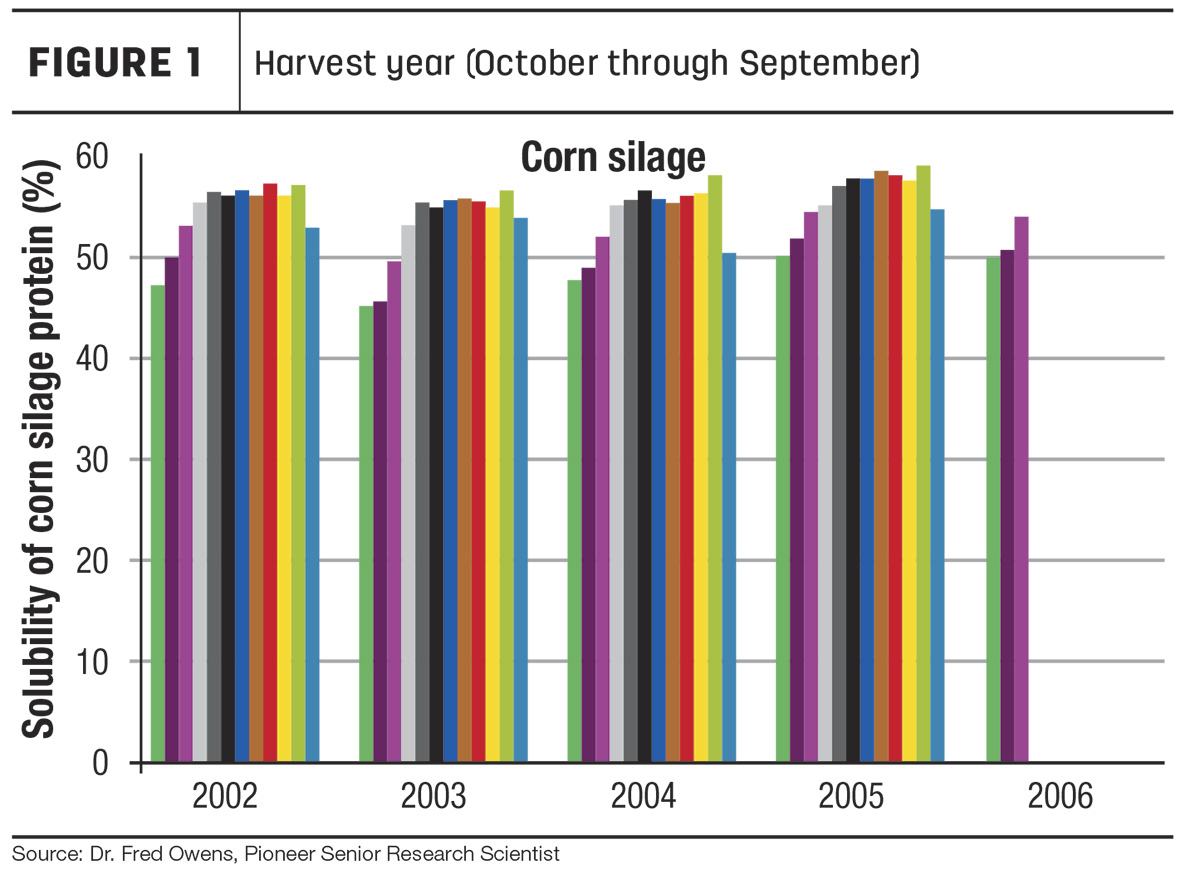
Growing environment will directly impact the total amount of grain/starch content in corn silage. However, with four to five months of storage time, the differences in the consistency of starch digestibility rates can be minimized from one silage crop to the next.
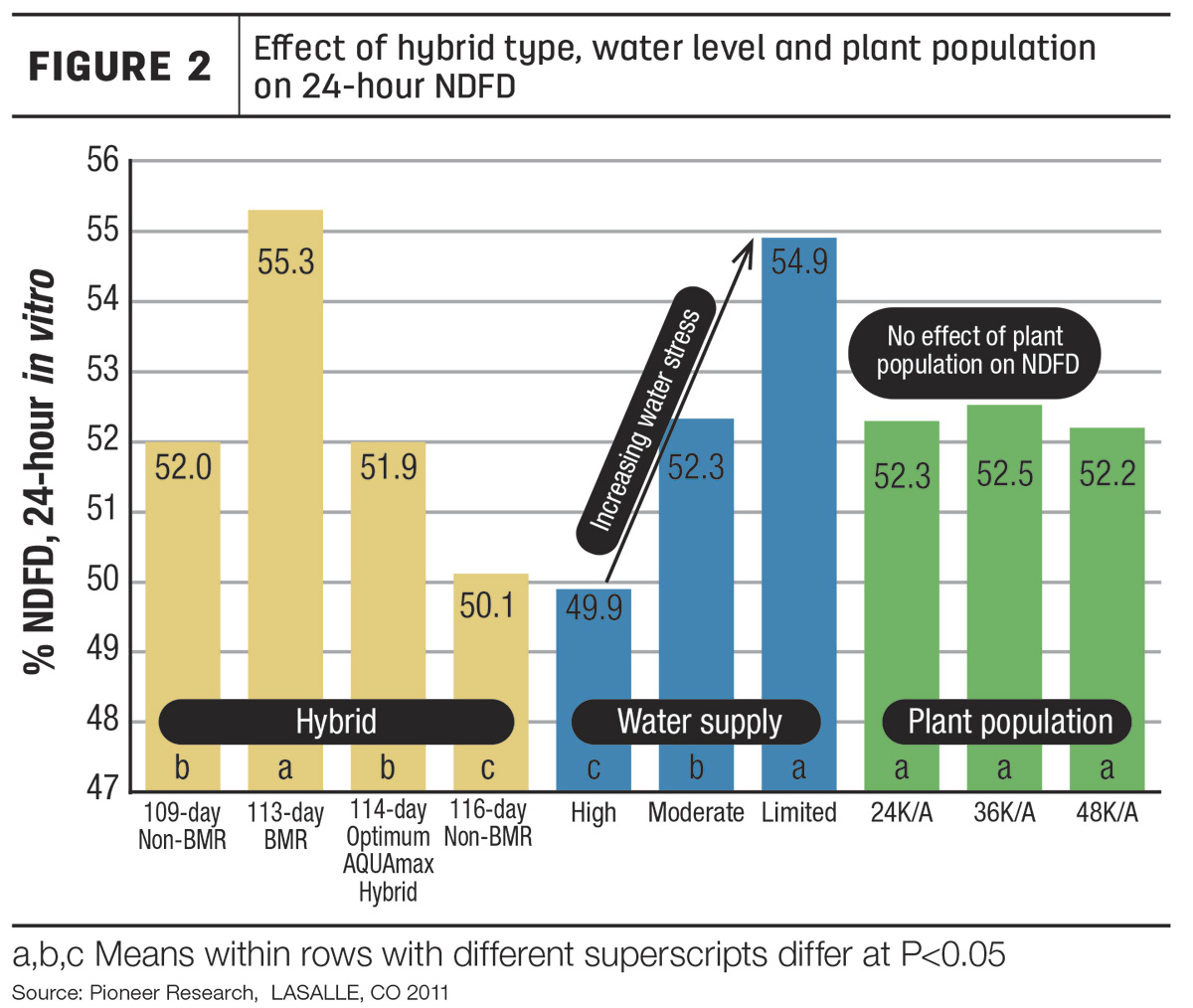
The growing environment impact on fiber digestibility can have three times more effect than genetic fiber digestibility differences in non-BMR hybrids and between BMR hybrids. Lower fiber digestibility in corn silage is typically indicated by above-average moisture and higher-than-average heat units during the vegetative growth stage (pre-tassel), producing rapid and high growth rates, above-average moisture being the key driver. Corn plants experiencing drought-like conditions in the vegetative stage may exhibit higher fiber digestibility but have less overall biomass yield.
A 2011 study depicted in Figure 2 conducted by Pioneer indicated the impact of hybrid selection, water level and plant population on 24-hour neutral detergent fiber digestibility (NDFd).
Fiber digestibility
Regarding fiber digestibility in corn silage, hybrid selection, brown midrib (BMR) as compared to non-BMR corn has been a tool for optimizing fiber digestibility. While fiber digestibility is improved, yield drag, plant health and lack of drought tolerance are potential trade-offs to achieve the higher fiber digestibility.
The most common tool to address fiber digestibility differences between growing seasons is chop height at harvest time. A summary of 11 research trials by Wu and Roth at Penn State yielded a 6.7% (54% versus 50.6%) improvement in fiber digestibility averaging a 6.8-inch + 2.5-inch compared to a 19.8-inch + 2.8-inch chop height. The higher chop height reduced overall yield by 7.4% (8.1 tons dry matter versus 7.5 tons) and increased starch content by 5.9% (32.4% versus 30.6%). A more recent summary by Ferrarato in 2019 of seven chop height studies equated to 12.5 inches (to compare with Wu and Roth), found a 5.3% improvement in fiber digestibility, a 10.4% reduction in yield and an 8.5% improvement in starch content for the higher chop height. To manage this from one growing season to the next would require early sampling at silage harvest of different chop heights from representative fields. The results of those samples utilizing wet chemistry would determine if growing conditions for that year warranted adjusting chop height to achieve the desired fiber digestibility.
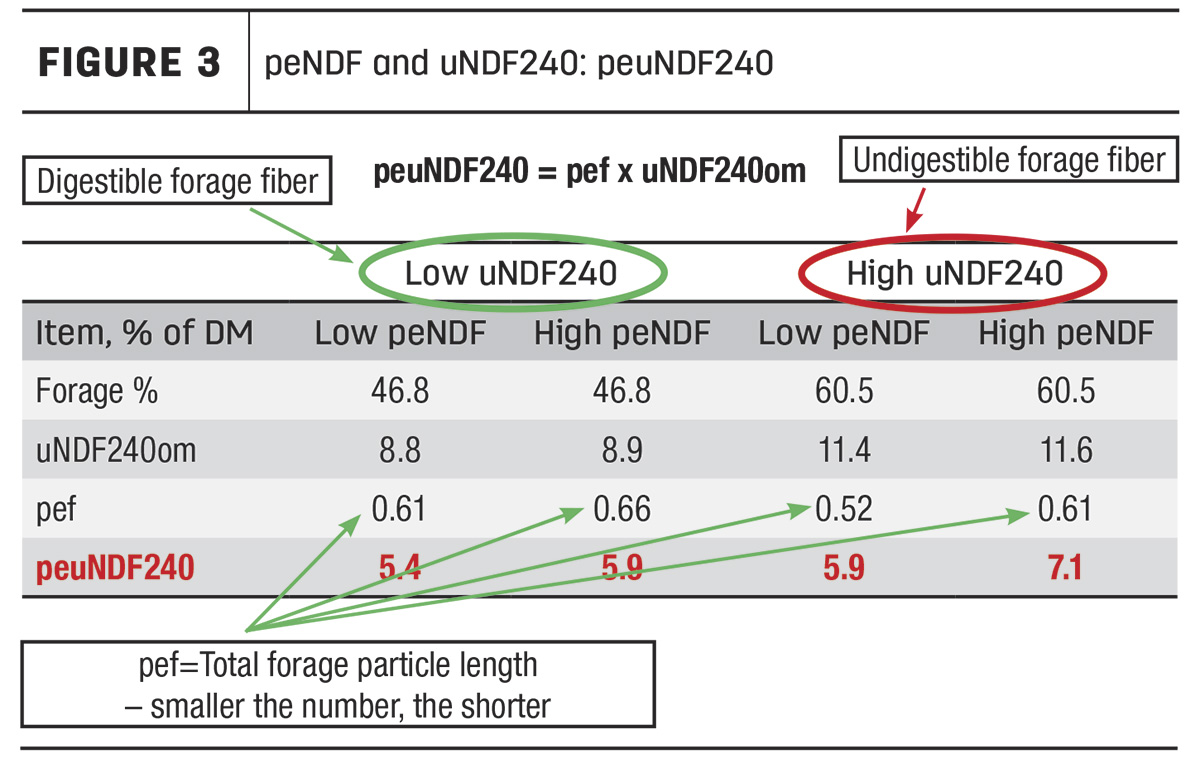
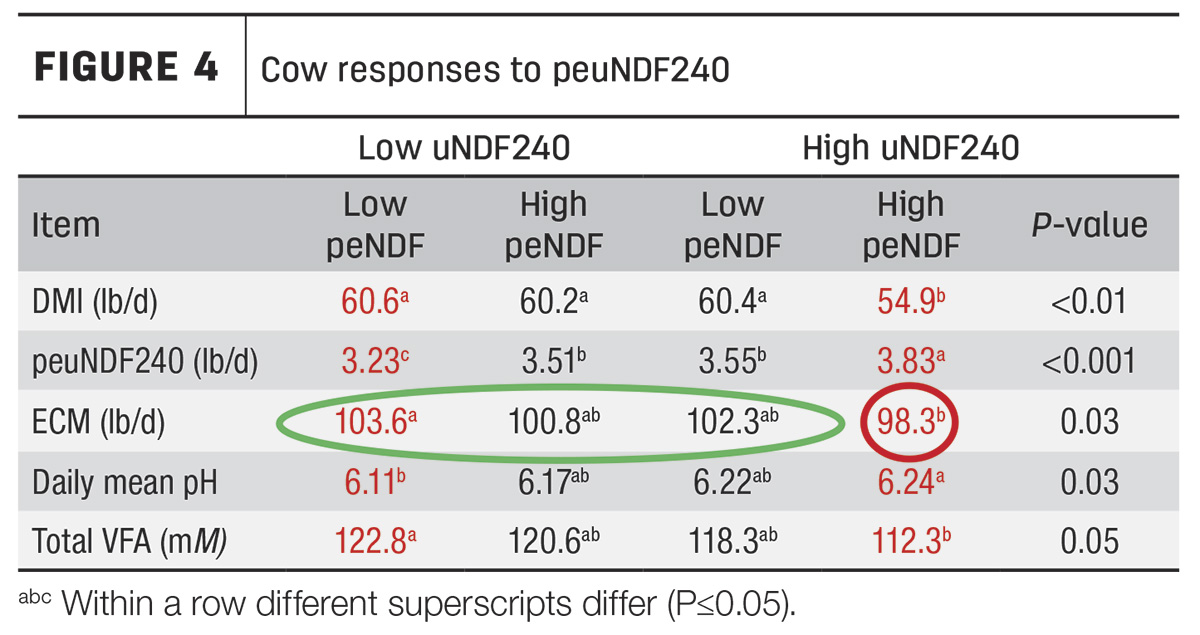
A second potential option to manage the undegradable neutral detergent fiber (uNDF240) is chop length. Grant et. al at Miner Institute found that by reducing the physically effective fiber of forage that contained higher levels of uNDF240, they were able to maintain statistically similar amounts of energy-corrected milk (Figures 3 and 4). From a practical standpoint, reducing chop length would provide more surface area for the rumen microflora assisting in the breakdown of the total fiber fraction. An additional benefit to reducing chop length noted was reduced meal time per cow, allowing for more time resting and increased rumination.
Another new management option in the marketplace for mitigating fiber digestibility differences is silage separation technology post-ensiling. Separating the silage creates two primary components: (1) smaller forage particles containing a higher percentage of starch (higher energy-density silage) and (2) longer forage particles with reduced starch content. This technology is able to adjust the two portions generated based on the growing environment differences encountered from year to year and the overall needs of the operation for the two portions generated. Creating these two components facilitates precision feeding of the corn silage crop for every group of animals (replacements, far-off and close-up dry cows, and lactating cows).
Understanding and implementing all the best management practices every season for producing high-quality corn silage that are under your control is critical. Making yourself aware of the impact of the growing environment each season through early sampling and testing is the first step. Benchmarking it annually and addressing those impacts with proven and cutting-edge technology will provide the consistency your herd thrives on and is critical to your bottom line. When someone asks, “How is this year’s corn silage feeding?” You can say, “Great, a lot like last year’s.”
References omitted but are available upon request by sending an email to the editor.