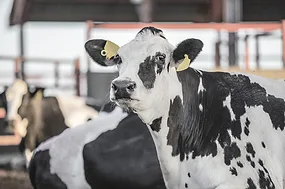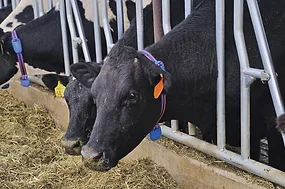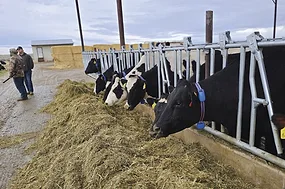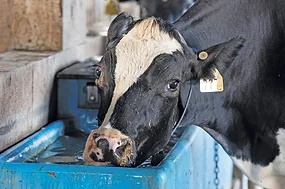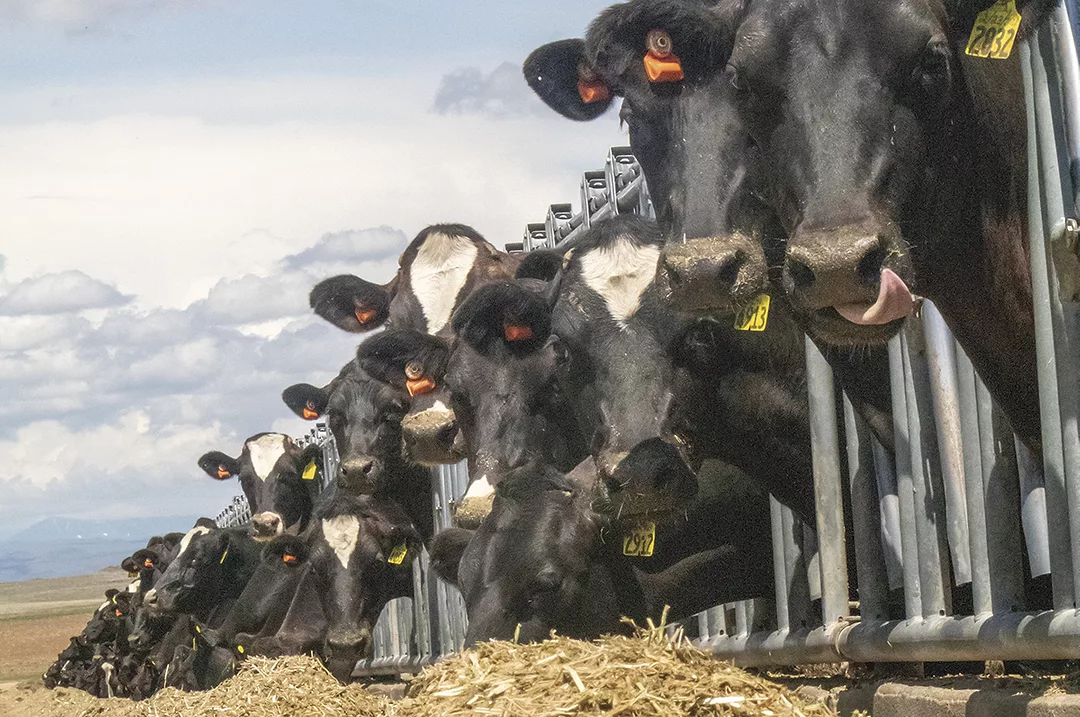
As you watch a cow walk through the barn, you admire how she looks and decide to look up her data on your mobile device. She’s one of the high-producing cows in the barn, just fresh 63 days. She’s made three daughters so far, ready to extend her legacy. You watch her as she walks toward the parlor and into the holding area – she looks great. You smile as you think about having a whole barn like her.

An hour later, she’s dead.
Hemorrhagic bowel syndrome (HBS) is a silent, confounding killer in dairy herds. It’s particularly stressful because the exact cause of HBS is unknown. There are few symptoms, it often impacts older high-producing cows, and it’s nearly always fatal. Often you don’t know a cow has HBS until it’s too late.
HBS is characterized as extreme hemorrhaging in the small intestine that leads to blood clots and intestinal obstruction. It usually affects high-producing adult cows within the first 100 days of lactation. Symptoms can include acute abdominal pain; severe bloating; sudden onset of dark, tarry or bloody feces; and general lethargy or weakness. Symptoms reflect the effect of the obstruction, the extreme blood loss and necrosis of the small intestine. By the time the symptoms are recognized, it’s often too late to save the cow.
No cure, only prevention
There is no singular cause of HBS, so prevention is difficult to implement because the target is diverse and unknown. Start by realizing that HBS isn’t a disease; it’s a syndrome. A disease is something that has a defined cause and treatment. A disease caused by a bacterium or virus usually has clear symptoms that lead to identification of a treatment. Vaccines can prevent or significantly reduce disease incidence – there’s no vaccine for HBS.
Conversely, a syndrome is caused by a multifaceted chain of events that come together to create a specific situation. This shotgun approach makes it difficult to pinpoint one area to target to avoid the impact of the syndrome.
While the exact cause of HBS remains a mystery, we have a good idea of what happens. It likely starts with bacteria, such as Clostridium perfringens, or mycotoxins creating gaps within tight junctions between cells in the gut. These tight junctions are just what they seem – the bond between epithelial cells in the intestinal lining wall that keep pathogens from crossing the barrier and leaking into the bloodstream to cause harm. These pathogens could likely include clostridia, E.coli or salmonella, all of which are present in the environment and in feed the cows consume.
Once tight junctions are loosened, the pathogens and toxins can translocate across the barrier from inside the gut to within the bloodstream in high numbers. That creates the insult that signals the immune system to act, creating an inflammatory response that leads to severe blood clotting. The clotting causes obstruction which leads to necrosis in the small intestine and eventual death.
Leaky gut shouldn’t be confused with HBS – although leaky gut happens through the same process, but something takes the issue steps further to cause the clotting and eventual obstruction.
Still questions to answer
While we can assume to understand the process by which HBS occurs, it’s still unclear why it tends to occur only in high-producing cows. Knowing this, we can offer some assumptions. High-producing cows have high feed intakes. These big slugs of feed can contain high levels of pathogens and mycotoxins ready to cause harm inside the cow. The early days of lactation for high-producing cows are also the most stressful as the cow recovers from calving and is working to ramp up milk production, meaning their immune system may be compromised.
We assume that feeds and the feeding system can be HBS culprits. Anytime feeds change to cause changes in the diet can lead to an impact on immune function and a cow’s ability to fight off challenges. Feeding wet feeds, especially if the feeds are not tested for mycotoxins or other pathogens, can have an impact. Even rained-on feed can cause diet and gut disruptions and predispose a cow for HBS.
If you can’t treat, prevent
If we can’t treat HBS once symptoms are realized, we need to put our attention toward prevention.
First, use good feed hygiene to limit pathogen and mycotoxin contamination. Good fermentation at harvest is critical, as is the use of inoculants to reduce molds. From a feeding process standpoint, keep feed in the bunks and mix it well to avoid sorting so cows don’t get slugs of feed.
Next, certain feed ingredients can help limit the impact of mycotoxins and pathogens that can create situations leading to HBS. Research has shown that bacillus can impact tight junction proteins to help create a tighter barrier inside the small and large intestine and prevent pathogens from entering the bloodstream through the digestive tract. This helps prevent leaky gut syndrome which can lead to HBS.
Like pathogens, mycotoxins are ever-present in feed ingredients. Testing is important not to understand if mycotoxins are present but rather what types of mycotoxins are present and at what levels. Refined functional carbohydrates (RFCs) are highly bioavailable and help support digestion in the rumen while simultaneously protecting the hindgut from pathogens and mycotoxins. In a research study, RFCs were found to directly improve hindgut integrity and effectively bind mycotoxins, resulting in a significant reduction in epithelial cell damage due to the mycotoxins aflatoxin, T-2, DON, zearalenone and fumonisin B1.
Research also documents the effect of RFCs on pathogen binding, specifically salmonella and E. coli. One study found that S. Newport, S. enteritidis, S. Dublin and S. cholerasius were all effectively bound in the presence of RFCs. Similarly, E. coli F18 was also effectively bound by RFCs.
Fighting HBS can be an uphill battle. It could impact your best cow today and you would have little to do to stop it. Your best option is prevention; creating resilient animals that can fight off challenges from mycotoxins and pathogens is a first and critical step toward holding HBS at bay.
References omitted but are available upon request by sending an email to the editor.