Dairies are paid on components, yet most manage production by the pound. That gap – between how milk is valued and how it’s managed – is one of the clearest opportunities on the modern dairy. Fat, protein and lactose are where the money is, and the farms capturing that value are the ones measuring components on every cow, at every milking, in real time.
From the Lab to the Stall
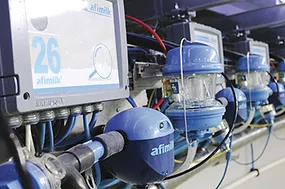
Historically, component data came from monthly test-day samples – a single snapshot that could be weeks out of date by the time it arrived. The AfiLab in-line milk analyzer changes that entirely by measuring fat, protein and lactose from every cow at every milking. Because it uses near-infrared spectroscopy, it does its work without costly reagents, turning the milking stall itself into a continuous, cow-by-cow diagnostic lab. It also detects blood in the milk and can trigger automatic unit detachment, protecting the entire bulk tank from a single contaminated cow.
Catching Trouble Before It Costs You
Real-time components let producers shift from reacting to disease to intercepting it. Watching the fat-to-protein ratio alongside lactose levels flags metabolic and digestive problems in the subclinical stage – before clinical signs appear and before major milk losses occur. A drop in lactose, for instance, can flag a cow for mastitis even before conductivity changes or visible symptoms show up.
The economics are hard to ignore. Clinical mastitis averages more than $300 per case, while subclinical ketosis and subacute ruminal acidosis (SARA) each cost roughly $100 per cow per year. Farms using in-line component analysis to catch these issues early see an average gain of about $200 per cow annually by avoiding those losses – roughly $5,000 per milking stall each year, with a system break-even point around 14 months. That’s an insurance policy that pays for itself and then some.
Feed Smarter and Get Paid More
Component data does more than protect health; it drives two of the biggest levers on the dairy – feed cost and milk value. Knowing each cow’s components in real time lets nutritionists make responsive, least-cost ration decisions that lift the value of the milk while improving feed efficiency and lowering feed cost. On the revenue side, the same data identifies your highest-value producers – the cows delivering the best-quality, best-paying milk – so breeding, culling and feeding decisions build a herd that’s worth more at the plant, not just heavier in the tank.
Manage What You’re Actually Paid For
When components are measured continuously instead of once a month, they stop being a line on a statement and become a daily management tool. Producers can protect health, sharpen feeding and steer genetics all from the same stream of data – and align the way they manage the herd with the way they actually get paid. In a market where margins are thin, managing to the milk check isn’t a luxury. It’s how the best dairies stay ahead.