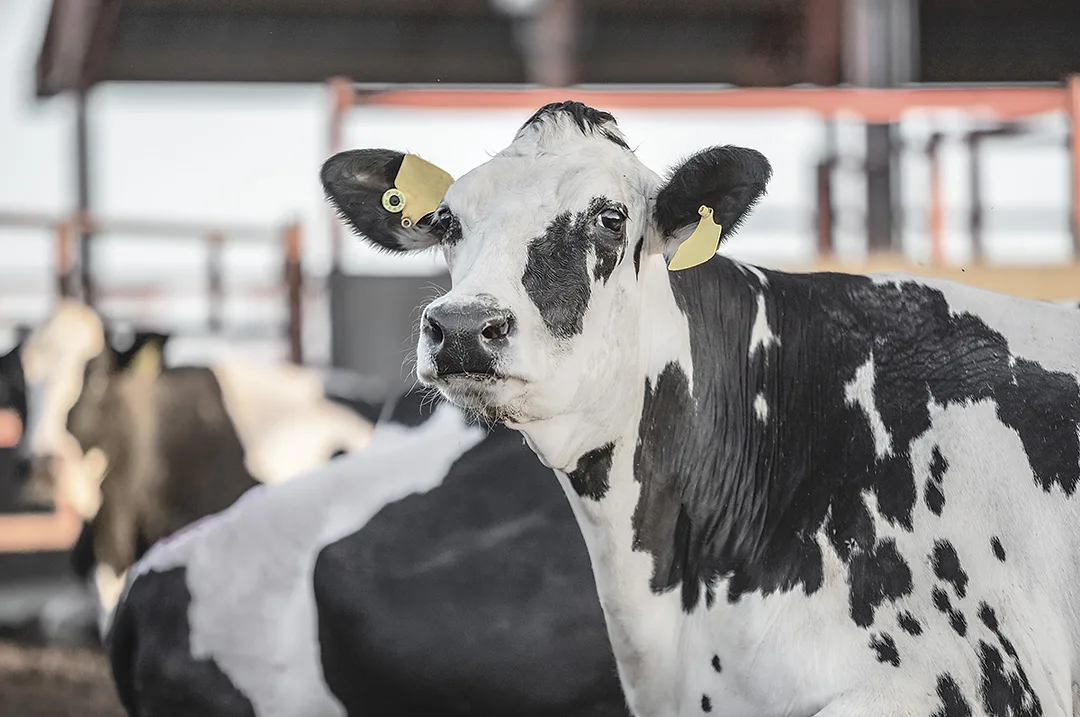
There’s no single definition of sustainability on a dairy, but the path forward often follows a familiar road map. It begins with improving efficiency and maintaining consistent performance from each cow while using fewer resources.

Longevity is a key milestone along that path. Cows that remain productive longer drive higher milk production, reduce replacement costs and create more flexibility in herd management. When longevity is maximized, sustainability becomes a measurable outcome.
The starting point for that road map is hoof health. If a cow isn’t comfortable moving, her ability to eat, produce and stay in the herd longer is compromised. No matter your sustainability goals, strong hoof health supports every step along the way.
Mobility as the starting point for sustainability
At the center of the hoof health conversation is cow comfort. It is often the first thing to evaluate because it directly influences how willing and how long a cow spends lying down. Research suggests dairy cows require at least 12-14 hours of lying time per day, and falling short can increase lameness risk.
And it’s not just total lying time that matters, but whether cows can lie down and rise easily and comfortably. When stalls are well-designed and maintained, cows rest more naturally, reducing time spent standing on hard surfaces and limiting stress on hooves.
When cow comfort is compromised, the impacts extend far beyond the hooves. Reduced lying time can limit feed intake, disrupt milk production and shorten how long cows remain productive in the herd. Even small mobility challenges can lead to measurable performance and efficiency losses across the herd.
You can often spot early signs of discomfort by observing behavior such as standing, bunching or reluctance to lie down. Factors such as stall design, bedding management, heat abatement and time spent locked up all play a role in determining if cows get the rest they need.
The hidden cost of lameness
Even mild lameness can create a ripple effect. A cow that appears only slightly lame may still experience reduced feed intake, milk production or reproductive efficiency. In some cases, mild lameness can be the difference between a cow becoming pregnant or remaining open for another cycle. It can also divert immune resources, increasing the risk of secondary challenges such as elevated somatic cell count or mastitis.
At its core, sustainability is about efficiency – getting consistent performance from healthy cows that remain productive in the herd longer. The challenge is that hoof health issues can often go unnoticed. By the time visible signs of lameness appear, performance, longevity and profitability may already be impacted.
Research shows a severe case of lameness within the first month of lactation can reduce 305-day milk yield by up to 772 pounds. Lame cows may also breed less efficiently, increasing days open and costing dairies approximately $4 per cow per day. In many cases, lameness can delay pregnancy by up to six weeks.
Ultimately, these impacts shorten productive lifespan, with cows scoring a 3 or more for locomotion being 8.4 times more likely to be culled from the herd.
Cows with sound mobility are more likely to produce consistently and remain productive longer, reducing culling risk and supporting long-term performance and, ultimately, business sustainability.
Trace mineral nutrition’s role in hoof health
While hoof health is often associated with facilities and management, it also begins at the nutritional level. Trace minerals such as zinc play a critical role in strengthening hoof structure and tissue integrity while also supporting many other biological functions that help cows perform consistently.
Most nutritionists recognize the importance of meeting trace mineral requirements, but the form and availability of those minerals can determine how effectively they’re absorbed and used by the animal. A more bioavailable trace mineral program, at the right inclusion level, can result in up to a 35% reduction in lameness across the herd.
From a sustainability standpoint, those gains translate into greater efficiency beyond hoof health alone. Healthier cows convert feed more efficiently, maintain reproductive performance and experience fewer health challenges, enabling more consistent output from the same level of input.
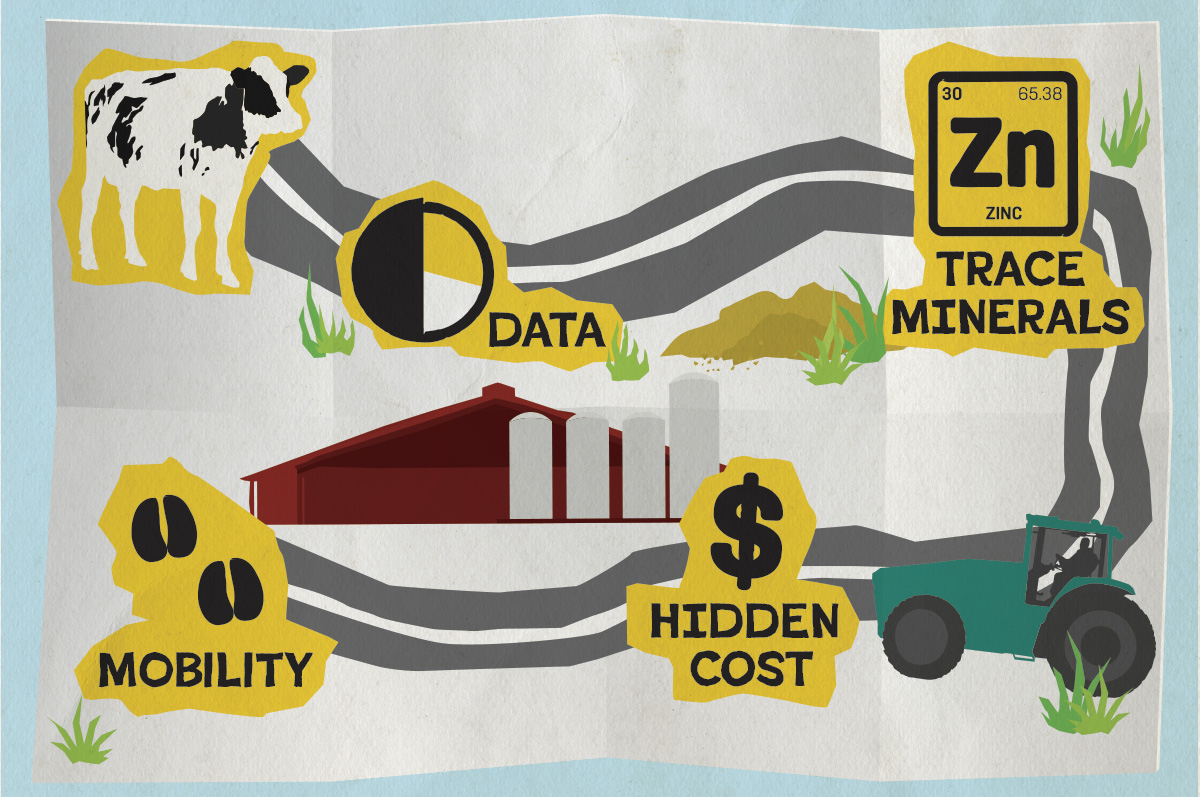
Illustration by Kristen Phillips.
Using data to stay ahead of challenges
Sustainable progress requires identifying issues early. Many hoof problems develop gradually and can be easy to miss in day-to-day routines. On-farm audits to assess cows, facilities and behavior help identify challenges that may otherwise go unnoticed.
Locomotion scoring and evaluating trimming records are critical tools in that process. Establishing a baseline of performance through an initial assessment allows you to pinpoint where to focus your efforts. From there, follow-up evaluations can help measure progress and adjust strategies over time to reinforce the sustainability practices utilized on your operation.
For example, monitoring when cows require multiple trims or only a single intervention can indicate how effectively underlying problems are being addressed. Reducing the incidence of common lesions across the herd is a strong signal that management, environment and nutrition are working together to support hoof health and overall sustainability.
A stronger foundation for sustainability
Hoof health is the starting point for a sustainable dairy, influencing cow comfort, performance and longevity. When mobility is supported through proper management, nutrition and early detection, you can maintain more consistent output and improve overall herd efficiency.
By staying ahead of issues and focusing on prevention, dairies can strengthen long-term profitability and more effectively meet their sustainability goals.
References omitted but available upon request by sending an email to an editor.