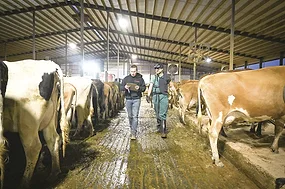
Spring often brings heavy rains and melting snow, especially in regions of the Northern Hemisphere, creating humid conditions that can significantly increase the risk of lameness in dairy cows.

Wet environments are a leading contributor to lameness, as moisture softens the hoof horn, weakens structural integrity and increases the likelihood of claw lesions. In fact, studies show that one-third of the total water absorbed by a hoof occurs within the first hour of exposure, resulting in a rapid loss of hoof hardness. Cows kept in such poorly managed conditions spend less time lying and more time perching, which adds further stress to the hooves and increases susceptibility to injury and infection. Additionally, wet and contaminated surfaces promote the growth of infectious agents like Fusobacterium necrophorum, Dichelobacter nodosus and Treponema spp., which are associated with digital dermatitis (DD) and foot rot.
While traditional best management practices remain essential, the introduction of non-invasive tools like 3D camera systems transforms how producers detect and respond early to these health issues.
Footbaths and trimming
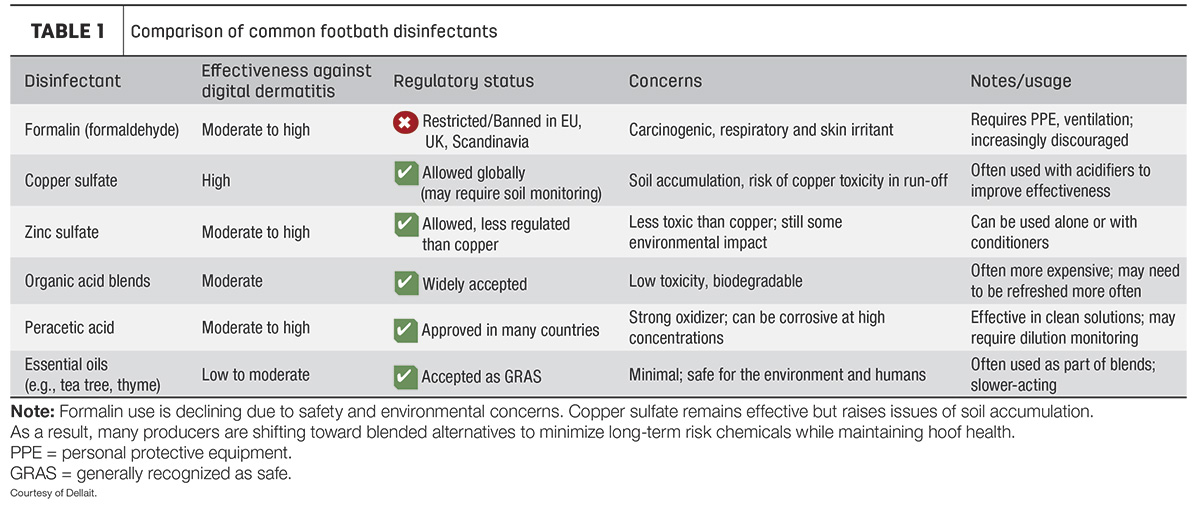
Maintaining hoof health through regular trimming and the use of footbaths is essential. Among the various disinfectants available for footbath use, copper sulfate (typically at concentrations of 2.5% to 5%) remains one of the most widely used due to its proven effectiveness against DD. However, environmental concerns – particularly the risk of copper accumulation in soil and runoff – have led many producers to explore alternatives. Zinc sulfate offers a similar antimicrobial effect with somewhat lower environmental impact and less regulatory scrutiny, while organic acid blends and peracetic acid-based products provide biodegradable and user-safe options, though often at a higher cost or with shorter activity.
Formalin (formaldehyde), once frequently used in footbath routines, has come under increasing restriction or outright prohibition in several countries because of its carcinogenic and toxic properties. When permitted, formalin must be handled with extreme caution and only in well-ventilated areas with appropriate personal protective equipment.
In addition to choosing the right disinfectant (Table 1), routine hoof trimming – ideally conducted two to three times per year – remains critical to preventing hoof overgrowth, ensuring even weight distribution and reducing the risk of lameness. Hoof health programs are most effective when footbaths and trimming are used together in a preventative, rather than reactive, strategy.
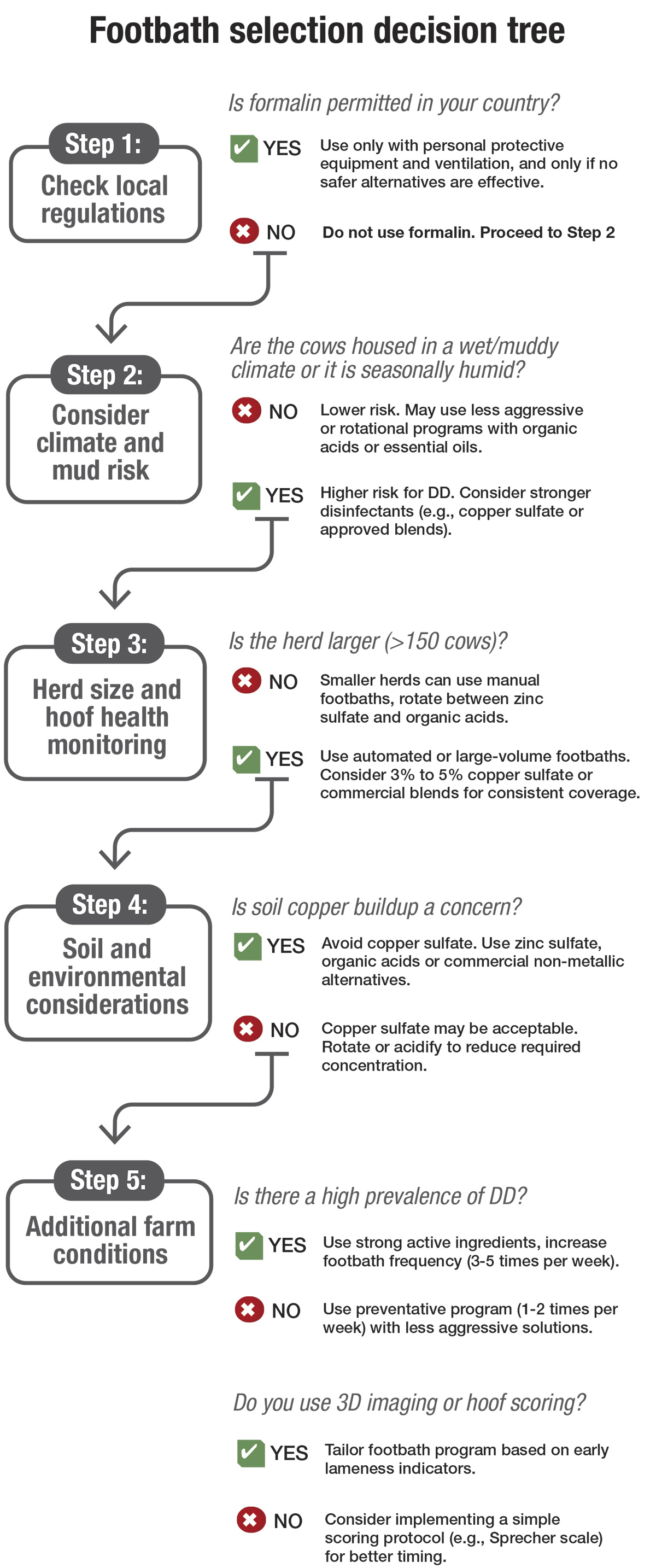
Selecting the right footbath strategy depends on several key factors, including local regulations, climate conditions, herd size and environmental impact. The five-step decision tree guides producers through a step-by-step process to help choose the most appropriate disinfectant and management approach based on their unique farm circumstances.
Locomotion scoring
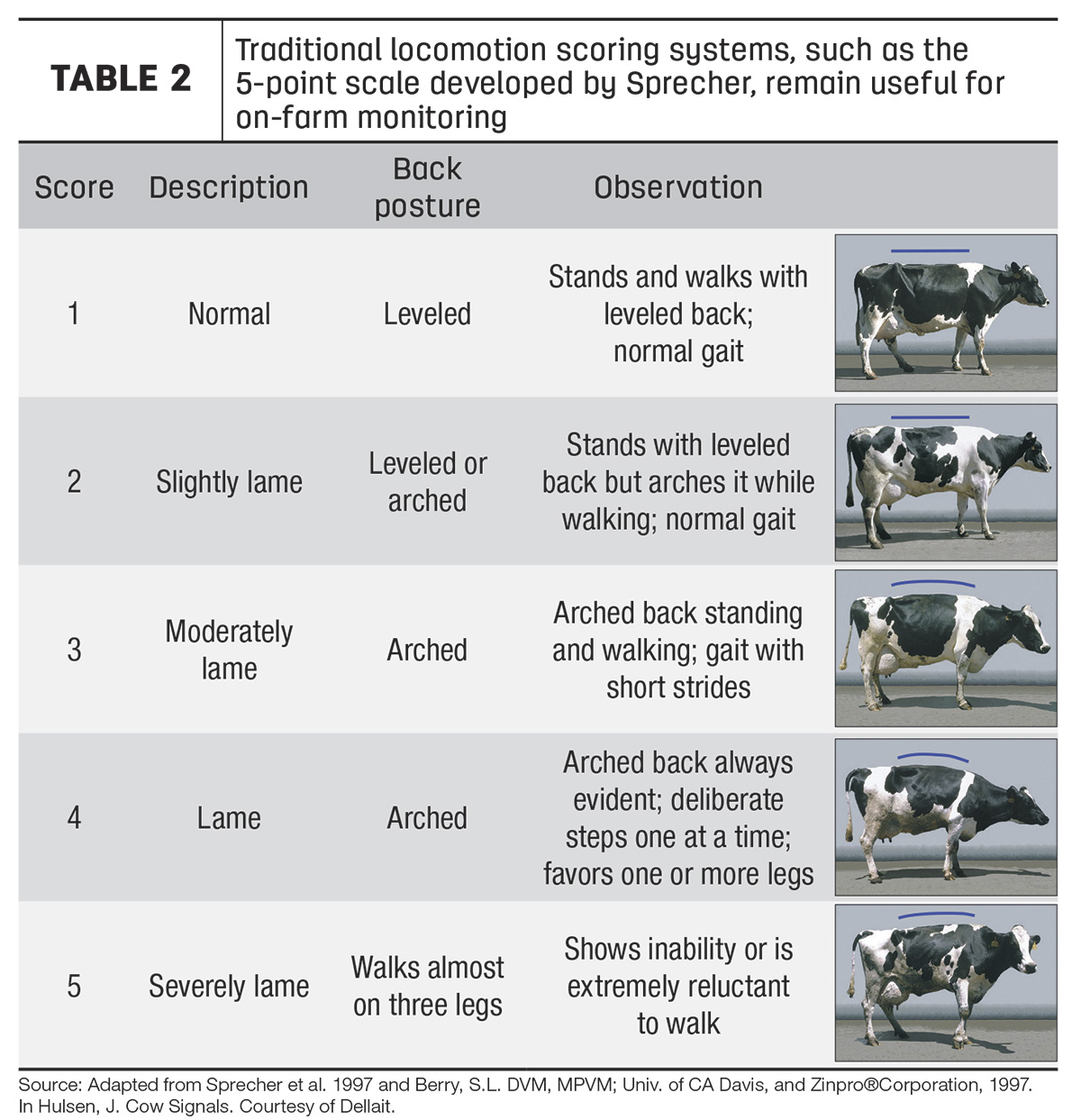
Traditional locomotion scoring systems, such as the five-point scale developed by Sprecher, remain useful for on-farm monitoring. However, new 3D imaging technologies can now automatically assess gait and back posture, detecting deviations from normal movement patterns linked to early lameness. These systems work continuously, eliminating the need for periodic manual scoring and allowing earlier detection of mild lameness.
Implications
As dairy producers deal with the challenges brought on by wet weather, maintaining hoof and udder health requires a multifaceted approach. Proven practices such as regular hoof trimming and careful selection of footbath disinfectants remain essential, especially when adapted to local conditions and regulations. However, the adoption of emerging technologies like 3D imaging provides a new layer of precision and timeliness in health monitoring, offering earlier detection of subtle changes in locomotion. By integrating these tools with preventive management strategies and environmentally responsible choices, producers can minimize animal suffering, reduce economic losses and enhance long-term farm sustainability – even under the toughest weather conditions.
References omitted but are available upon request by sending an email to the editor.