It's taken seven decades, but the fight against New World screwworm (NWS) isn't getting easier or cheaper.
NWS, or Cochliomyia hominivorax, is a parasite fly that deposits its eggs in the wounds of livestock and produces deadly diseases with its larvae, commonly referred to as screwworms. Early on, these infections usually resulted in death. Significant harm was done to livestock health as a result of these parasite illnesses, and treating afflicted animals was expensive in terms of both money and resources.
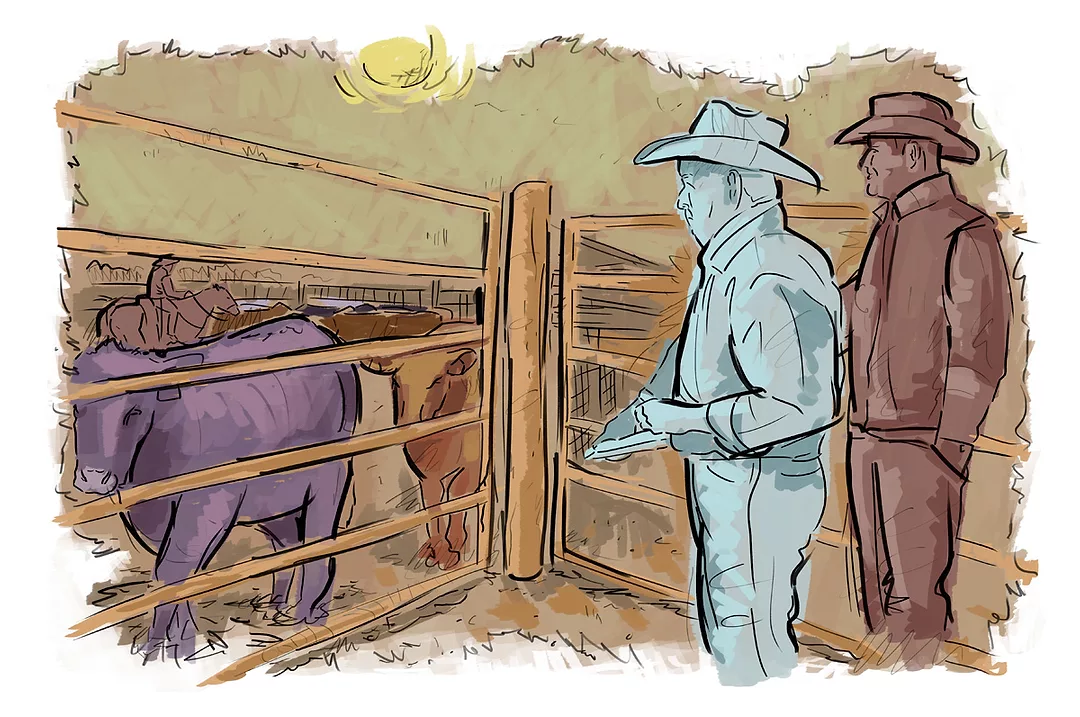
“When I was in high school, I remember every saddlebag had a vial and the other necessary things needed to treat any infected areas. If worms were present in the wound, we had to scrape them out and gather a sample,” says Alisa Ogden, a third-generation farmer and fifth-generation rancher in New Mexico. “This equipment was provided by the USDA, and once the sample was collected, we mailed it in. If the larvae were screwworms, they would schedule a drop of sterile flies to the ranch.”
Initially, screwworms were a problem confined to Central and South America, but by the 1950s, the problem grew into the U.S. In 1957, the first significant infestation happened in Florida, which alarmed the agricultural community. Economic strain set in immediately, leaving farmers and ranchers with skyrocketing veterinary bills and lost production as animals became sick or died.
In the process, ranchers had to invest in new practices to prevent the parasite from spreading. This involved creating more regulated environments for cattle, using chemical treatments and keeping an eye out for infection symptoms. Weather, terrain and herd size were all factors that influenced fly activity.
“When the screwworm was prevalent, we had to ride almost every day to look for any open wounds in the cattle, especially when it was in the hotter part of the season when the flies were more active,” says Ogden.
As a result, ranchers’ profit margins were lowered by these additional expenses, severely hurting smaller businesses. The outbreak impacted the production of not only beef, but dairy production as well. This endangered ranchers' livelihoods and resulted in the loss of export markets due to concerns about contamination.
Over a million animals were thought to have been impacted during the outbreak's first year. Furthermore, the cost of eliminating the flies, treatment costs and animal mortality totaled more than $132 million in damages, leaving a significant economic impact. Additionally, the reduction of imported cattle resulted in a lower beef supply in the U.S., which, as expected, increased the price of beef.
At the time, the U.S. was a significant exporter of beef cattle, and the expansion of screwworms worried overseas markets. Fearing the parasite would spread to their own herds, several nations placed limits on the importation of U.S. beef cattle products. In addition to hurting American cattle ranchers' immediate sales, this also put the industry's long-term survival in international markets in jeopardy.
When the screwworm outbreak had severe consequences, the U.S. government and agricultural organizations realized an immediate need for a coordinated response. Under the direction of entomologist E.F. Knipling, scientists and researchers from the USDA came up with a solution: the sterile insect technique (SIT). This technique involved producing sterile male screwworms and releasing them so they could mate with the females, leaving the females with eggs that would never hatch.
This was effective in creating a slow decline of the screwworms and eventually eradicating the problem overall. This process was started in Florida, and by 1966, the USDA had eliminated screwworms from the U.S. mainland.
What was thought to be eradicated resurfaced in a few minor outbreaks over the next 58 years. After a 10-year pause, a new outbreak occurred in 1976, hitting a total economic impact of $283 million to $375 million to the Texas economy, according to a USDA Animal and Plant Health Inspection Service report (see Table 1).

The most recent outbreak was in November 2024 after screwworm was discovered on a cow near Mexico’s border with Guatemala. This unexpected finding led the USDA to respond by banning Mexican cattle imports, leaving cattle ranchers concerned, especially in Texas.
“Cattle feeders located in Texas could find replacements, but it would cost them more money,” says Don Close, chief research and analytics officer at Terrain. "They would survive if it was a temporary issue that is resolved quickly. As for the Mexican producers, it was detrimental, but on the contrary, advantageous to the Mexican cattle feeders and packers.”
Approximately 3% of U.S. cattle come from Mexico. After nearly three months of closed borders, the U.S. began a partial reopening in February 2025 to the border and intense safety precautions were put in place for any cattle coming from Mexico.
Since imports of cattle from Mexico have resumed, the top priority is to protect American livestock from foreign pests. APHIS has now visited, examined and approved pre-export inspection pens that Mexico prepared and identified in San Jeronimo, Chihuahua, and Agua Prieta, Sonora, in accordance with the protocol that the two countries had agreed upon. Before entering the pre-export inspection pens, they will be inspected by Mexican officials once more before undergoing a final APHIS inspection and crossing at the Santa Teresa and Douglas ports of entry. The cattle will be examined and treated for screwworm by qualified and authorized veterinarians. To make sure they are free of insects and ticks, cattle that have been authorized for importation will also be dipped in a solution. In order to restore trade through other ports of entry and authorize more pre-export inspection pens, the U.S. and Mexico are collaborating closely.
“My biggest concern is when we move past this outbreak, and we are six or eight months down the road, we could potentially have another outbreak that is closer to the border. When this happens, we could have a way more serious problem, and the pace at which they can get the sterile flies released into the population is going to be critically important,” says Close.
Animal diseases and pests continue to constitute a serious threat to the U.S., as evidenced by the recurrence of screwworms in neighboring countries despite decades of success in eliminating screwworms from the U.S. mainland; the 2024 outbreak showed that the parasite remains a significant issue. The U.S. can continue to defend its cattle industry against this parasitic threat and guarantee the viability of its agricultural economy for future generations by combining advanced biosecurity measures, international cooperation and modern pest control methods.