Breeding cattle through artificial insemination (A.I.) has advanced significantly over the past few decades. By implementing the latest technologies and protocols, producers can achieve greater reproductive success while advancing their herds’ genetics. Improving reproductive efficiency is especially important now when cattle are at record values and each calf brings more revenue potential than it ever has.

Select a protocol
Choosing which breeding protocol to use has become more simplified thanks to organizations such as the Beef Reproduction Task Force. Each year, the group publishes breeding protocol sheets that offer details on when and how to administer A.I. protocols. These protocols are extremely well-validated through multistate research efforts and can yield excellent pregnancy outcomes. There are a few A.I. protocols that stand out for use in cows and heifers.
For heifers, use a progestin-based protocol, if at all possible, such as one that involves a controlled internal drug release (CIDR) or melengestrol acetate (MGA). Ideally, aim to use one of the longer protocols, like a 14-day CIDR prostaglandin protocol or MGA prostaglandin protocol. Those two protocols work especially well with heifers because some females may not have reached puberty. Having a little more time allows more of those heifers to start cycling, increasing their chances of becoming pregnant.
Using a CIDR can also help noncycling cows return to estrus after calving. It’s not uncommon for half or more of the cows to be noncycling at the start of the protocol, especially if the previous calving season was long or cows are in less-than-ideal body condition. For many years, a preferred protocol for many cow-calf producers has been a very simple and straightforward 7-day Cosynch plus CIDR. A newer, highly effective protocol is 7 & 7 Synch, an adaptation of the 7-day Cosynch plus CIDR that includes an additional dose of prostaglandin and a week of presynchronization.
Visit the task force online and work with your veterinarian, extension specialist or genetics provider to implement the A.I. program that best suits your herd.
Utilize estrus detection aids
Monitoring estrus expression after a protocol provides insurance that everything is working, so your investments in drugs and labor to set up the breeding and genetics are protected.
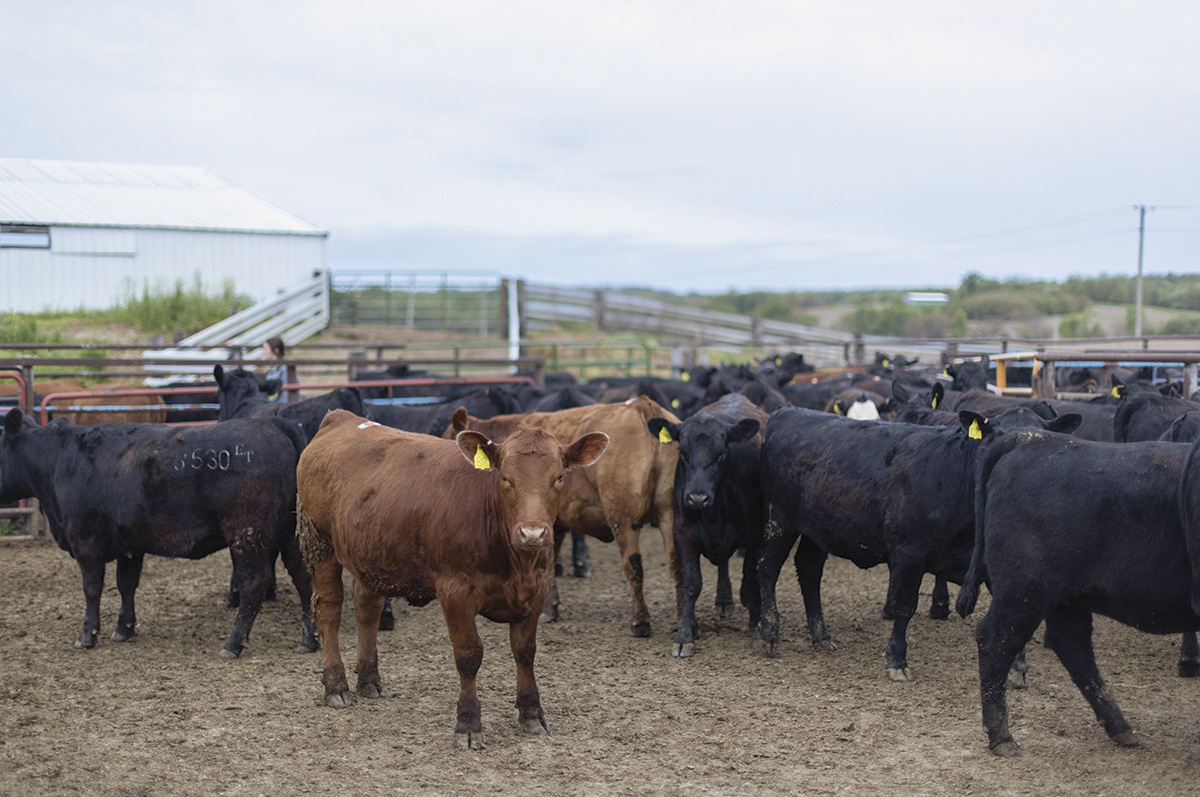
Estrus detection aids on groups of cattle can help with the efficacy of timed A.I. Image courtesy of Estrotect.
Heat detection doesn’t have to mean spending hours watching for mounting activity and breeding cows based only on those signs. Instead, using estrus detection tools and technologies, such as breeding indicator patches in conjunction with timed protocols, can provide really helpful information either to help troubleshoot or adapt the protocol in the moment.
Identifying the best cows and heifers to breed to particular genetics is a benefit of using estrus detection aids. Pregnancy rates with sexed semen can be enhanced by selecting females that are in higher estrus intensity to breed. When using a breeding indicator patch, if 50% or more of the patch’s surface ink has rubbed off, that female is a good candidate for breeding with sexed semen. If less than half of the patch surface ink is rubbed off when timed A.I. is performed, you may want to consider using less expensive conventional semen to limit costs.
Pair the protocol with detection
Generally, when estrus detection is performed and cattle are inseminated over the course of multiple days, conception rate can be maximized because you can more precisely align insemination with the optimal timing. With a timed-A.I. protocol, however, all the females are typically artificially inseminated at the same time on the same day.
Having estrus detection aids on groups of cattle receiving A.I. can be a nice barometer. For instance, suppose you expect 70% of the heifers to be in heat after, but only 30% of the heifers are showing signs of estrus by the time of timed A.I. – you know that something isn’t quite ideal. If you are able to, pivoting to a split-time A.I. approach could help. That would mean breeding only the 30% that had exhibited heat and holding off on breeding the remaining heifers until the next day. Typically, many of those heifers go on to express estrus within the next 24 hours and, as a result, achieve much better conception rates. Those that still have nonactivated breeding indicators can receive a shot of gonadotropin-releasing hormone (GnRH) and still achieve reasonable conception rates with timed A.I. Applying estrus detection aids in this manner provides confidence in the process, lets you know whether the synchronization worked effectively and allows you to make pivots if necessary.
Using estrus detection aids helps determine chuteside decisions and picking which types of genetics to use in the moment. Having an accurate indication of whether a cow or heifer expressed estrus enables better timing alignment of A.I. and more effective use of resources.
Combining synchronization protocols with estrus detection aids improves efficiency and reproductive outcomes. Taking this integrated approach maximizes conception rates, leads to more successful pregnancies and ensures a stronger return on your breeding investment.