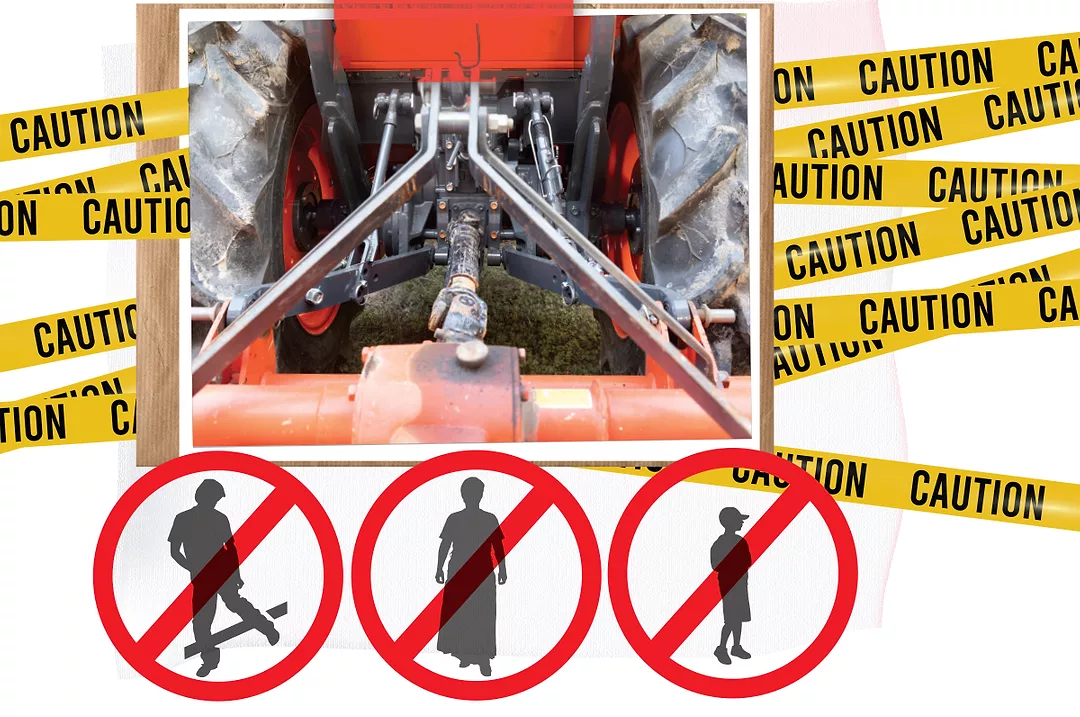
The urgency to complete tasks quickly is a prevalent mindset in agriculture, often leading to compromised safety practices. While many believe that accidents will not happen to them, it is important to recognize that every farmer knows of at least one friend or family member who has suffered an injury during routine operations.

Power take-off (PTO)-driven equipment is frequently used on most farms. While experience in handling or working near PTOs may reduce risk, it is crucial to always acknowledge the inherent dangers. PTO shafts are a leading cause of entanglement fatalities, accounting for 30% of agricultural deaths in Canada. Between 1998 and 2008, there were 14 fatalities directly related to PTO shafts. PTO shafts typically rotate at speeds of 540 to 1,000 RPM, and in less than a second, operators can become entangled, resulting in severe injury or fatality. Most PTO-related injuries lead to permanent dismemberment or death. For instance, at 540 RPM, a PTO shaft completes nine full rotations per second. With a 4-inch circumference, 36 inches of clothing or an entire limb can become wrapped around the shaft in just one second. At 1,000 RPM, the shaft rotates 16.6 times per second, and it takes only half a second for a limb to become entangled.
PTO safety checklist
Ensuring safety when working with PTO-driven equipment is paramount. Regular inspections before, during and after operation are necessary to mitigate risk. The following outlines key safety procedures to follow:
Pre-operational PTO inspection
- Inspect the PTO to verify that all components, including shields and guards, are correctly in place and securely fastened.
- Ensure the master shield is properly positioned where the PTO connects to the tractor or implement.
- Test the driveline guards by spinning them to confirm they are not obstructed or stuck to the shaft.
- Confirm that the PTO rotates freely.
Operational safety procedures
- When operating PTO-driven equipment such as silage blowers, grinder-mixers, irrigation pumps or manure pumps, maintain a minimum distance of 6 feet from the PTO shaft.
- Place safety pylons around the equipment when the PTO is in use.
- Never leave the PTO running unattended. Always fully disengage the PTO and equipment before leaving the area.
- Walk around the PTO shaft rather than stepping over it, even when the shaft is not rotating.
- Avoid wearing loose clothing, jewelry or having long hair exposed while working near a PTO.
- Ensure that no one, including children or animals, is in the vicinity of the PTO. Additionally, inform other personnel working in the area about the PTO and its associated hazards.
Shutting down and completing operations
- Disengage the PTO prior to turning off the machinery to prevent the shaft from rotating during startup.
- Turn off the tractor or equipment before dismounting to perform cleaning, maintenance, servicing or adjustments on the PTO or its attachments.
- Regularly inspect the PTO for worn or damaged components, and ensure that all guards and shields are intact.
Training and evaluation
It is essential to ensure that all individuals working with or around PTO-driven equipment are thoroughly trained and evaluated to confirm their understanding of safety protocols. Maintain documentation of all training sessions for future reference.
Additional safety considerations
While reducing PTO-related risks may not always be convenient, there are several practices that can significantly lower the likelihood of entanglement incidents. The following guidelines should be followed to prevent the most common types of PTO injuries:
- Always use the driveline recommended for your specific machine.
- Properly position the tractor's drawbar for each implement to avoid undue stress on the driveline, particularly on uneven terrain or during tight turns.
- Minimize PTO shaft abuse by avoiding tight turns that could pinch rotating shafts between the tractor and equipment, limit excessive telescoping, gradually engage the PTO and avoid over-tightening slip clutches on PTO-driven implements.
- Ensure the PTO shaft is securely locked onto the tractor's PTO stub shaft.
- Keep universal joints in phase to prevent potential issues.
- Lubricate bearings regularly as per the manufacturer’s recommendations.
The speed at which a PTO shaft operates far exceeds human reaction time, making it easy for clothing or body parts to become entangled. Always adhere to proper safety procedures and ensure that others are kept at a safe distance from PTO-driven equipment. Installing and maintaining a PTO guard could be the crucial factor in preventing a tragic accident and ensuring safe operation.