Cool spring and excessive moisture
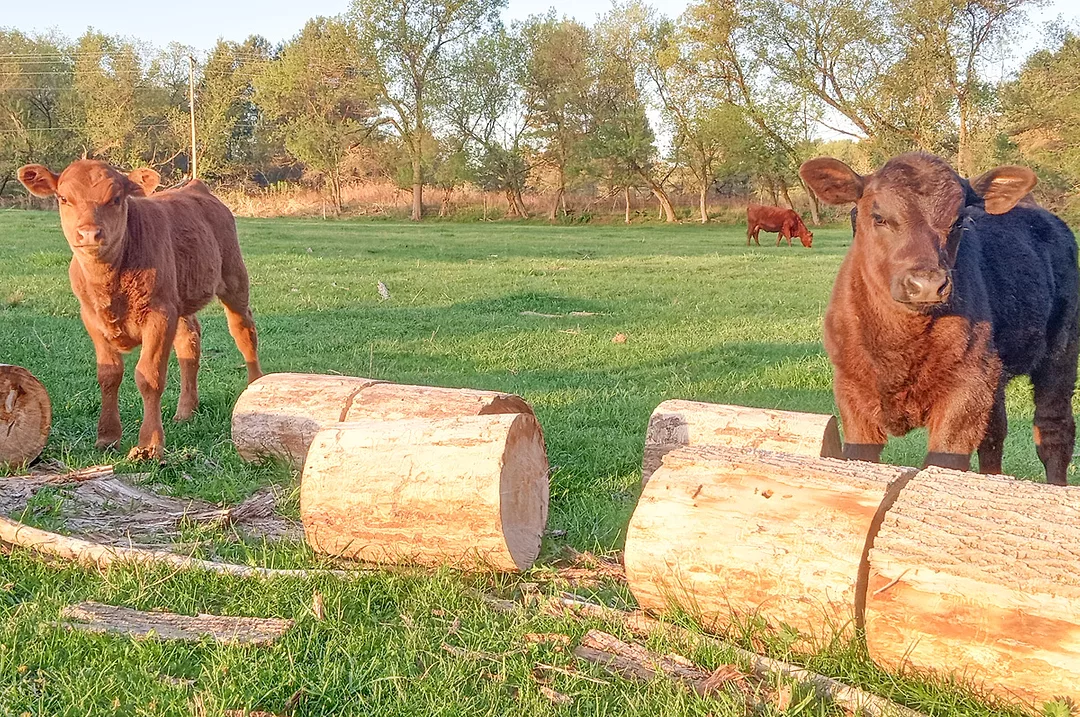
This spring, cool-season grasses came on slowly with cooler-than-normal temperatures. To find this information, I reviewed Weather Spark’s temperature history graphics. For the Williamsport, Pennsylvania, region, we saw a slow, steady climb out of the 40s beginning in February but didn’t see 50ºF until Feb. 22. Cows would have back-eaten any incremental growth of pasture bluegrass and ryegrass if grazing at or above stocking density. By March 15, producers started to see 60ºF as the average, and cows were less likely to be at the feedbunk during the morning.

For pastures without cattle turnout, this was not a setback. But for those with cattle on pasture year-round, they most likely grubbed it down and were still eating hay at the feed rack through mid-April. Temperatures and precipitation took a steady upswing after April 17. Most cattle were out on soggy-bottom pastures by May 13. Except for the 30% of the state in abnormally dry to moderate drought persistence (Scranton and Philadelphia, Pennsylvania, and Cumberland, Maryland), pasture growth was on par with lawn mowing activities.
May 15 was a kick-starter for pasture acceleration. With cool morning temperatures in the 60s and a high of 76ºF in the afternoon, we finally started to see the beginning of a spring flush. Unfortunately, this only lasted two days. After a high of 84ºF on May 17, daytime highs dropped and persisted at around 70ºF. Unfortunately, heavily stocked pastures will likely not see any significant biomass accumulation in cool-season grasses like smooth brome, orchardgrass and tall fescue that usually peak around the end of May.
Forecasters are indicating the Northeast will experience above-average June heat and well above average from St. Louis westward. If June heats up rapidly, this will short-circuit any vegetative elongation of grazed cool-season grasses, leading to short seedhead swards. Hopefully, producers found time to clip seedheads in June and got a top dress of fertilizer on marginal pastures as a hedge to increase pasture biomass.
Excessive moisture leaches quality
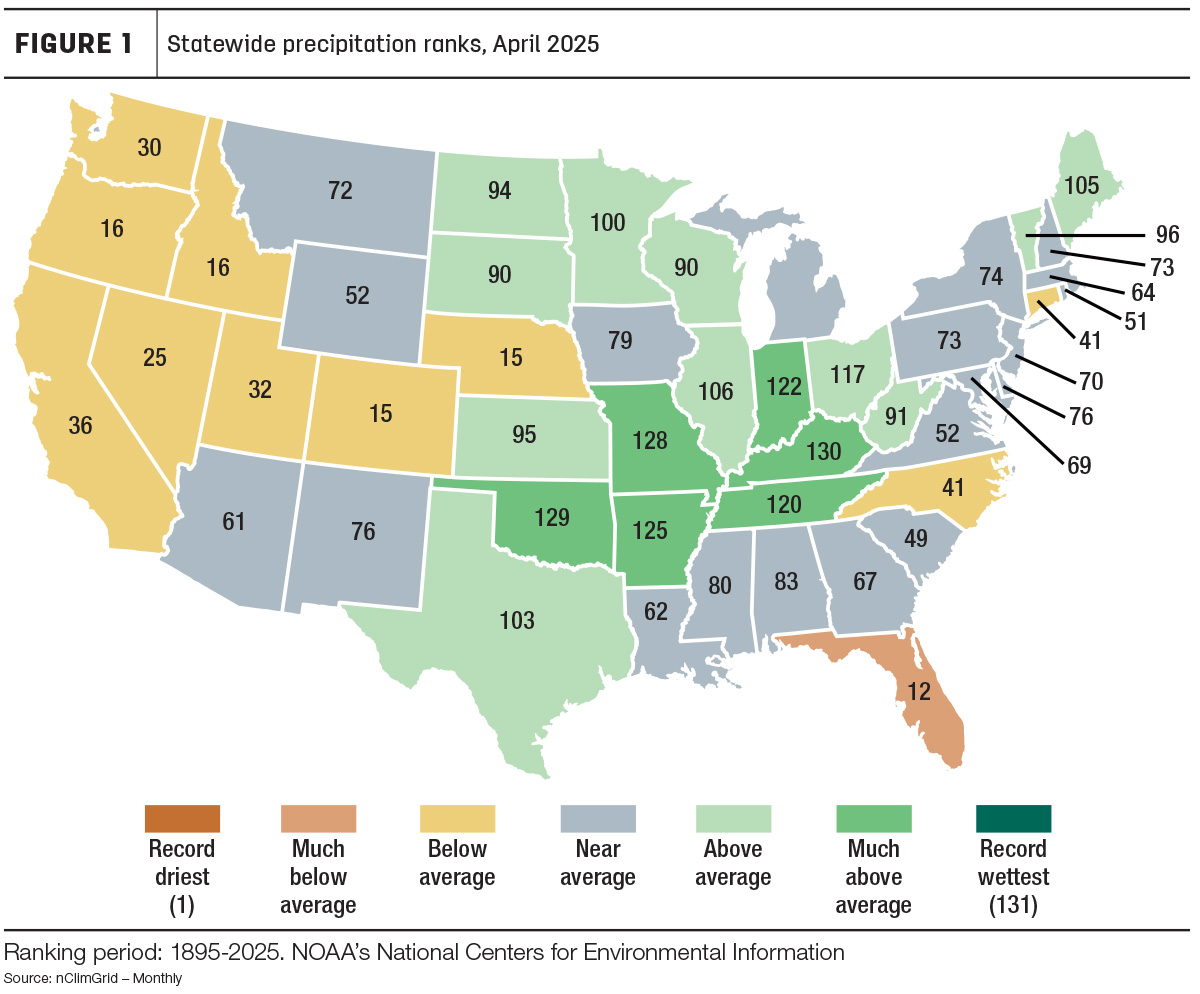
The monthly Statewide Precipitation Ranks from NOAA’s National Centers for Environmental Information page shows most of the Mid-Atlantic states except Connecticut were near average to above normal for April precipitation, along with most of the central U.S. being near to much above. While this does not bode well for a dry first cutting swath, it should yield adequate pasture biomass for pasture forbs. But not necessarily maximum quality without replenishment of the water-soluble minerals that may have leached out.
Unfortunately, 1.37 inches of rain fell on May 17 in northern Pennsylvania, along with a temperature drop to the low 30s, and this super-saturated pasture soils. With more than 2.6 inches in April and now 3 inches to date in May, the rain has chilled milk production and calf average daily gains. Any gains from winter-applied cow paddies probably moved beyond the reach of pasture grasses. A common visual indicator of bland dietary intake in April is a rough hair coat – even after spring worming and skinny-ribbed calves.
There isn’t enough vitamins like A, D and E going into the rumen and adsorption in the small intestine when forage intake is greater than 75% water to replace body fat going into milk production.
Mineral supplementation
If you haven’t already, check your herd’s mineral consumption for the last three months. If the forecast is anything like ours for June and you had a pasture full of cows in heavy lactation on native pasture grasses in April and May, those cows probably could use some more mineral supplementation.
Worm those cows
The lack of snowfall – again, and daily lows above 30ºF means cattle frequently encountered muddy conditions last winter. When average daily temperatures increased above 55ºF this spring, livestock deleterious stomach worms begin proliferating and may already be a problem. Any change in individual cow manure color, consistency and smell should garner further investigation as we move into the summer months.
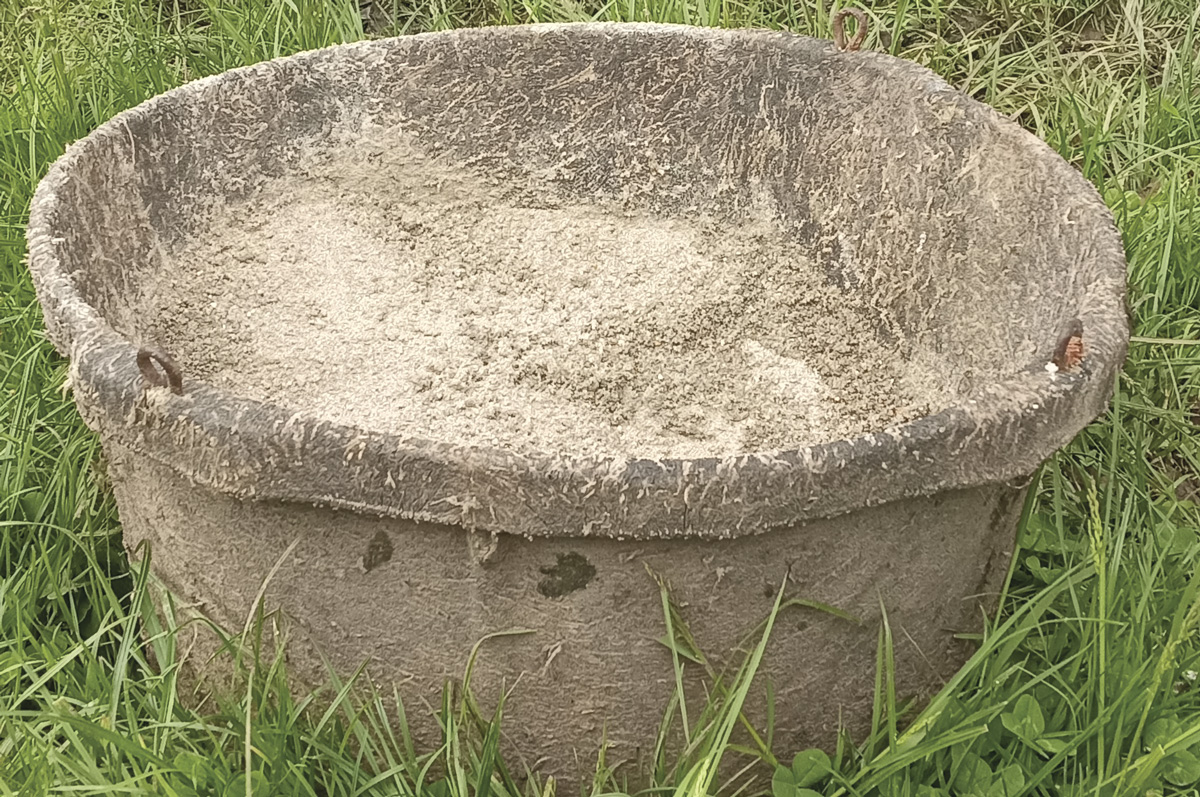
Do you have waterlogged pastures? Beef up your free-choice mineral options. Image by Melissa Bravo.
How to assess pasture conditions going forward
Drought. On the U.S. Agricultural Commodities in Drought page, we can see that most of the hay-making areas of the eastern U.S. were not experiencing drought conditions at the end of May. That’s great for fall hay inventories. The U.S. Drought Monitor Conditions & Outlooks tool predicts drought conditions throughout much of the Northeast will abate during the next few weeks.
Heat-induced dormancy. We may not get the benefit of extended regrowth on April- and May-grazed season grasses this June. Timely irrigation is one way to stave off heat-induced dormancy of cool-season grasses. Hopefully, Mother Nature will provide. For those who can stockpile, now is the time to set aside enough acreage to get through a three-month slump.
More precise estimates. The most reliable tools to assess individual paddock productivity coming off a heavily grazed spring are:
- Take species and biomass assessments twice a week.
- Evaluate manure color and consistency. Overgrazing leads to more pathogen loads.
- Take soil samples. Marginal soils will respond to inputs.
- Put a bale of hay out. Estimate daily dry matter (DM) intake based on consumption rates.
For information on how to go about taking pasture forb measurements to estimate DM availability, visit the North Carolina State Fact Sheet: Quantifying Pasture Productivity or North-Central SARE’s Measuring Pasture Productivity with a 5-Gallon Bucket pamphlet.
Warm-season forage and weed evaluation. When the cool-season annual grasses go dormant in the heat of summer, deep-rooted weedy perennials like horse nettle and milkweed crop up to compete with orchardgrass and red clover. While they are great for pollinators, they are not going to improve average daily gain (ADG).
Soil test. The wet spring did not help the fertility of your pastures. For the most accurate top-dress recommendation, take a soil test from the top 6 inches of soil representative of the area to be spread and a sward sample from the same locations. Don’t forget to check the extra fee box for micronutrients and organic matter (OM) on the soil test.
Don’t put off liming. If this spring was a repeat of last year or the year before, your pastures could use the calcium and magnesium that comes with 2 tons of lime to the acre. A great list of forage and pasture videos can be found on the Iowa State University website. Check out the webinar by Antonio Mallarino on low soil pH: Use ag lime, pelleted lime and other sources effectively. Research shows that 800 pounds of pelleted lime an acre can perk up a clay-type soil such as loess, glacial till or alluvium. When the weather is not cooperating with truck application, consider this more expensive measure. One acre of biomass increase might be the fix you need to extend the grazing season.
Know your soil organic matter and cation exchange capacity levels. The major minerals that drive quality and quantity in pasture-based grazing programs are derived from the nitrogen cycle, potassium cycle, phosphorus cycle and the organic matter cycle. The CEC on a soil test tells us the cation exchange capacity of a soil. This essentially is an indicator of how well the soil has held onto reserves of calcium, potassium and magnesium. The more organic matter and clay particles present in the top 6 inches of soil, the higher the CEC.
Already fertilized? Take a soil test from below the root zone, i.e., as deep as you can go with a plow. It might be more cost-effective and healthier for your pasture and cows to plow sections and reseed if subsoils are above optimum. August-seeded cover crops can put on enough biomass to extend the fall grazing season.