For North American dairy producers, weather disruptions and fluctuating forage availability are becoming familiar hurdles. Whether it’s too much rain delaying harvest, too little causing drought or issues like spoilage in the bunk, feed inventories are frequently at risk. In this challenging landscape, safeguarding your forage supply is more than good practice; it is a profitability imperative.

One opportunity producers and nutritionists can leverage today is to improve feed efficiency through precise forage management and strategic nutritional technologies. By making thoughtful, small changes like optimizing forage use and incorporating intelligent feed solutions, dairy operations can stretch existing feed supplies further without compromising milk production or herd health.
The real cost of forage volatility
Feed remains the most significant cost in dairy production. Variability in feed quality due to spoilage, improper storage or inconsistent harvest timing affects not only inventory levels but also ration consistency and animal performance. And buying replacement forage? That comes with a premium price tag.
Today, total ration cost can range from 15 to 25 cents per pound of dry matter per head per day. According to reports, the average dairy herd size in the U.S. in 2024 was 377 head. Assuming a dry matter cost of 20 cents, a farmer with a herd of 377 cows eating 50 pounds a day spends $3,770 per day in feed alone. With expenses like that, ensuring the forage harvested is high-quality and stays that way is necessary.
Still, there are always factors outside a dairy farm’s control that can diminish the availability of quality on-farm forage. In these cases, dairy managers may find themselves asking, “How can I extend my current inventory without affecting production?” The answer lies in using the inventory you have more effectively.
Stretching feed without sacrifice
The first step to maximizing feed starts with selecting the right seed variety and forage type, which comes down to what is appropriate for the operation. Factors include maximizing yields per acre, matching the region’s growing conditions and meeting the herd’s nutrient requirements. Needless to say, there are a lot of conditions to evaluate, but the more you dig into the details, the better the likelihood of a good harvest.
Once the right forages are grown, harvesting the crop at the appropriate time means capturing the best nutrient levels along with improved digestibility. For hay, you want to ensure the first cutting is at the right stage of maturity and then meet the correct interval for each subsequent cutting. A crop that’s too mature can mean reduced digestibility and nutrient value. Corn maturity is based on matching the moisture level and plant maturity to the storage method. Still, even when corn is ready to harvest, weather can create a field that’s impossible to reach.
Next, it is vital to minimize the spoilage of stored feed. When preserving forage in a bunk, bag or silo, it is important to maximize density and minimize exposure to air. For a bunk, that means covering the forage the same day you fill the bunk.
The use of expensive inoculants or other preservatives is sometimes necessary, especially when harvest conditions are suboptimal (like when the ground is wet but the hay needs to come out of the field), when feed is exposed to rain and air or when the harvest takes longer than usual and is exposed to the elements. Ultimately, harvest conditions may make these pricey add-ons essential.
Lastly, minimize shrink by properly maintaining the silage face and carefully managing forages and your purchased feed ingredients.
Technology helps get more from forage
The management tips mentioned can help improve the bottom line while also ensuring high-quality feed reaches the cows. There are also nutritional interventions that can make a difference.
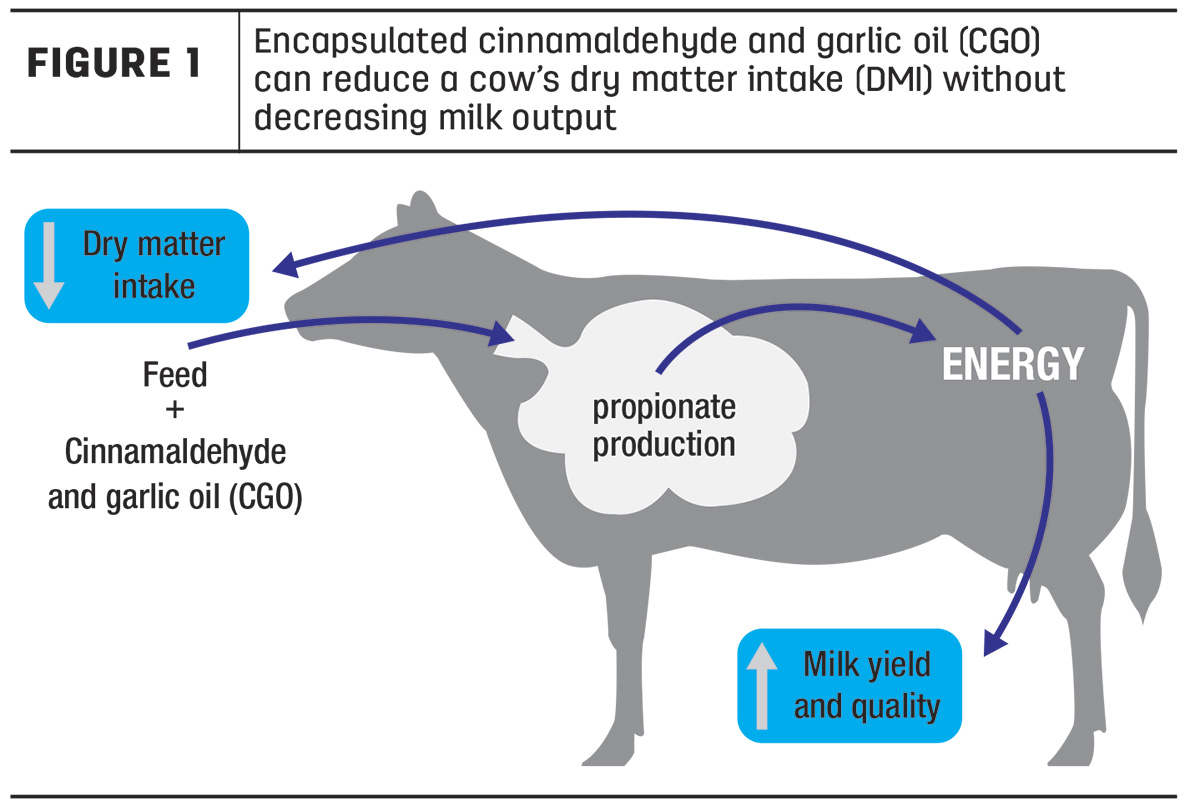
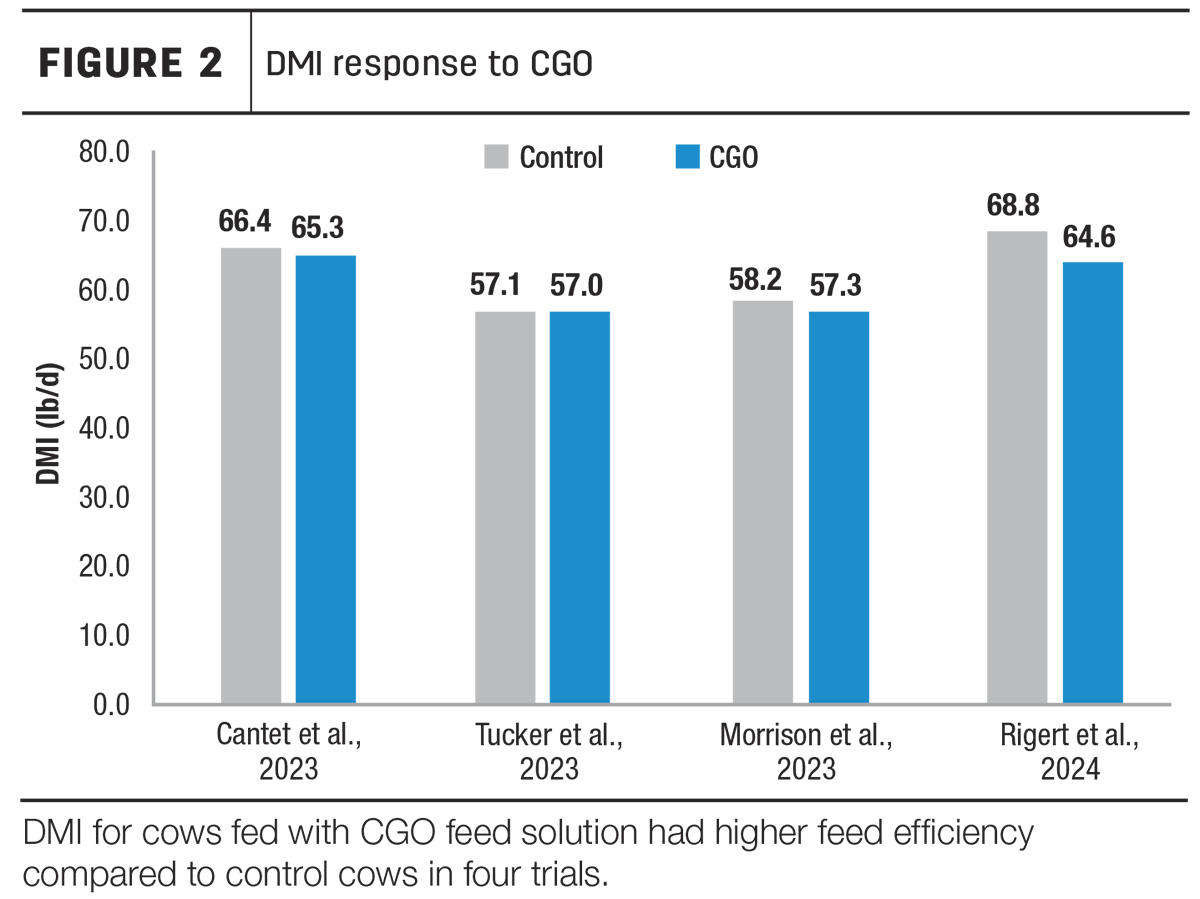
Across several commercial dairy trials, researchers saw that the strategic use of a plant-based feed solution containing encapsulated cinnamaldehyde and garlic oil (CGO) can reduce a cow’s dry matter intake (DMI) without decreasing milk output (Figure 1). In fact, data compiled from university-led and commercial studies show that feeding this solution reduced DMI by an average of 2.08 pounds per cow per day while maintaining, and in some cases improving, milk yield.
What does this mean for the dairy farm? A 33-pound bag of the feed solution is shown to yield savings of over 81,000 pounds of total mixed ration (TMR). That is feed that can be redirected, conserved or leveraged to support a larger herd on the same acreage. It means dairy managers can enjoy cost savings and operational flexibility.
Rethinking feed efficiency
Feed efficiency – the amount of milk produced per pound of DMI – is emerging as a critical performance indicator for today’s dairies. Improvements in feed efficiency directly correlate with profitability and resilience. With margins tight and weather unpredictable, reducing inputs without sacrificing output is the ultimate advantage.
In one study, cows supplemented with the feed solution showed an 8% improvement in gross feed efficiency without changes to milk components or body condition (Figure 2). This added efficiency allows producers to buffer their forage risk, building inventory reserves without additional acreage or external purchases.
Real herds, real results
While multiparous cows often dominate dairy performance metrics due to their established lactation history, primiparous cows (those in their first lactation) offer unique management opportunities. These younger animals are still allocating energy toward growth in addition to milk production, making them particularly sensitive to nutritional strategies. Supporting their feed efficiency without compromising yield is critical to building long-term productivity. Recent studies suggest that targeted nutritional interventions can unlock untapped potential in primiparous cows, setting a stronger foundation for future lactations.
In a Purdue University trial, primiparous cows maintained milk yield while reducing DMI by 1.5 pounds (0.67 kilogram) per day, and multiparous cows increased milk yield by 2.9 pounds (1.32 kilograms) per day without changes in intake. At the Miner Institute, primiparous cows fed the solution gained 2.6 pounds (1.2 kilograms) per day in milk yield while maintaining intake, demonstrating that efficiency gains are possible regardless of parity.
These results across trials suggest the feed solution doesn’t just help in one-off situations – it is a dependable tool to protect feed investments over the long term.
Ration flexibility means business agility
Integrating best practices along with intelligent nutrition solutions that enhance feed efficiency provides multiple business benefits. With greater efficiency:
- Producers can consider selling surplus hay or forage to generate cash flow.
- They can milk more cows on the same acreage without increasing land costs.
- They may be able to lease less ground, reducing fixed costs.
- They can create a buffer against unpredictable harvests, supporting long-term planning.
This flexibility is both agronomic and financial. And in an industry where every penny per cow per day adds up across the herd, those saved feed costs make a difference.
The bottom line: Feed smarter
Farmers often talk about making the most of what they have. That is what best practices, coupled with reliable, science-backed nutrition support, can do without sacrificing milk production or body condition. It represents a shift toward intelligent nutrition, where technology and management align to protect the farm’s most precious resource: its feed supply.
References omitted but are available upon request by sending an email to the editor.