Milk cultures are a powerful tool in managing mastitis, offering insights into which pathogens are affecting your herd. Understanding whether infections stem from environmental or contagious organisms can help guide crucial decisions: Which cows should be treated? Which may need to be culled? Where should management efforts be focused to prevent future cases or outbreaks?

While your herd veterinarian will interpret culture results and provide clinical recommendations, producers with a solid understanding of the findings can play a more active role. When you’re confident in what those reports mean, herd health discussions become more collaborative and effective. Even a “no growth” result, which may seem unhelpful at first, can provide useful information about udder health and overall mastitis risk.
This article is designed to help you interpret milk culture results more confidently, so you can work more strategically with your vet and make informed decisions for your herd.
The most common mastitis pathogens in dairy cattle
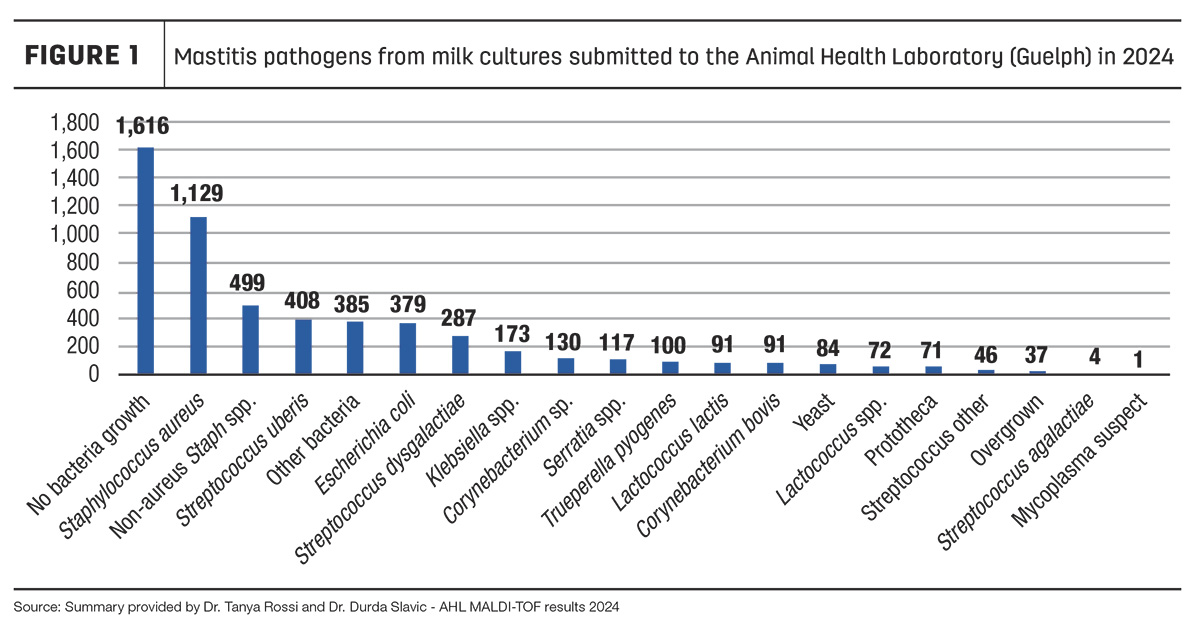
Based on over 4,900 milk samples submitted to the Animal Health Laboratory at the University of Guelph in 2024 (Figure 1), the top mastitis-causing agents were:
- Staphylococcus aureus
- Non-aureus staphylococci (NAS) spp. (or another coagulase-negative staphylococci – CNS)
- Streptococcus uberis
- Escherichia coli
- Other bacteria
Notably, most of the samples showed no growth; this is a common and still meaningful result (discussed further below).
Understanding a no-growth result
A no-growth milk culture may initially feel like a dead end, but it can still provide valuable insight:
- The cow’s immune system has already cleared the infection.
- It was caused by a pathogen that is shed intermittently (e.g., S. aureus, mycoplasma spp.).
- The pathogen may be difficult to culture (e.g., mycoplasma spp.).
- It was a case of nonbacterial mastitis (e.g., chemical irritation or trauma).
- There was a sample handling issue, like delays or temperature changes, that killed the bacteria before testing.
In well-managed herds, a high percentage of no-growth results is not unusual and may reflect good immune control. However, if you're seeing frequent no-growth results, it is worth reviewing your sampling technique and discussing with your veterinarian whether a different diagnostic test might be indicated in finding the culprit.
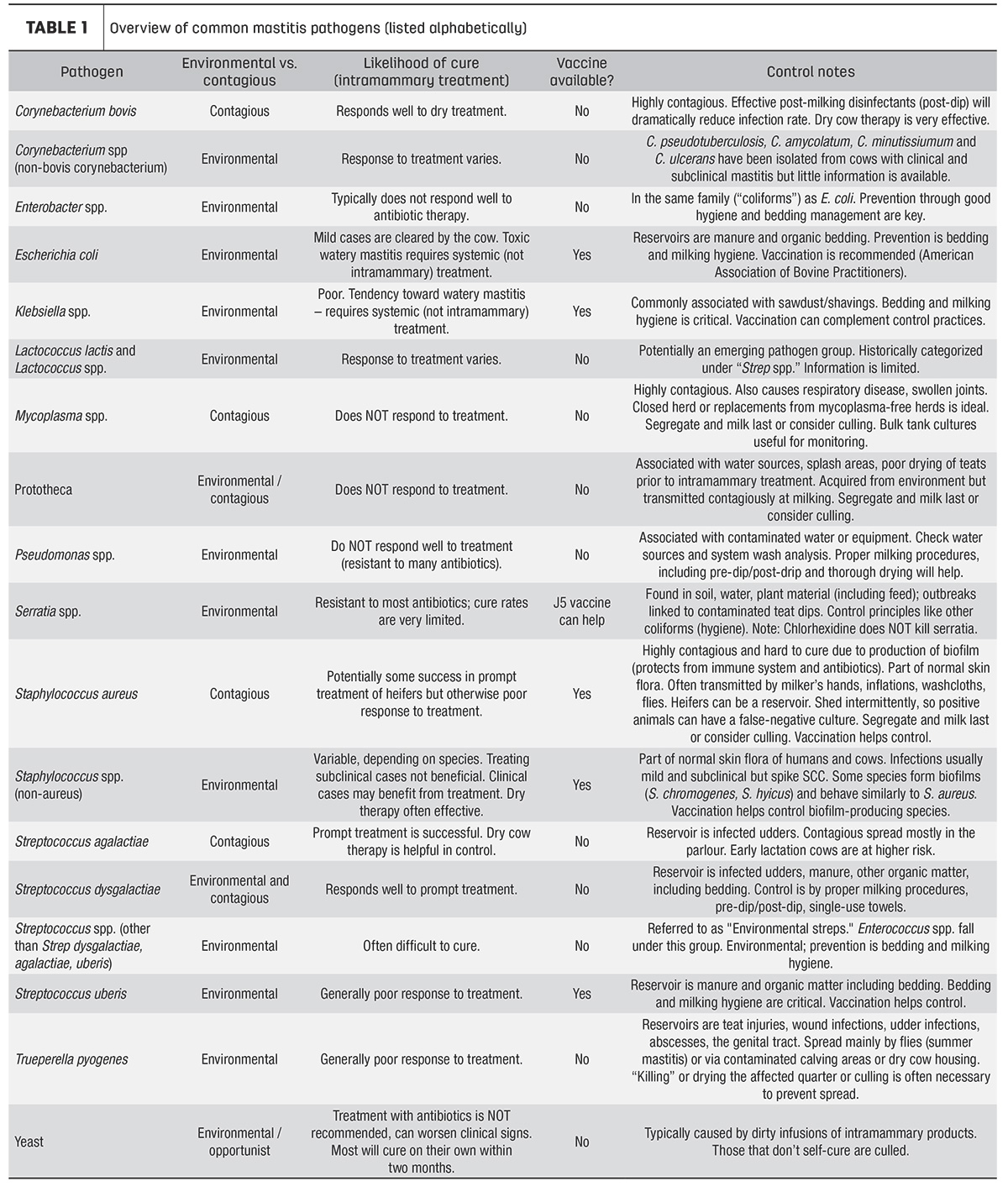
Environmental vs. contagious pathogens
Environmental pathogens originate from the cow’s surroundings (manure, bedding, milking equipment). These often cause transient infections (spikes), especially in the summer months, and respond well to hygiene improvements and vaccination.
Contagious pathogens spread from cow to cow, primarily during milking. Control focuses on preventing transmission through milking hygiene, culling chronically infected cows and vaccination.
You’ll also see the term “opportunist.” These organisms are not necessarily a typical mastitis-causing agent, but if introduced into the udder, they have the potential to cause mastitis.
Practical tips for interpreting culture results
- Don’t rely on the culture alone. Consider somatic cell count (SCC) trends, clinical signs, parity and lactation stage when evaluating a result.
- Look for herd-level patterns. Are certain pens, lactation groups or seasons overrepresented?
- Treat strategically. Not all cases require antibiotics. Reserve treatment for infections with good cure potential, and consult your vet on selective therapy.
- Use results to improve prevention. Culture data can inform changes in bedding, milking hygiene, vaccination protocols and culling strategy.
When to culture
Consider milk culturing in the following situations:
- Repeated high SCC or chronic cases
- Evaluating a selective dry cow therapy program
- Spikes in clinical mastitis with no clear cause
- Clusters of cases within a group or season
- Monitoring success of a control effort (e.g., S. aureus reduction)
A note on vaccines
Mastitis vaccines are not a silver bullet, but they can support broader prevention strategies, especially in high-risk herds. Available options include:
- J5 vaccines: Focused on E. coli and other coliforms
- Combination vaccines: Cover E. coli, S. aureus, and CNS
- Klebsiella-specific vaccines
Talk to your veterinarian about what vaccines are right for your herd and how to integrate them effectively.
Final thoughts
Milk cultures aren’t just a diagnostic tool – they’re a communication tool. They allow you and your veterinarian to make smarter, more targeted decisions that improve milk quality and reduce costs.
Don’t be intimidated by the science. With a little practice and a solid partnership with your vet, milk culture reports become a strategic asset in your herd’s mastitis control program.