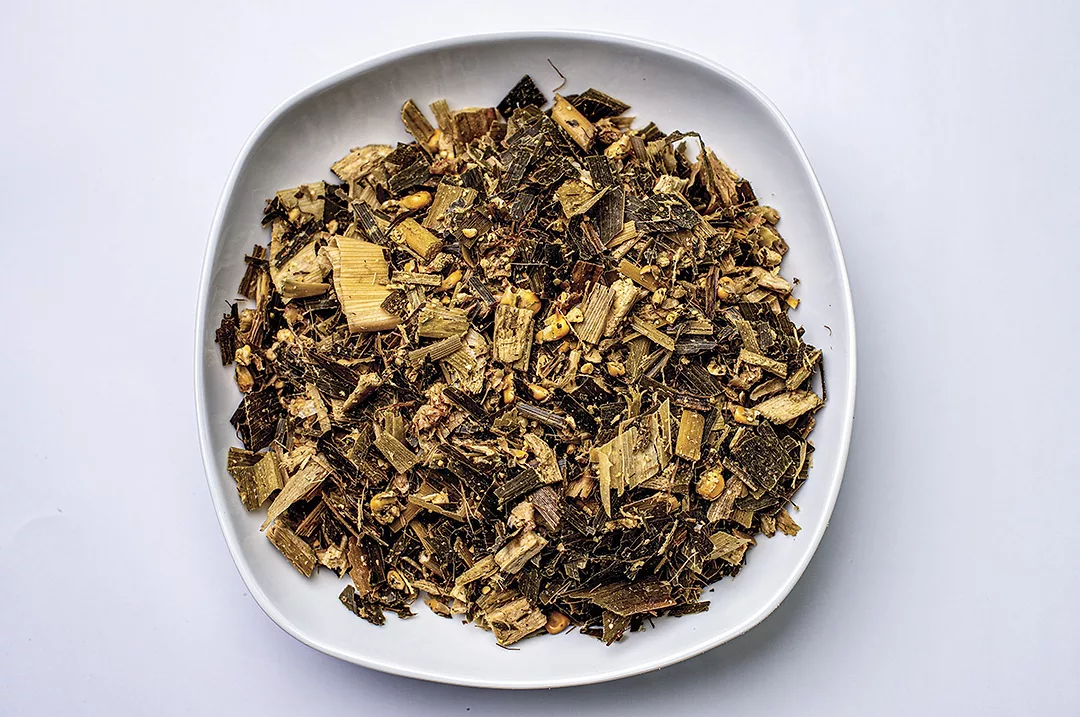
No matter your region – or what kind of year it’s been – mycotoxins have a way of showing up when silage comes out of storage or when a byproduct gets delivered. Whether you experience all four seasons in the North, are in the humid South and East or the dryer stretches of the West, molds and mycotoxins are a persistent, and often underestimated, risk.

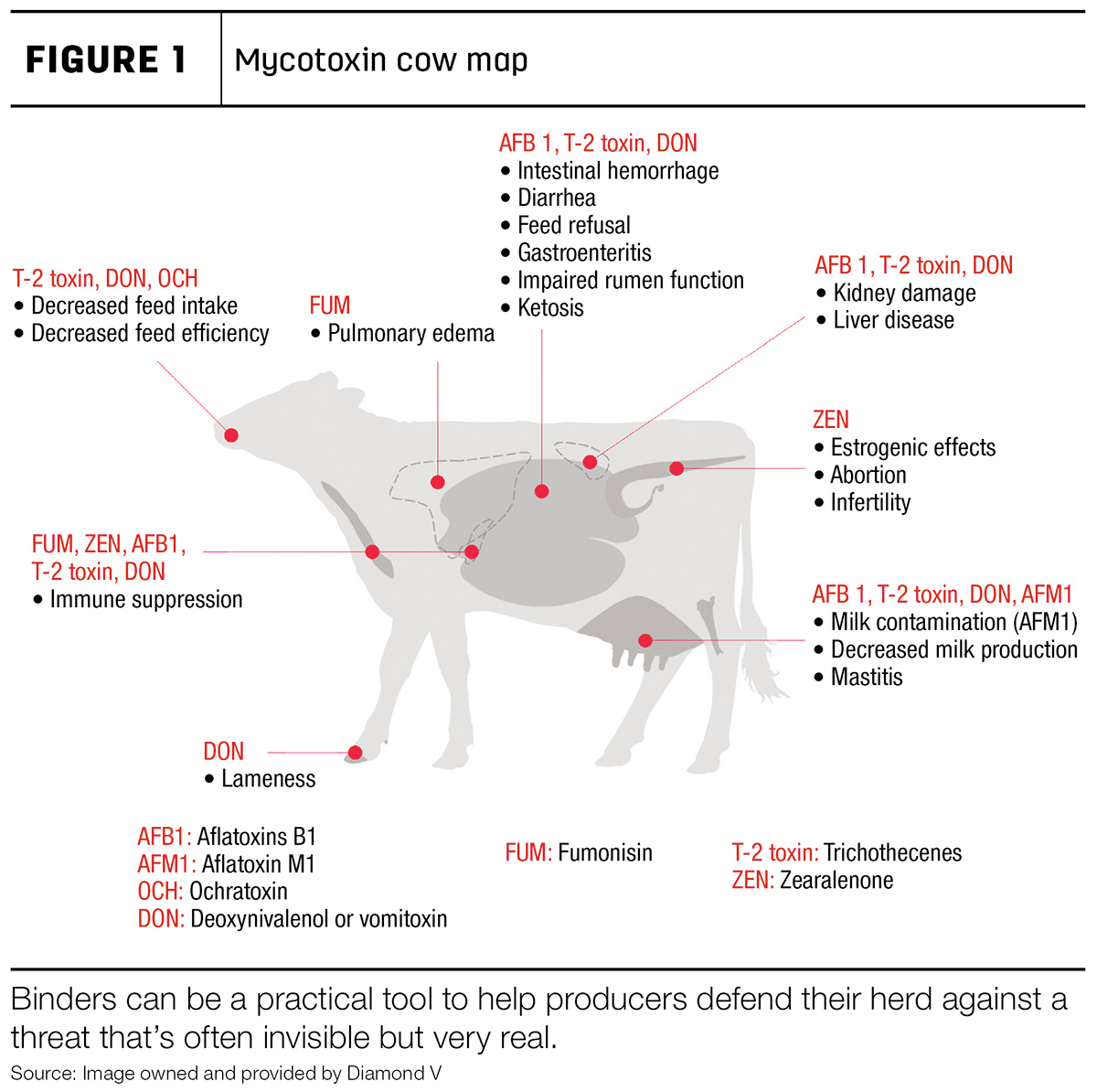
As an animal nutritionist for the past two decades, I’ve seen that mycotoxins aren’t just a problem during challenging growing season years. They are a year-over-year risk that we encounter annually. Turning the focus to early intervention practices and nutritional strategies can help reduce the impact mold and mycotoxins have on cow health, reproduction and production (Figure 1).
In my experience discussing mycotoxin impacts with producers and nutritionists, one consistent truth comes to mind: It is hard to test your way out of a mycotoxin problem.
For example, you could pull samples from a silage pile or commodity bay and find nothing. But had we tested a week earlier – or later – we would have an entirely different situation on our hands. The truth is that mycotoxins don’t show up neatly in a pattern or predictably. And testing more frequently can become expensive and time-consuming. One proactive approach to mitigating mycotoxins is incorporating a low-inclusion mycotoxin binder. Think of it as an “insurance policy” for feedstuffs that helps support cow health and productivity, even when mycotoxin levels are not immediately detectable. We know mycotoxins are out there – the question is whether we accurately take samples or test often enough to find them before we feel their impact.
When it comes to managing mycotoxins in a dairy ration, the primary goal of using a mycotoxin binder is straightforward: It’s about protecting the cow. These binders work by tying up a portion of the toxins present in the feed so they don’t get absorbed into the animal’s system. They help safeguard rumen health and limit the broader negative impacts mycotoxins can have – especially on performance and reproduction. Binders can be a practical tool to help producers defend their herd against a threat that’s often invisible but very real.
Testing is only one part of the mycotoxin picture
Another watchout I often discuss with nutritionists and producers is that most mycotoxin panels only test for a certain number of toxins – around five or so. The reality is that there are more than 400 known mycotoxins. And if you find even one in a sample, it’s likely there are others present, too.
Our team has access to insights into mycotoxin levels from more than 350,000 forage and feed analyses every year. These insights are powerful tools in the battle against mycotoxins at the feedbunk. For example, in the West and Southwest, we’ve seen elevated levels of fumonisins this year – especially in key dairy states like California and Texas. And often, those samples show three or more mycotoxins present that are impacting herd performance.
Mycotoxins are complex, with multiple factors contributing to their prevalence, adding to the case for proactive management. Mycotoxins are produced by molds, and molds naturally exist in fields and feedstuffs, but moisture and temperature do play critical roles.
When certain molds come under “stressful” conditions, it can cause them to secrete mycotoxins. In the field, stress from the weather, like hot and cold temperatures, as well as physical damage from storms, can be triggers.
Testing is useful, but it’s just one part of the puzzle. If we consider filling in the puzzle proactively, we can have advantages like:
- Insurance against potential mycotoxin challenges
- Prevention of potential subclinical performance losses
- Cut delays in addressing mycotoxin issues
- Maintain consistent rumen health
- Avoid potential productivity and reproductive performance drops
When evaluating different mycotoxin binders available in the marketplace, there are a number of questions to consider: Is it broad spectrum? Is there solid research behind it? Does it work at a low inclusion rate (e.g., 10 to 20 grams)? And most importantly, is it economical? At the end of the day, if we assume there’s always going to be some level of mycotoxins in the ration, then a proactive approach with the right binder can help safeguard cow health, reproduction and overall performance.
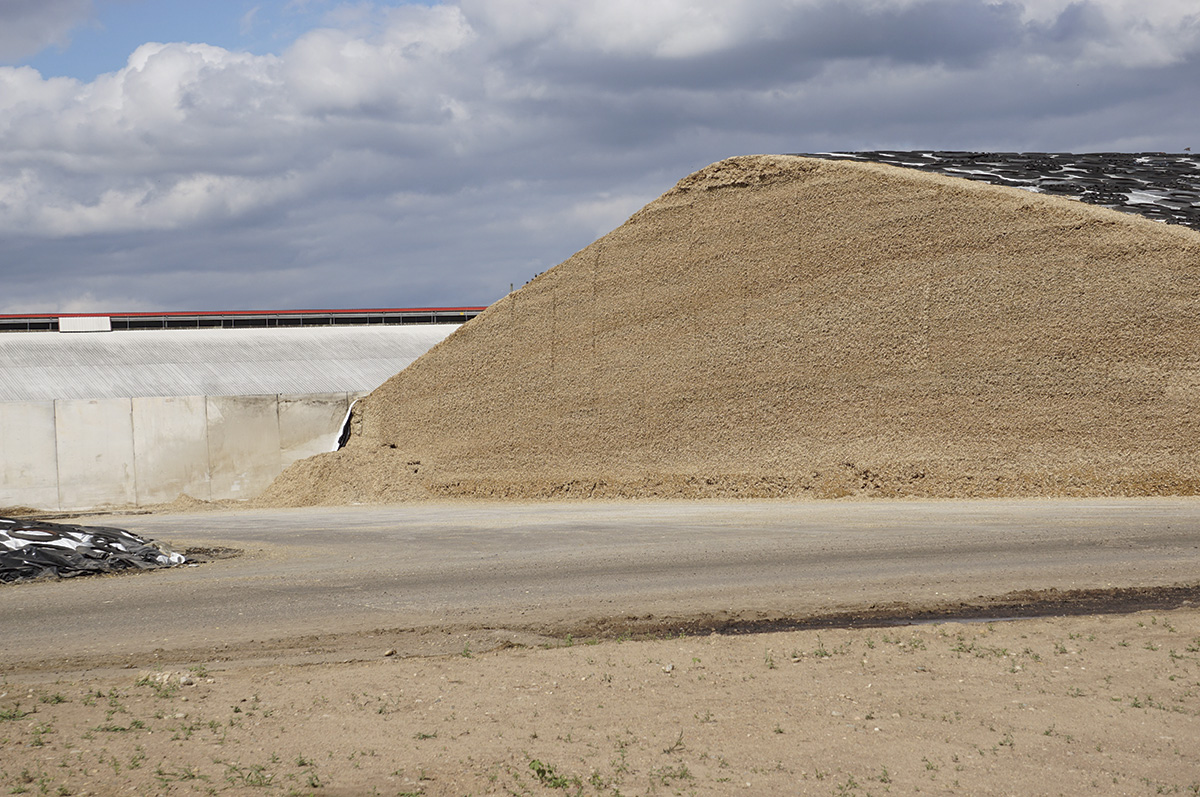
Layered and sealed for nutrient retention, a silage pile stands ready, but hidden mycotoxin risks may still linger beneath the surface. Image courtesy of Diamond V.
What can you control?
You can’t stop a hailstorm. You can’t change the weather. But there’s a lot you can control during the growing season that can impact feedout.
You can check crop maturity. You can chop at the right height to reduce soil contamination. You can bring in forage on time, pack it well and cover it immediately. All those decisions and activities go a long way in protecting feed quality.
Consider the four-pronged strategy for reducing risk and protecting silage quality from mycotoxins:
- Preharvest: Evaluate crop rotations, field management, anything to reduce mold pressure.
- Harvest: Manage moisture levels, chop height, timing – get forage off the field cleanly and quickly.
- Storage: Pack it right. Cover it well. Inspect piles regularly for mold.
- Feedout: Properly deface piles. Activate routine testing. Explore feeding a mycotoxin binder in the ration.
Byproducts and commodities also can be affected by molds and mycotoxins. Here in California where I live, we grow more than 400 different crops and have access to many seasonal byproducts like almond hulls, citrus pulp, grape pomace – to name a few. Because of the seasonality of certain byproducts, there are not always perfect storage options on-farm. If that’s the case, these byproducts are exposed to the elements and become wet, heat up and can grow mold.
It’s worth mentioning to communicate directly with commodity suppliers to buy the best-quality feed you can. If you’re feeding seasonal byproducts, make sure they’re coming from someone who stores them properly. And the same should be applied for cottonseed or high-moisture byproducts that may sit for lengthy periods of time before being used entirely. Test these feeds when it makes sense, and spot check now and then. Also encourage your feed mill or commodity broker to check what they’re selling. It’s a partnership.
One final reminder: Reproduction is production, and mycotoxins can hit reproduction hard. If we can minimize their impact, we can give our herds the best chance at consistent production and long-term success. Whatever your path is, ensure it’s intentional. Work with your feed supplier and nutritionist, evaluate incorporating a binder to your ration and prioritize for the long-term success of your herd.