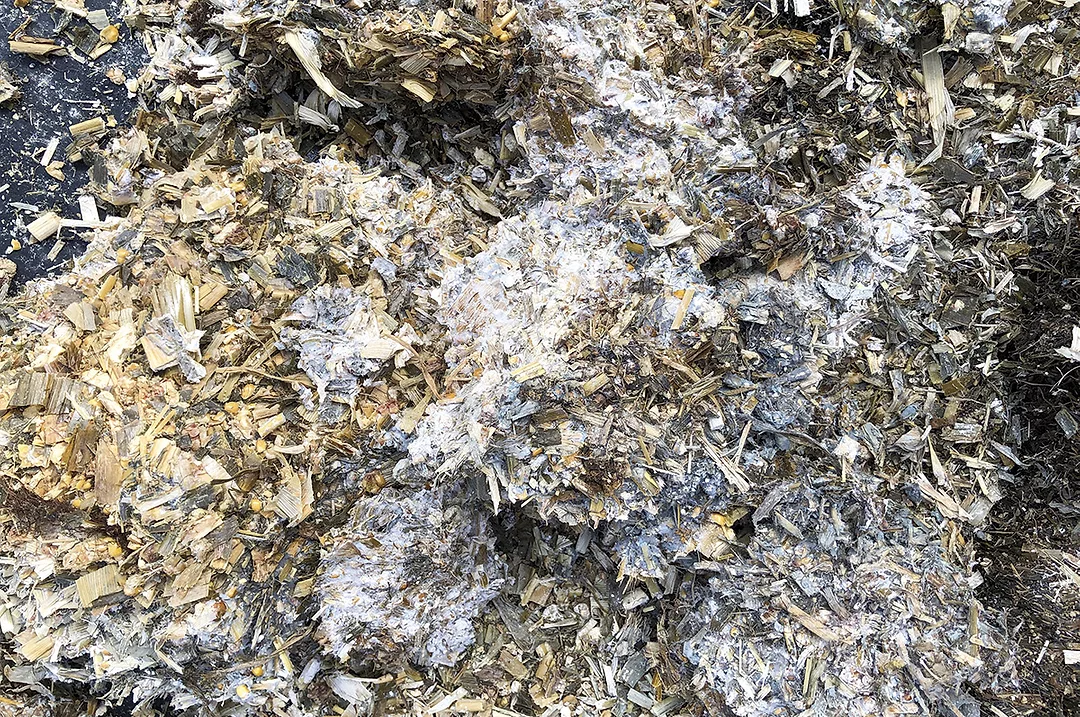
Year after year we see the flashing lights and hear the sirens and alarms when we harvest corn silage as well as when we begin feeding ensiled crops to ruminants: mycotoxins. The headlines are numerous, and the topics range from molds and mycotoxins in general to specific mycotoxins like deoxynivalenol (DON) and zearalenone (ZEA). Generally, the risks are presented and the potential impacts on health, performance and economics are described.

For most, the first line of defense is testing. You can’t mitigate what you don’t measure. I’m reminded of the quote from author Kara Thomas, “If you look hard enough, you’ll probably find something that makes you wish you hadn’t.” This is often the case with mycotoxins. A variety of feed and forage analysis laboratories will gladly test your feedstuffs, but it is not cheap. A basic screening panel for mycotoxins starts around $150, and a full screening panel can cost $300 per sample. However, we can’t be like ostriches with our heads buried in the sand and believe that if we don’t look for mycotoxins, they won’t be there. Alternatively, is it wise to conduct a full screening panel on a variety of samples that may show low or tolerable levels of mycotoxins? Because of their diverse and extensive microbiota in the rumen, ruminants can tolerate higher levels of mycotoxin-contaminated feedstuffs than pigs and chickens, yet they can suffer from mycotoxicosis.
Consider the following scenario: We harvested corn silage last fall following a growing season that was challenging for our corn crop and favored mold growth and mycotoxin production. We chose not to apply silage inoculant, as it was just an added expense. Fully expecting mycotoxin contamination, we properly sampled the corn silage and sent the samples to a reputable forage testing laboratory. The results confirmed our suspicion that our corn silage has elevated and impactful levels of mycotoxins. What do we do?
Leg one: Field-borne mycotoxins and silage inoculants
Given the aforementioned scenario, we’ve missed an opportunity to possibly mitigate some field-borne molds and mycotoxins. Unfortunately, we didn’t apply a science-based, research-proven inoculant that can reduce levels of several mycotoxins in the corn silage. The unique inoculant combination of Lactococcus lactis O-224 and Lentilactobacillus buchneri LB1819 has demonstrated benefits in reducing several mycotoxins in corn silage, in addition to preserving both the quality and quantity of ensiled crops.
Leg two: Adding ‘binders’ to the TMR
First, according to the Association of American Feed Control Officials (AAFCO), there is no such thing as a “mycotoxin binder.” Some of the products we feed that may have affinity for some types of mycotoxins are clays (bentonite, sodium bentonite, montmorillonite, etc.) and are classified as anti-caking agents, technical additives, pelleting aids or non-nutritive carriers, but they are not classified as mycotoxin binders. Likewise, a variety of silicates (calcium silicate, hydrophobic silica, sodium silico aluminate, etc.) have been fed as binders when they, too, are classified as anti-caking agents, not binders. Lastly, hydrolyzed yeast derivatives, more commonly known as yeast cell wall products featuring beta-glucans and mannan-oligosaccharides (MOS), have shown some affinity for mycotoxins in the laboratory, but they are not classified as mycotoxin binders. Three different classes of ingredients that could be fed to reduce the harmful effects of mycotoxins, each working in different ways with varying degrees of effectiveness.
Back to our scenario: As a way to help mitigate the mycotoxins in our silage, the nutritionist added a binder to our TMR. A few days after adding the binder, the cows’ performance improved and lasted about 30 days. Then the cows were off, again. So, we decided to feed the same binder at a 2x daily rate. For the next two weeks, the cows were fine, but then they regressed like they had done previously.
Rather than feeding higher rates of the same binder, another approach would have been to feed binders from each of the three classes outlined previously. As binders exert their beneficial effects in a non-specific manner, feeding binders from different classes could enhance our spectrum of mitigation.
Leg three: Take care of the cows
The cows will always tell us what is working or not working. In the case of mitigating mycotoxins, we need to take care of the cows. Help them to help themselves.
The first leg of our milking stool is a science-based, research-proven silage inoculant that can reduce some mycotoxins from the corn silage. The second leg of our milking stool is the addition of binders to the feed that can reduce the harmful effects of some mycotoxins, but not 100% of the mycotoxins present in the corn silage or in the gastrointestinal tract of ruminants. Thus, there will be free mycotoxins that will reach the intestinal epithelium of the cows and potentially cause clinical mycotoxicosis. Furthermore, even though all the mycotoxins found in a sample may be below critical thresholds, we do not know the potential of additive effects of multiple mycotoxins in the TMR on health and performance of our cow herd.
Specific strains of science-based, research-proven probiotics have demonstrated efficacy for supporting the normal mucus layer covering and tight junction proteins connecting the cells of the intestine. Not only do these probiotics help support normal functions of the intestine when presented with mycotoxins, but probiotics help support normal barrier and immune functions of the intestine against a variety of pathogens that can lead to inflammation and disease. Feeding a science-based, research-proven probiotic can augment our first two strategies and complete our milking stool approach to mitigating mycotoxins.
Conclusion
Challenges with growing seasons, weather-related harvest delays and sub-par silage storage can lead to mycotoxins in stored forages. Our three-legged milking stool for mitigating mycotoxins includes: a research-proven silage inoculant, binders from multiple classes added to the TMR and effective probiotics fed to the cows to help them help themselves. A sound milking stool has three legs that are the same length and bear the weight equally. If you are only adding binders to your TMR to mitigate mycotoxins, your milking stool only has one leg.