Although the 2025 harvest is now over, mycotoxins in these stored grains and forages will continue to challenge the Canadian agricultural landscape. Mycotoxins, naturally occurring chemical toxins produced by certain moulds, are stable compounds that can withstand storage time and most processing procedures. They can be formed during field growth of the host plant (e.g., corn or wheat) during harvest, storage and feedout.

As we move further away from harvest and into storage and feedout, mycotoxin risk does not disappear. In fact, warming temperatures and variable storage conditions can favour the growth of storage moulds such as penicillium. These moulds and their associated mycotoxins can further challenge feed quality and animal performance if not properly managed. Ongoing monitoring, good storage management and targeted mitigation strategies remain critical to minimizing risk throughout the year.
Animal impact and the need for proactive management
Mycotoxin intake by ruminants is linked to a range of effects. It may reduce feed intake, alter rumen function, damage gut integrity, lower immune response, lead to poor reproductive performance and alter milk production or quality. The cumulative impact of these challenges poses a substantial economic burden on producers. Recognizing and addressing these hidden threats is crucial for maintaining animal health and optimizing production.
Sometimes it is easy to diagnose a mycotoxin challenge based on symptoms, but all too often the symptoms that the cow is showing look like many other diseases. To accurately address mycotoxin risk, proactive management is key.
The first step is to know your mycotoxin risk. Individual farm sampling and analysis is beneficial when symptoms arise, but even before that a broad understanding of yearly mycotoxin risk is essential.
2025 harvest analysis
In our 2025 harvest anaylsis, more than 1,400 new-crop grain and forage samples were analyzed from across Canada between July and December. Three fusarium toxins, including deoxynivalenol (DON), T2-HT2 toxins and zearalenone (ZEA), were the focus of analysis, as they typically represent some of the highest occurrences and risk in Canada. Overall, results show that all commodities have potential for mycotoxin contamination, although forages and corn products may often have higher risk.
In conjunction with individual mycotoxin results, this survey also reports the total mycotoxin risk that a cow may face when exposed to multiple mycotoxins simultaneously. When two or more mycotoxins combine, the risk becomes more complex, and risk levels can increase beyond what each toxin would pose on its own.
To understand total risk to the animal exposed to a mixture of mycotoxins, we utilized our Risk Equivalent Quantity (REQ) metric. REQ simplifies mycotoxin risk assessment by combining the levels of multiple mycotoxins present into a single numerical score. Rather than evaluating each mycotoxin individually, REQ weights them according to their known impact on animal health, accounting for the cumulative effect of co-occurring toxins. This allows producers to make more informed decisions when the complete mycotoxin risk is estimated.
Key results by feedstuff
Mycotoxin risk can vary by growing region and feedstuff type. Below are insights by commodity.
Corn silage
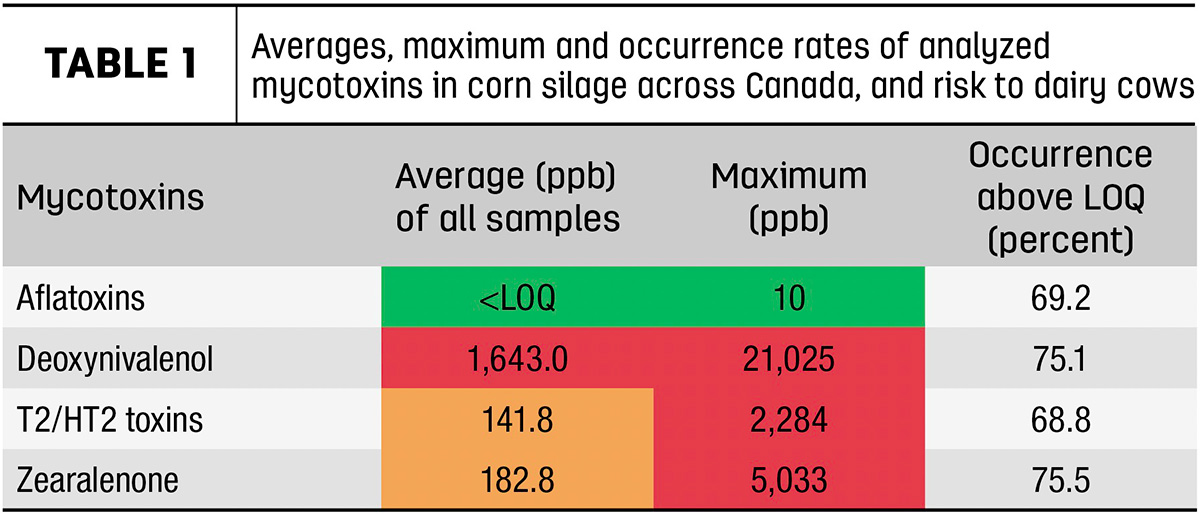
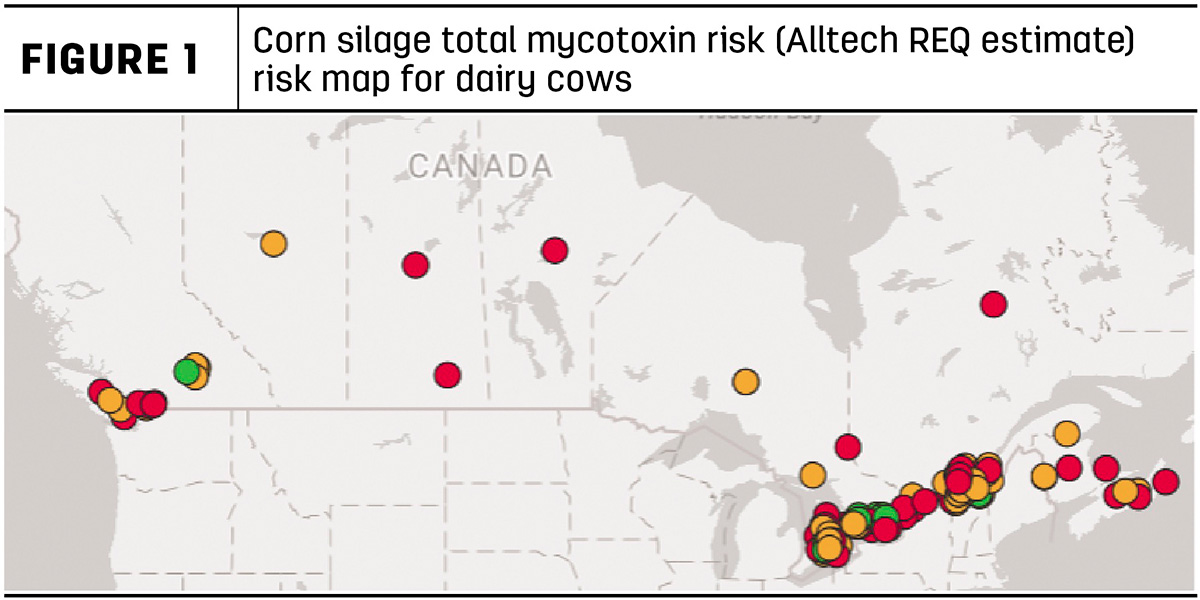
Corn silage is an important commodity to dairy nutrition, but it also continues to be a higher-risk ingredient when it comes to mycotoxins. Although mycotoxin type and content vary by region, fusarium mycotoxins remain a constant challenge (Table 1). In British Columbia, T2-HT2 was most frequently detected and provided more risk, as in previous harvest analyses. Ontario had the highest potential for all three fusarium mycotoxins, with occurrence rates at 73% to 85% and potential for high concentrations (DON maximum up to 21 ppm). Quebec had the highest occurrence of ZEA, followed by DON. In contrast, the Maritimes had the highest occurrence of T2-HT2 toxins. Multi-contamination resulted in many moderate to higher-risk samples, although some did remain at low risk (Figure 1).
Other forages
Haylage samples were primarily collected in Ontario and Quebec. In Ontario, all three tested mycotoxins were detected at higher occurrence rates (80% to 93%) and averaged lower to moderate risk for dairy cows. By contrast, haylage samples from Quebec were dominated by the presence of ZEA (90%) at moderate to higher-risk levels.
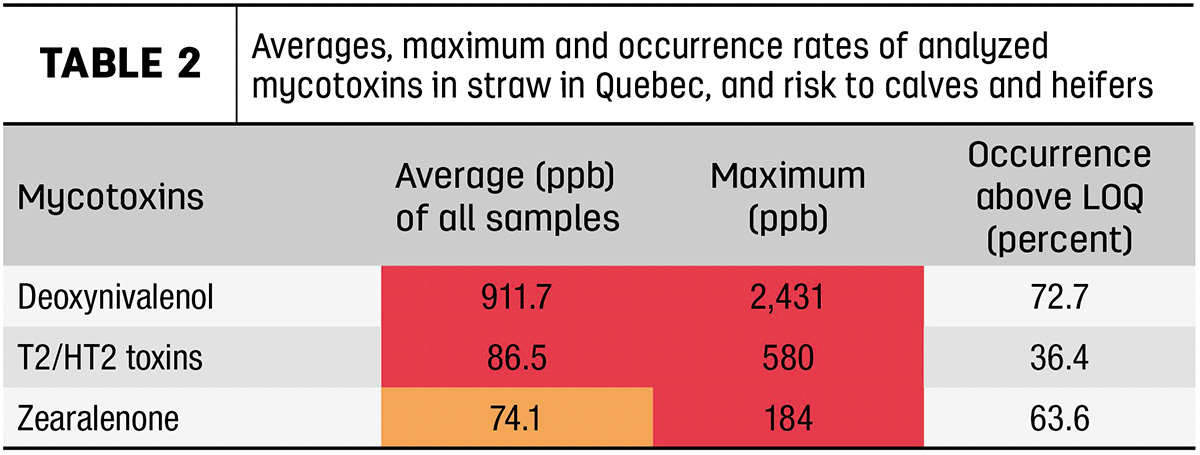
New for 2025, straw was analyzed as part of the harvest analysis program in Quebec (Table 2). Straw samples did show the presence of mycotoxins, with highest occurrence and risk coming from DON. Mycotoxin contamination in straw is significant, as it may play a greater role in calf and heifer diets than other commodities do.
Grains
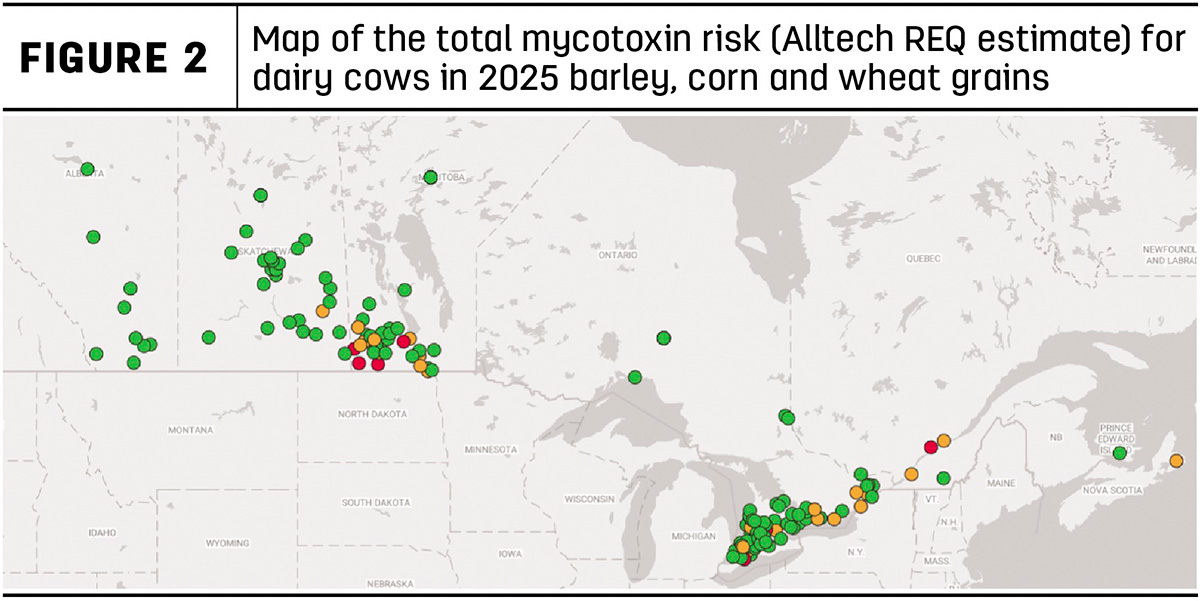
Analysis of over 800 samples of barley, corn and wheat grains showed varied mycotoxin risk. A notable higher-risk area was southern Manitoba, with mycotoxin challenges in barley and corn (Figure 2). The risk in these ingredients appeared to be greater than in previous years, with DON of primary concern, but some samples also contained high levels of T2-HT2 toxins and ZEA. Ontario contained some isolated higher-risk areas, with DON levels reaching 33.2 ppm in corn grain and a similar mycotoxin profile to the 2024 harvest. Higher risk was also observed in Quebec grains, although fewer samples were collected in this province.
Summary
Mycotoxins are a constant challenge for the dairy industry, with potential to influence farm productivity and profitability. Even seemingly harmless levels of mycotoxins can have detrimental effects on animal health when they are consumed over time. Furthermore, the combination of multiple mycotoxins increases the total risk to the animal. As we move forward, proactive monitoring and implementing targeted strategies remain crucial for safeguarding animal health and optimizing productivity.
For a deeper dive into results by province, view a copy of the harvest analysis report online.