Fall has arrived, meaning football teams are back on the field. Practices are broken out by position groups. The quarterbacks and receivers working on their routes. Linemen learning blocking schemes. Linebackers going over blitzes and the defensive backs reviewing coverages. In order to have a winning season, each position has to learn their responsibilities and execute them properly. When this happens correctly, the team accomplishes the goals it sets.

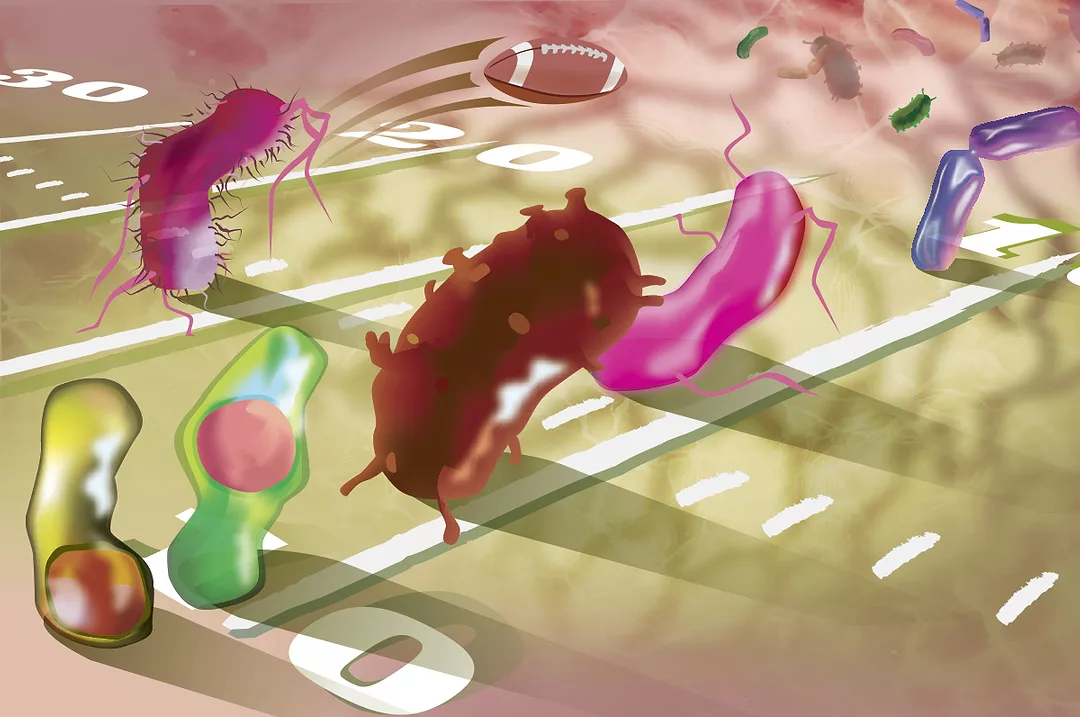
Microbial football
We often don’t realize that, like the football team, the microbes in the rumen have their own “positions” and responsibilities. Millions of bacteria, protozoa and yeast work together to break down feedstuffs and produce the energy the cow needs to function. Certain strains of microbes will break down the cell wall; others will consume the starches. “Safety” bacteria are even present to consume lactic acid in an effort to prevent the pH of the rumen from dropping below a safe level which would allow the opposition to run unstopped. The success of the ruminant digestive system is dependent on each microbial team member performing its function.
Defense
Bacteria that break down the feedstuffs and produce volatile fatty acids – used by the cow for energy – can be thought of as the offense in the cow. But just as important as the offense is the defense, which protects the cow from entering a state it can’t recover from. Diets that are high in non-structural carbohydrates like grains can be fermented much more quickly than those with high levels of fiber. As volatile fatty acids accumulate in the rumen, the pH begins to drop. With this drop in pH, new players that do better in more acidic environments enter the game. These bacteria such as Strep. bovis produce lactic acid, which further drops the pH of the rumen.
The primary defense to tackle this drop in pH is rumination. Cows chewing their cud produce copious amounts of bicarbonate. As the bicarbonate enters the rumen, it neutralizes the buildup of acid (think of the third-grade science experiment where baking soda and vinegar were mixed to produce gas and water). But if the cow’s diet doesn’t have adequate roughage, the secondary defense against this drop in pH are other bacteria that can consume the lactic acid.
Megasphaera elsdenii into the game
As diets increase in energy, typical of high-lactating cow rations, the amount of roughage is often decreased compared to lower-energy diets such as those found in the dry pen. With a lower roughage, more digestible diet, there may be less cud chewing, decreasing saliva production. Fortunately, there are bacteria in the rumen such as Megasphaera elsdenii that are designed to act as the safety in this situation. Unfortunately, unlike safeties in football which are typically some of the fastest players on the field, M. elsdenii is very slow to replicate. This slow response leaves cows susceptible to subacute ruminal acidosis (SARA), as it takes substantial time for the protective levels of this bacterium to accumulate in the rumen. The effects of SARA can be devastating to a transition cow, making her more susceptible to many other metabolic disorders such as ketosis and displaced abomasum, potentially sacking the cow’s chance for a successful lactation just as it gets going.
A winning play
Traditionally, rations for dairy cows have moved from a high-forage, low-energy dry cow diet increasing in energy through the close-up and fresh cow pens to a high-energy lactating cow diet. Historically, cows have been faced with increasing the energy levels too rapidly, leading to potential SARA, or stepping up the diet too slowly, exacerbating the already existing negative energy balance and increasing the risk of ketosis. A complicating consequence of a high-fiber diet is a loss of absorptive capacity of the rumen. Decreasing the cow’s ability to absorb nutrients from the rumen increases the risk of negative energy balance to early-lactation cows.
Direct-fed microbials have gained greater utilization in an effort to get the correct players into the ball game. Many of the products commercially available contain differing strains of lactobacillus. One of the proposed mechanisms of action of these products is to produce low quantities of lactic acid in the rumen, telling the cow to get the right players into the game before more proficient producers of lactic acid show up. Newer production techniques have now allowed the production of the actual target bacteria, M. elsdenii, to be commercially available to administer to transition cows. By providing cows with the bacteria that controls lactic acid in the rumen, producers are able to provide more energy to the cow (preventing ketosis) without creating an acidic environment which leads to acidosis and other off-feed events.
Just as a football coach wins by putting the right players into the game at the right time, dairy producers can help cows win by getting the right bacteria into the rumen.