Laura Hernandez would not be where she is today if it was not for the support or guidance of her parents. They always told her to never give up and believe in what she can accomplish. Hernandez was consistently reminded that if you work hard, you can make it happen.
“My parents always told me I should believe in myself and keep trying,” Hernandez says. “My dad was always the one to say, ‘If you work hard, you can accomplish whatever you want.’”
Hernandez credits her parents for instilling in her a strong work ethic and drive. She also holds on to a piece of advice from her grandfather that stayed with her even when times were tough: to get as much education as possible.
“Resilience is what they imparted on me,” Hernandez says. “Being a scientist, there is a lot of rejection. You must be able to be resilient to power through those things and learn not to take them personally.”
Learning that mindset from a young age helped Hernandez to keep going after setbacks. She has learned to take criticism constructively and apply new ideas to whatever project she is working on. It is a lesson she regularly shares with her students so they can learn from it as well.
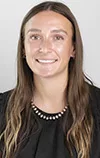
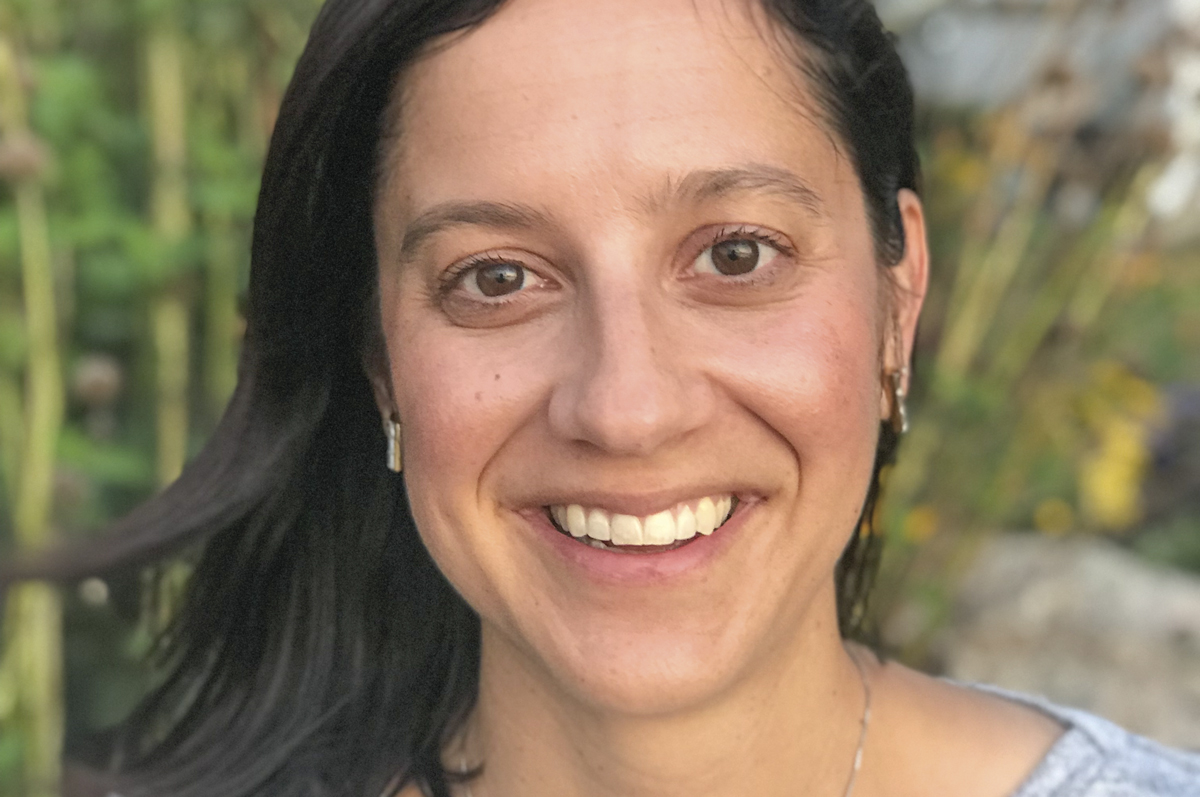 Laura Hernandez smiles in her professional headshot photo. Image provided by Laura Hernandez.
“Developing resilience and knowing others are not attacking you by giving you feedback is a really hard thing to do,” Hernandez says.
Developing resilience has helped Hernandez accomplish achievements she never thought would happen. Outside of teaching and mentoring graduate students, she likes to write. Recently, she was appointed as the next editor in chief of the Journal of Dairy Science, becoming the first woman to hold the position.
“I really enjoyed being a section editor, so that is what intrigued me about the possibility,” Hernandez says. “I was really shocked when they told me they were going to hire me, but I was pleasantly surprised. I am very excited.”
Seeing the end product of her writing is one of Hernandez’s favorite parts about writing. She loves to go back and read her students' writing and help with the editing process.
“I have my own style of writing,” Hernandez says. “So it is nice to read papers and see how different people put their ideas together and how they articulate their findings.”
Hernandez has created a successful life for herself, and part of that is because she took the advice of people around her. She never missed an opportunity to learn more. Hernandez’s doctorate adviser told her she should do post-doc because he saw a lot in her and knew she could be successful.
“That was the best career advice I was ever given,” Hernandez says. “It is the best advice I ever took because it got me here and I know it was the right decision.”
Hernandez grew up in El Paso, Texas, as a city kid with a love for animals. That passion led her to pursue a degree in animal science during college. Hernandez started her undergrad at Iowa State University on a swimming scholarship, but transferred after an injury. Hernandez completed her bachelor’s degree at New Mexico State University, where she also earned her master’s degree.
“I did my master’s degree at New Mexico State working with sheep and reproductive losses due to toxic weed consumption,” Hernandez says. “That was when I really learned I loved science, and I liked teaching and working in the lab. My master’s adviser encouraged me to go on to get a Ph.D.”
Hernandez took the advice from her adviser and attended the University of Arizona to get her doctoral degree in the nutritional biochemistry program. After completing that program, Hernandez went to the University of Cincinnati to do her post-doc in their medical school.
“I was still working with a mammary gland biologist but doing much more biomedical type work,” Hernandez says. “I worked with rodents and humans and really dove into the physiology and the molecular biology of lactation and the development of the mammary gland.”
The first exposure Hernandez had to the dairy industry was not until attending graduate school at the University of Arizona. It was never in her plan to work with dairy animals, but she ended up finding a fascination for how dairy cows work and wanted to learn more.
“I did not really know what science was in the way that I do science now as a researcher,” Hernandez says. “Grad school was really where I first fell in love with how amazing they are from a standpoint of the stress on their body while lactating and trying to maintain their metabolism and their hormones.”
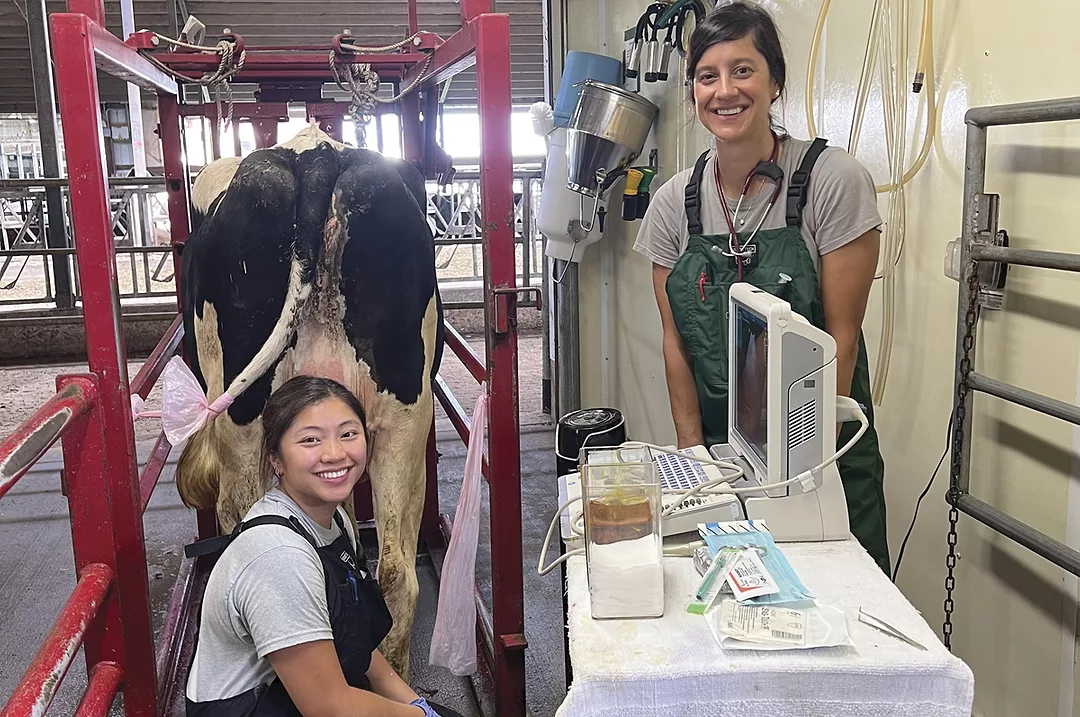
After completing graduate school, Hernandez saw that a lactation biology position opened at the University of Wisconsin – Madison, which is where she is today. At this job, Hernandez is a writer for manuscripts and grants, teaches undergraduate student classes, attends weekly meetings and works with graduate students during the school year.
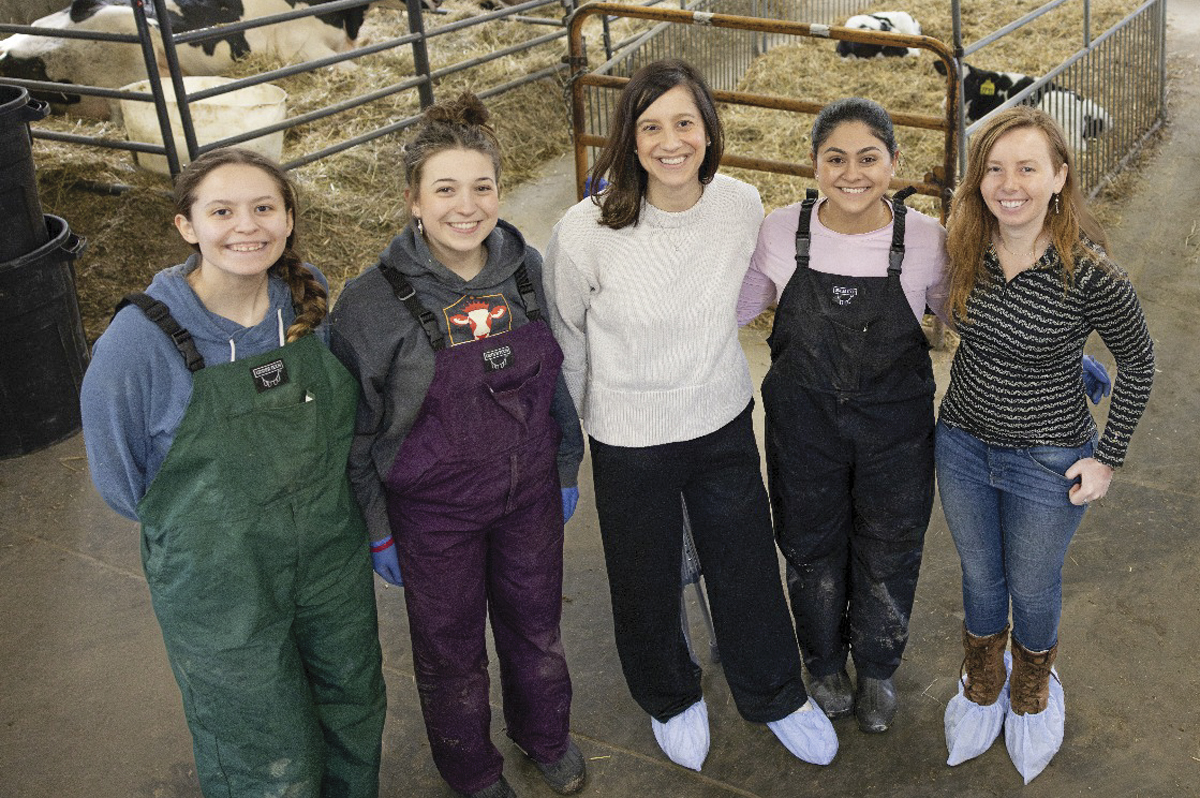
Laura Hernandez working with students in the barn. (Left to right) Leora Lewandowski, undergrad; Brianna Meyer, undergrad; Laura Hernandez; Natalia Teixeira, graduate program; and Sarah Adcock, collaborator and assistant professor – animal welfare. Image provided by Laura Hernandez.
Hernandez loves the flexibility of her job and how it can be so versatile. Her position allows her to explore various paths – whether it’s taking on administrative duties, focusing on research or dedicating more time to teaching. Her favorite part of the job is mentoring graduate students and helping with research projects. In addition, she has taken on the role of graduate program director.
“I stay in academia because the best part of my day is working through questions with my graduate students,” Hernandez says. “From doing the next experiment when we find something interesting out that was unexpected to watching them grow and finish their degrees, and seeing what happens from beginning to the end.”
Aside from Hernandez’s career, she has many other traits that define her. She loves to wake up early to fit exercise into her busy schedule.
“I am a super early riser,” Hernandez says. “At 4 a.m., I exercise and work early in the morning. A lot of people think I am kind of crazy for that, but I was a swimmer, so I was programmed that way.”
Family outings to different sporting events is another activity she loves to do. Being a collegiate athlete, she has brought this love to the rest of her family.
“We love to go to major league sporting events, whether it is football, baseball or any other sport,” Hernandez says. “We like to do that as a family. My kids love sports, so doing that with them is always a lot of fun.”
Not only did Hernandez create a successful career life for herself, but her personal life as well.
“Having a family and marrying my husband, who has always been super supportive of me, has been really helpful along the way,” Hernandez says.
Hernandez wants people to walk away from her story knowing that if you can develop resilience, you can do anything.
“If you put your mind to it, then you can get there,” Hernandez says.
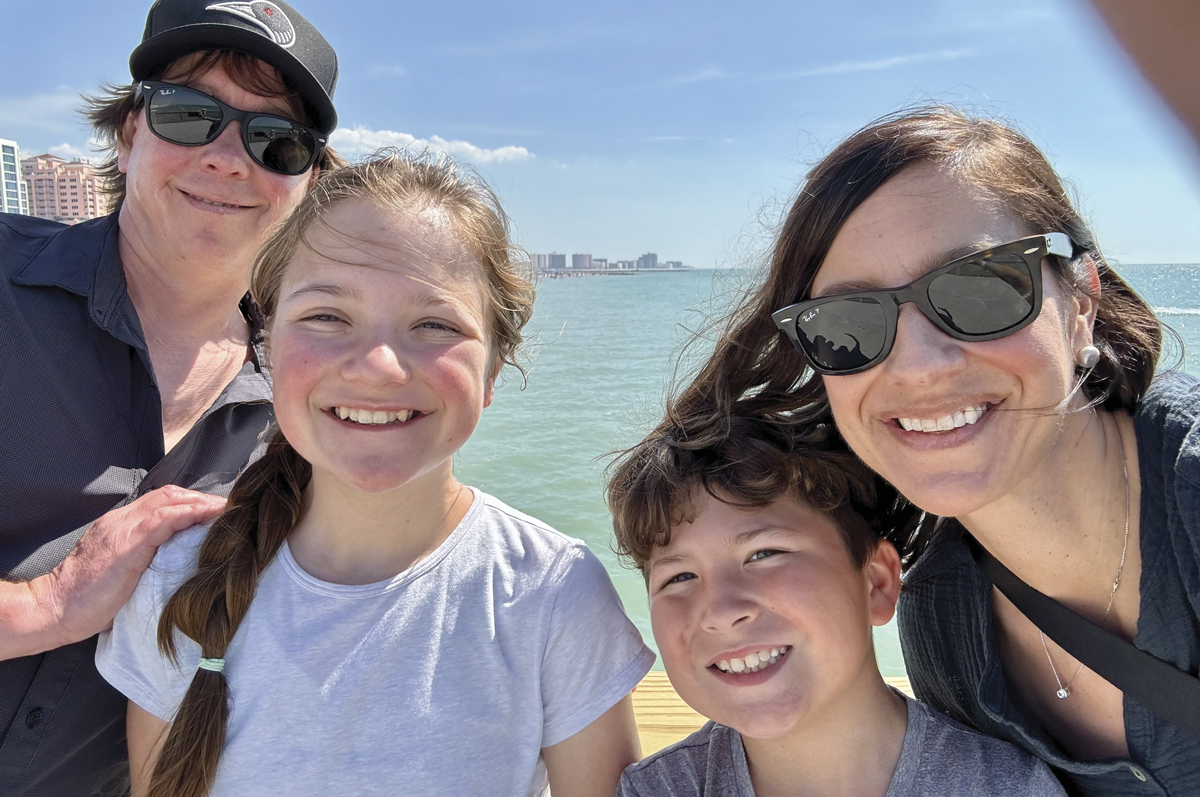 Laura poses with her family (left to right): her husband, Brandon, daughter Zoe and son Max. Image provided by Laura Hernandez.