Picture the following scenario: You arrive at the barn to work but you feel tired. Maybe it is just another busy week at the farm, or you haven’t had the chance to take a break. Later in the day, you look at your smartwatch, and it says you haven’t slept well over the last few days. Still, you ignore the data and move on with your day because there’s not much you can do right now; your cows need you.


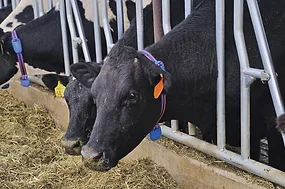
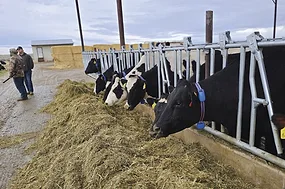
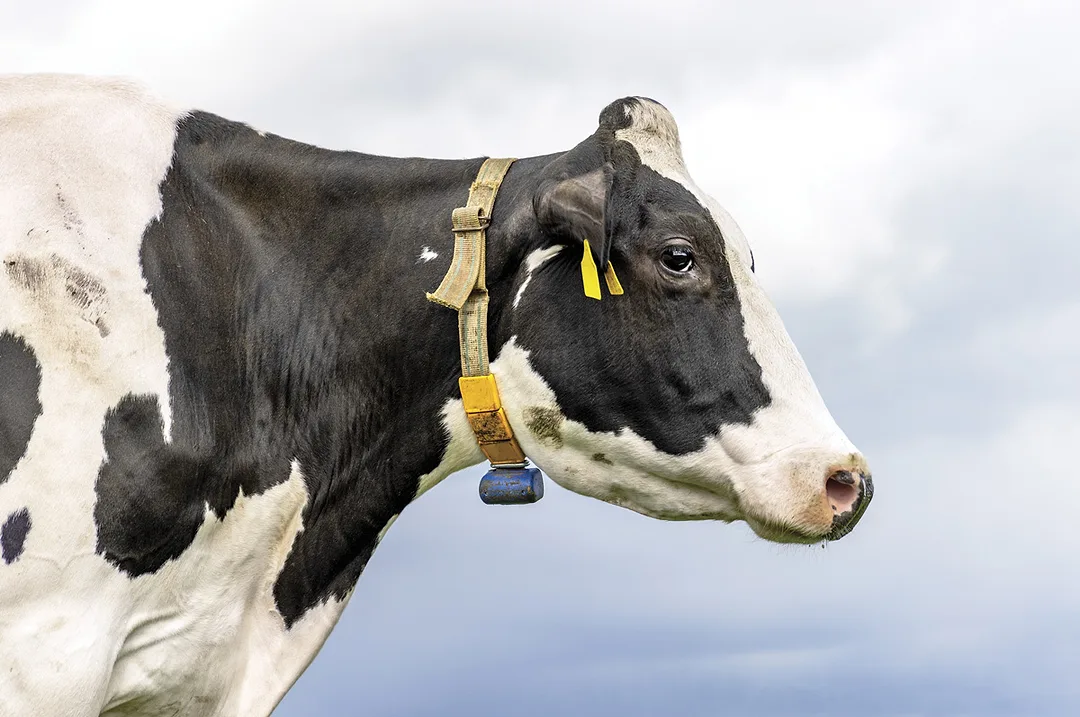
Similarly, today’s cows are monitored with wearable technologies like collars, eartags and rumen boluses. They generate valuable information such as activity or time spent eating or ruminating. The technology creates a baseline of individual and herd patterns. Any deviations from these patterns generate an alert for farm staff. These deviations in behavior or alerts can have different meanings depending on what is being measured, the production stage of the cow and farm management practices. You are probably familiar with breeding cows based on a high activity alert. Very straightforward, right? However, when you come across a list of cows with alerts such as low rumination, it might be a bit more complex. You check the profile of the cows, confirm that their rumination has indeed decreased and then ask yourself, “OK, now what?”
Why does rumination matter?
The rumen is the cow’s largest and most unique digestive compartment. Inside, several microorganisms have a symbiotic relationship with the animal. The cow provides microorganisms a safe, warm environment inside the rumen and unlimited access to feed. In exchange, the microorganisms ferment feed, helping the cow digest forages, and produce volatile fatty acids (VFAs) that the cow uses as her primary energy source. During the rumination process, a cow regurgitates some of the partially digested feed that’s inside the rumen and rechews it, hence the term chewing the cud. This process has two main functions: reducing the particle size of the digesta and producing saliva.
Reducing the particle size of the digesta provides microorganisms with a greater surface area to attach and better ferment it, increasing its digestibility. Furthermore, this breakdown increases the passage rate from the rumen and reticulum to the omasum and abomasum. This process is important to maintaining healthy balance: Low passage rates can cause rumen to fill and reduce feed intake.
Dairy cows can produce more than 50 gallons of saliva per day, with nearly half produced during rumination. This “extra saliva” not only helps cud chewing and swallowing but also provides proteins and urea that serve as nutrients for rumen microorganisms. More importantly, saliva contains sodium bicarbonate and phosphates, which buffer the rumen and help maintain optimal pH levels (5.8 to 6.5). This is essential for microbial health and function, as dropping below ideal pH can lead to subacute ruminal acidosis (SARA). Prolonged low pH has been linked to shifts in the microbial population, leading to reduced capacity to properly digest feed (and therefore reduced intake), damage to the rumen epithelium and decreased milk, fat and protein production.
What affects rumination and what can we do about it?
Rumination is fundamental to feed digestibility and overall rumen health and can be influenced by many factors. Therefore, it is important to understand how these factors impact the process and determine appropriate intervention to prevent negative consequences.
Dairy cows usually spend seven to 10 hours per day ruminating. But before you open your dashboard to check your herd rumination times, keep in mind it varies greatly between herds and even between manufacturers of such technologies. Hence, when using the information to make management decisions, it is important to understand your herd’s patterns and the algorithm of the system you use. If you notice changes in the rumination patterns of an individual cow, a group of cows or even your whole herd, the first step is to investigate what might have caused those shifts. Among the factors affecting rumination time in dairy cows, the most common include diet composition, stress factors and diseases.
Forage inclusion and particle size are key dietary factors affecting rumination time. Higher forage levels and larger particle sizes increase rumination because the cow needs to spend more time ruminating to break down the fiber. Hence, diets with greater inclusions of concentrates or with small particle sizes normally decrease the time cows spend ruminating. Remember that managing diet particle size is also important to prevent cows from sorting. Therefore, if you notice changes in rumination times that affect the whole herd or a specific group of cows, it is important to check if there was a recent diet change, or if there were any issues with the diet being either over or under mixed in the wagon.
Environmental stressors such as heat stress, group changes, limited bunk space and prolonged time in headlocks also have a negative impact on rumination times:
- Heat-stressed cows have lower feed intake, spend more time panting and change their daily eating patterns.
- Group changes cause a disruption in the social hierarchy of the group, while limited bunk space and prolonged time in headlocks lead to higher competition. They all result in cows having a more aggressive eating behavior and potentially sorting more through the feed.
Disease is a major factor associated with low rumination. Research shows that cows might exhibit reduced rumination and activity up to five days before the clinical diagnosis of metabolic, digestive or infectious disorders. The magnitude of decreased rumination is also linked to how severe the case is. Therefore, if an individual animal shows reduced rumination and other previously discussed causes have been ruled out, it is a good idea to evaluate your cow, especially high-risk animals such as transition cows.
Solving and preventing the problem
When you identify animals experiencing drops in rumination, one of the goals should be to stabilize their rumen environment and prevent microbial imbalances. Common strategies are drenching the animals with rumen buffers or feeding probiotics to actively help the microbial population stabilize in the rumen. Although buffers may temporarily be effective in stabilizing rumen pH, drenching is labor-intensive and more stressful for the animal, while not reestablishing the microbial population. For example, research has shown that supplementing high-risk dairy cows with live microorganisms native to the rumen such as Megasphaera elsdenii can increase the rumen’s resilience to pH imbalances, minimizing the risk of recurring imbalances.
In summary, instead of ignoring those low rumination alerts like you might do with your own fitness tracker, understanding what may be causing them is key before taking action. If you receive alerts on your own fitness tracker, you may take action by investing in a better pillow or putting your phone down earlier. Similarly, establishing management practices to support individual animals and prevent rumination drops on herd and group levels can make a big difference.