If you look back at the history of dairy facilities, you'll notice that in the 1970s and early 1980s, many tiestall barns were designed with power ventilation. However, due to rising energy costs and the emergence of wider freestall dairy designs, natural ventilation became more popular and has remained the preferred system in the dairy industry for the past 40-plus years.

Today, with the introduction of ultra-wide freestall barns, power ventilation systems are once again being used in new dairy builds. These systems can be designed for year-round use or in combination with natural ventilation to provide additional cooling in hot weather.
This brings us to a comparison of natural versus power ventilation systems – and the pros and cons of each – when planning your new dairy barn. The key point to remember is that when properly designed, both systems can create a healthy environment for both you and your cows.
Natural ventilation
The primary advantage of natural ventilation has always been operating cost. Even automated systems with electric drive units consume far less electricity than running multiple fan motors. Another benefit is that during a power failure, your sidewall curtains or panels will still allow airflow through the barn. Most systems also have manual overrides to adjust the sidewall openings if outdoor temperatures change significantly during an extended outage. This eliminates the need for large standby generators, which are necessary to keep power ventilation systems running in such situations.
In winter, minimum ventilation is typically provided through ridge openings or chimneys – no fans required. Natural ventilation systems also work well in non-insulated, cold-structure buildings like fabric barns, whereas power systems are generally designed for insulated structures.
Depending on your local climate, a few interior circulation fans can be added to enhance summer airflow when natural wind is absent. Some fan types also offer misting or sprinkler cooling. Even with circulation fans, these systems operate quietly, creating a calmer environment inside the barn.
The open sidewalls in natural ventilation allow more natural light into the barn, improving cow comfort. Advanced control systems can include light sensors that dim interior lights to match outdoor light levels, producing what is known as long-day lighting, which some studies show benefits herd health and production. Improved light levels have also been linked to better behavioural patterns and increased feeding activity among dairy cows.
For youngstock, natural ventilation can replicate a cold-housing environment similar to hutches, but with the added convenience of a contained structure for easier care and feeding. This type of setup can also simplify chores such as feeding, bedding and health checks by bringing young calves indoors while still preserving the benefits of cold housing.
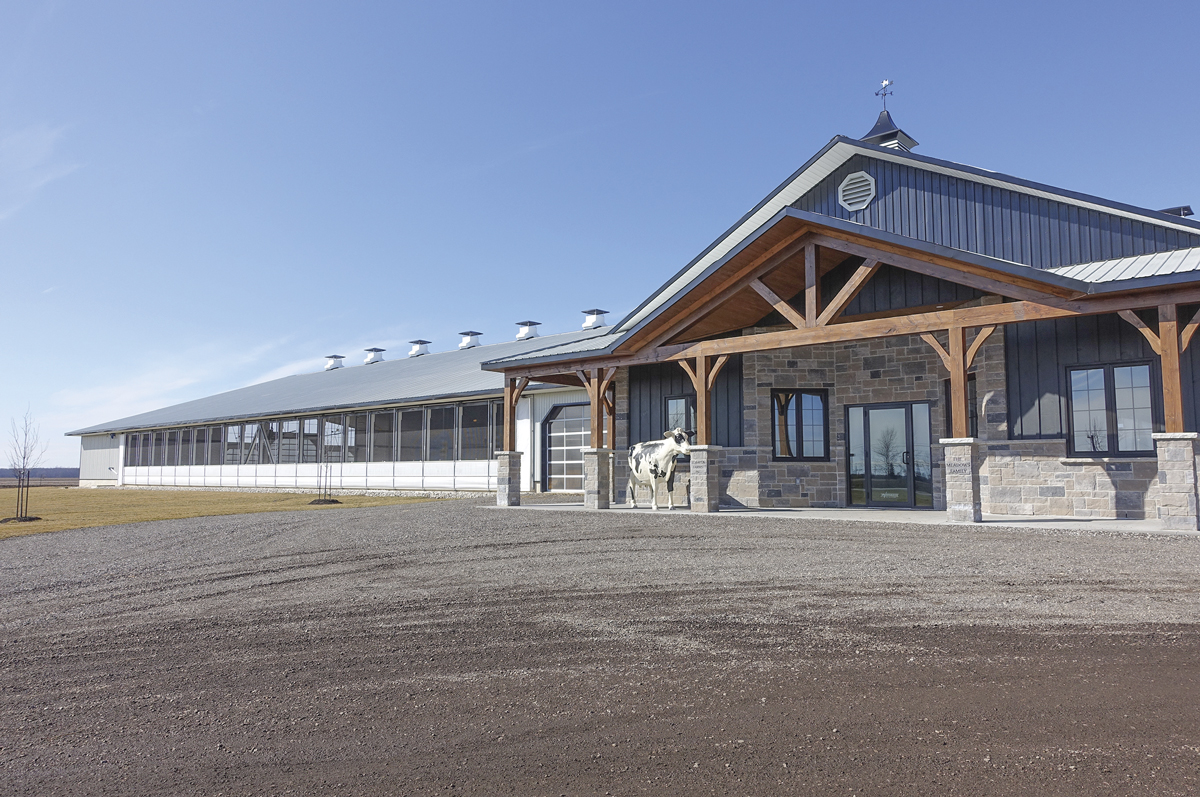
Natural ventilation system using sidewall curtains and winter ventilation chimneys. Courtesy image.
Power ventilation
A well-designed power ventilation system is ideal for ultra-wide freestall barns, where natural ventilation becomes ineffective beyond 150 feet in width. Power systems with automated fan staging and fresh air intakes provide tighter temperature control than natural systems, helping to maintain a more consistent environment throughout the day and across all seasons.
In barns with ceilings and attic space, intake air can be drawn from the attic, where it is already tempered. Ceiling inlets then help direct airflow in a pattern that avoids creating drafts on the cows. Today's control systems can incorporate multiple indoor and outdoor temperature sensors, allowing precise control, which is especially valuable during spring and fall when outdoor temperatures can swing dramatically within a day.
Power ventilation also ensures consistent air exchange, helping to remove humidity and airborne contaminants. It can deliver high-velocity cooling on days when there is little or no natural wind. In the newer, ultra-wide dairy facilities – some over 500 feet wide – crossflow power ventilation (LPCV) is often the only viable option.
These systems may include interior circulation fans or drop-down baffles to direct air onto the cows for effective cooling. Depending on regional climate, they can also be designed to incorporate misting or evaporative cooling pad systems. Site layout and existing structures have less impact on power ventilation, giving you greater flexibility to position exhaust fans in a way that directs contaminated air away from high-traffic zones, livestock areas or other parts of your property where it could negatively affect your working environment.
Power systems can also integrate supplemental heating in calf housing areas, ensuring adequate ventilation and comfort during cold weather. This ability to combine ventilation and heating makes power systems particularly well-suited to facilities in colder climates, or for barns that house animals in more vulnerable stages of growth or recovery.
Conclusion
In summary, when choosing between natural and power ventilation, prioritize the benefits most important to your operation. Consider factors like barn width, insulation, utility costs and your local climate. Both systems – when properly designed – can provide the right environment for your herd and give you flexibility in choosing your barn’s layout and structure.
It is also important to consider long-term operational efficiency, animal comfort and how each system aligns with your farm’s management style. While natural systems may offer lower energy costs and simpler maintenance, power ventilation can provide more precise environmental control and adaptability for complex barn designs.
As always, it is wise to consult with a ventilation specialist experienced in livestock environments to ensure you are making the best choice for your new facility. Their insight into airflow dynamics, system design and environmental controls can help you make informed decisions that improve herd health, boost productivity and support your operation for years to come.
In the end, there is no one-size-fits-all solution – only the solution that fits your dairy best.