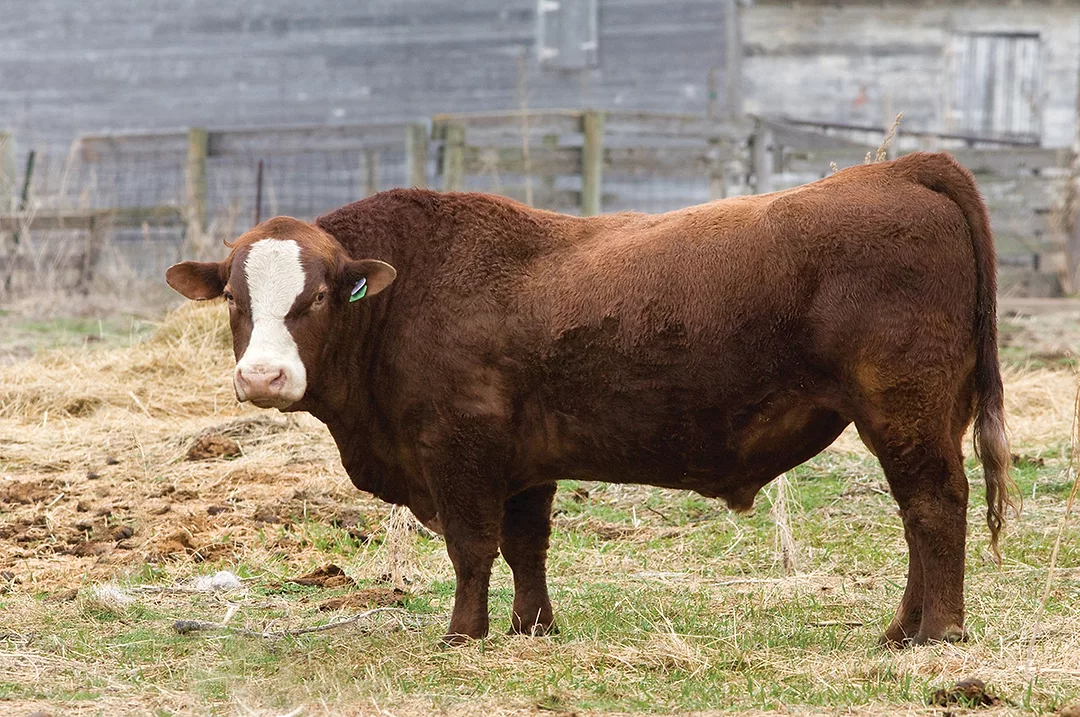
Composite-breed cattle are not a new concept. Breeders, genetics companies and researchers have been developing and exploring the benefits for decades now. Composite breeds of cattle are built on the concept of breed complementarity – combining the desirable characteristics of two or more breeds of cattle in a way that simultaneously masks or lessens each breed’s weaknesses.

By definition, a composite breed can be made up of any number of breeds of cattle. Historically, many composites contained several breeds; however, many modern composites have been pared down to a combination of only two complementary breeds. Ultimately, modern composite cattle deliver several benefits to the commercial cattleman.
Like partners in a marriage, a composite works best when the breeds involved complement each other. For example, several composites have leveraged the documented carcass quality of the Angus breed with the performance and cutability of continental breeds to build a breed with more ideal carcass composition. SimAngus (Simmental-Angus), Lim-Flex (Limousin-Angus) and Balancer (Gelbvieh-Angus) are all examples of this concept.
When it comes to creating environmentally adapted composite cattle, the adage “opposites attract” often applies. A good example of this is the creation of multiple composite breeds built from combining the heat and insect tolerance of the Brahman breed with any number of European breeds to create a tropically adapted line of cattle with better end-product and market acceptance. Think of breeds such as Santa Gertrudis (Brahman-Shorthorn), Beefmaster (Hereford, Shorthorn and Brahman) and Brangus (Brahman-Angus), just to name a few. In fact, the American Brahman is itself a composite of multiple Bos indicus breeds developed in the southern U.S.
Much like traditional crossbred or hybrid cattle, another advantage composites bring to the table is heterosis. Heterosis is particularly impactful to the traits most valuable to the commercial producer, such as fertility, longevity and health/survivability, but are also the hardest to select for through breeding alone. Most livestock producers recognize the value of hybrid vigor, but they often struggle with how to take advantage of it without implementing complex breeding programs with multiple breeds of bulls. Composites simplify that by allowing you to take advantage of hybrid vigor and complementarity at the same time, while only needing one breed of bull. While composites do not maximize heterosis, they are a straightforward way to reap a significant portion of its benefits. A simple two-breed composite with a 50-50 breed composition retains 50% of the potential heterosis that a true first-generation (F1) animal would express. As the number of breeds in the composite increases, so too does the percentage of retained heterosis.
The key difference between a composite and a crossbred animal is that the composite is the result of a committed breeding program built on multiple generations of crosses and back-crosses of the hybrid animals to create a population that is stabilized phenotypically and genetically. True first-generation crossbred animals, resulting from the mating of two purebred animals, tend to exhibit inconsistency in traits when mated back to one another, particularly if parent stock is of differing biological type (Bos indicus versus Bos taurus) or significantly different phenotype (frame size, coat color, muscle pattern, etc.). However, the multigenerational approach to creating composites ideally smooths out most of the ups and downs that can be experienced with first-generation crosses. Ultimately, this commitment to delivering a uniform genetic product is one of the key benefits of composite cattle to commercial cattlemen.
With all these positive attributes, an industry outsider might expect composite cattle to dominate the marketplace. However, the reality is that the genetic composition of the U.S. cow herd appears to have trended away from crossbreeding and composites toward a more straightbred cowherd. Much of this has been influenced by market demands for black-hided cattle and a justified focus on improving carcass quality in recent years. Angus cattle have transformed the color and quality of the U.S. cow herd and calf crop in recent decades because of their positive attributes and the effectiveness of Angus-branded marketing programs. Many of the most successful composites have incorporated Angus germplasm for this very reason.
That said, the innate benefits of many composites seem to be right for the times in the beef industry today. Common industry headlines around red meat yield, system and feed efficiency, cow longevity, and animal health are all potentially addressed with composite cattle. Red meat yield – or more appropriately, carcass fabrication yield – would seem to be most quickly addressed through breed complementarity. Composites of British and continental breed composition were built, at least in part, to address this very issue. Much of the opportunity for improved efficiency in our business today lies at the cow-calf production level, and much of this efficiency revolves around cow longevity and replacement rates. Composites, with their retained heterosis, are a simple way to improve cow fertility and productivity. Ultimately, trait complementarity and heterosis offered by composites could help tackle some of our more challenging opportunities.
Historically, a lack of genetic evaluations for composite cattle was a concern. Today, however, several composite breeds publish multiple economically relevant expected progeny differences (EPDs) and selection indexes generated from regular runs of genomically enhanced genetic evaluations. Multiple breed associations have embraced the value of composites and include them in their genetic evaluations. Additionally, there are multiple commercial genomic testing platforms tied to large populations of composite and crossbred animals that can be utilized to assist producers in female selection and other genetic decisions. Genetic selection tools are no longer missing from the tool chest of producers utilizing composite cattle.
Composite cattle are not the answer for everyone. Understanding your production environment and marketing outlet is the most important factor in deciding on the right genetics for your operation. Nonetheless, composite cattle can deliver several advantages to commercial cattle producers in varying production environments throughout the U.S. At the end of the day, the value of heterosis is hard to deny for the cow-calf producer, and composites are likely the simplest way to capture some of this value.