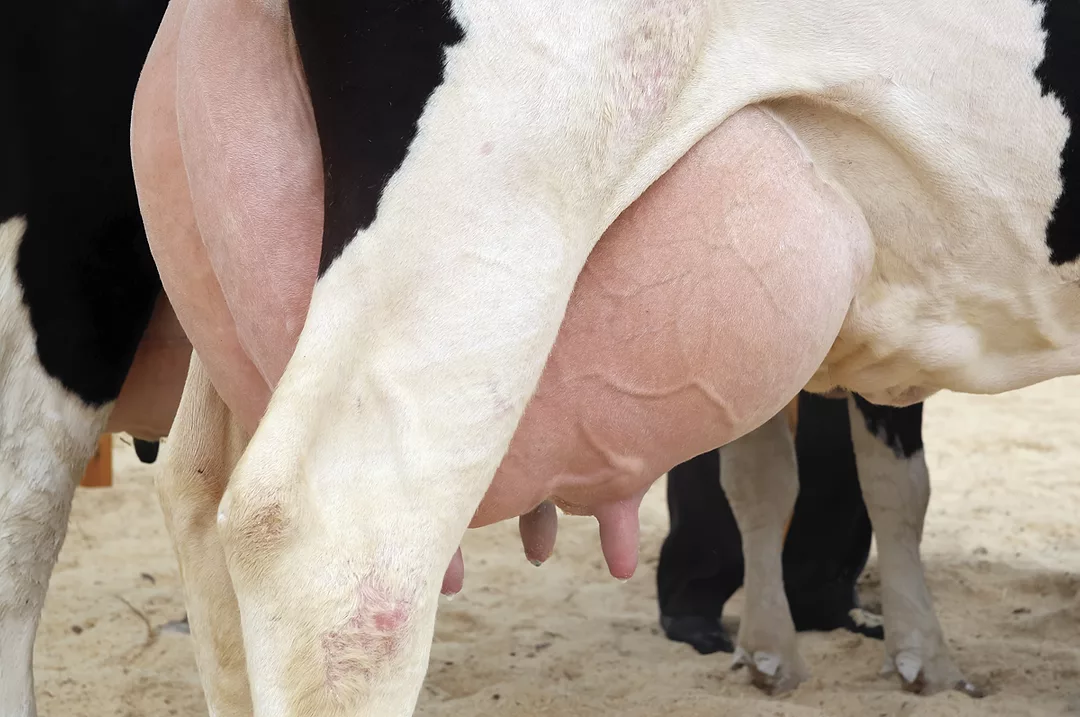
Udder edema is a common metabolic condition in dairy cows, particularly around the time of calving. Characterized by an excessive accumulation of lymphatic fluid in and around the interstitial spaces of the udder, it often presents as swelling, firmness and sometimes discomfort or impaired udder function.

While udder edema is often physiological and resolves spontaneously, this disorder can have negative effects on milk production, udder health and animal welfare. Recent studies show 66% of dairy cows have udder edema at least once in their lifetime. Understanding the signs, causes, risk factors and available strategies for the prevention and treatment of udder edema is essential for effective herd management.
Clinical signs and consequences
- Swelling and enlargement of the udder
- Skin tension and warmth
- Discomfort and sensitivity of the udder and teats
- In extreme cases, damage to the structural integrity of the udder and teats
Dairy cows with udder edema may exhibit negative behaviors such as difficulty milking, frequent stepping in the parlor, increased standing time and decreased lying time due to tenderness and swelling of udder tissues. In addition, udder edema increases the risk for secondary diseases, such as udder cleft dermatitis and mastitis. Not only can these factors negatively impact animal welfare, but they can also lead to economic impacts on farms (i.e., involuntary culling, decreased milk production and disease costs).
Causes and risk factors
Udder edema typically arises due to:
- Physiological changes and increased blood flow: The increased blood flow to the udder in preparation for lactation can result in increased hydrostatic pressure and capillary permeability, causing fluids to leak into the interstitial tissues. This is often seen in primiparous heifers, where the demand for blood during mammary gland development is greatest.
- High-sodium or high-potassium diets: These diets promote fluid retention. Improper supplementation of minerals, protein and anionic salts in the diet can increase the risk of edema.
- Genetic predisposition: This predisposition is especially evident in high-producing cows and first-calf heifers or cows with specific udder conformation traits such as weak ligaments.
- High body condition score (BCS) and lack of exercise: These factors impair lymphatic and venous return.
- Greater age at first calving and increased gestation length: This is likely attributed to overconditioned animals at the time of calving.
- Oxidative stress: Free radical oxygen species increase the risk of sodium and water retention in the body and injury to membrane integrity.
- Stressors: This can include pen movements, overcrowding and heat/cold stress.
Prevention strategies
Effective prevention begins with a focus on nutrition, management and genetics:
1. Dietary management
- Have a dietary program that adjusts for changes in dry matter intake (DMI) and any protein needs during the transition period, with monitored levels of anionic salts and minerals.
- Ensure that adequate levels of antioxidants such as vitamins E, A and C, carotenoids and flavonoids are in the diet.
- Consider providing a separate diet for late-gestation heifers that are at a greater risk of developing edema.
2. Monitoring and housing
- Monitor body condition scores and avoid overconditioning.
- Provide cows with ample space and reduce movements between pens.
- In areas with a greater risk of heat/cold stress, maintain adequate housing and corresponding support during extreme weather fluctuations.
3. Genetic selection
- Select for animals with improvement of udder depth, cleft and balance.
- Select for genetic lines with a lower incidence of udder edema or lower milk production.
4. Breeding
- Aim for proper gestation length and optimal age at first calving, depending on the breed of the animal.
Treatment options
While most cases are resolved on their own, targeted intervention may be needed in cases that become severe or persistent:
1. Supportive therapy
- Frequent milking can help reduce pressure and improve udder circulation.
- Hot and cold compresses or udder massages may relieve discomfort and stimulate lymphatic drainage.
- Ensure proper hydration and nutritional support.
- Supportive udder slings can be used temporarily to alleviate strain on the suspensory ligaments.
2. Diuretics
- In some cases, diuretics may be prescribed by a veterinarian to reduce fluid accumulation and swelling.
3. Anti-inflammatories
- Anti-inflammatory products may be used to reduce inflammation and pain, improving cow comfort and mobility. A nonsteroidal anti-inflammatory drug (NSAID) can be prescribed by a veterinarian. Phytogenic feed additives, such as those derived from plant sources, can be a promising alternative to conventional NSAIDs for dairy cows. They can provide anti-inflammatory, immunomodulatory, antimicrobial and antioxidant effects.
While udder edema is often a transient and manageable condition, proactive measures in feeding, management and monitoring can significantly reduce its occurrence and severity. Early recognition and supportive care will help to ensure cow comfort, promote udder health and maximize lactation potential. Partnering with a veterinarian, nutritionist and/or consultant will help tailor the best approach for your herd’s specific needs.
References omitted but are available upon request by sending an email to an editor.