In dairy-related news as we near the end of September 2025:

- USDA issues second economic assistance payment to farmers
- ADM, Alltech join together in new North American animal feed venture
- CoBank: Soaring demand for dairy foods fueled a U.S. butterfat boom
- Darigold names Amy Humphreys chief executive officer
- Skylar Diggins debuts puffer jacket made with milk
USDA issues second economic assistance payment to farmers
The USDA is issuing a second Emergency Commodity Assistance Program (ECAP) payment to eligible producers for the 2024 crop year. Of the authorized $10 billion in ECAP assistance, the USDA’s Farm Service Agency (FSA) has already provided over $8 billion in payments to eligible producers to mitigate the impacts of increased input costs and falling commodity prices.
“Initial ECAP payments were factored by 85 percent to ensure that total program payments did not exceed 10 billion dollars in available funding. Since additional funds remain, FSA is issuing a second payment,” said Deputy Undersecretary for Farm Production and Conservation Brooke Appleton. “As producers continue to face market volatility, these payments along with the entire suite of supplemental disaster assistance programs will help producers navigate market uncertainty, pay down debt for the 2024 crop year and secure financing for the next crop year.”
Payments will automatically be made to eligible producers with approved ECAP applications who received an initial payment. Any application approved after Sept. 25 will receive one lump sum payment. Authorized by the American Relief Act, 2025, these economic relief payments are based on planted and prevented planted crop acres for eligible commodities for the 2024 crop year.
For more information, producers can contact their local USDA Service Center.
ADM, Alltech join together in new North American animal feed venture
ADM, a global leader in innovative solutions from nature, and Alltech, a global leader in agriculture, announced the signing of a definitive agreement to launch a North American animal feed joint venture, bringing together decades of experience and unparalleled capabilities to create new advantages for customers.
Alltech will contribute its U.S.-based Hubbard Feeds and Canada-based Masterfeeds businesses, including 18 feed mills in the U.S and 15 in Canada, and ADM will contribute its 11 U.S. feed mills. The joint venture will be majority-owned by Alltech and governed by a board with equal representation from each parent company.
ADM and Alltech have a long-standing relationship, tracing back to ADM being Alltech’s first customer. The new venture will offer an opportunity to align their complementary North American feed strengths, including the expertise of their teams, extensive manufacturing capabilities, deep experience in nutrition science and well-recognized and respected existing product portfolios. The venture will be supported and strengthened by the parent companies’ leading-edge technology and R&D, broad logistical capabilities and connections across the broader ag and feed value chains.
Alltech will retain its Ridley Block Operations, Ridley Feed Ingredients and Alltech specialty ingredients, although these business units will be partners and suppliers to the joint venture. ADM’s Canadian locations will remain with ADM, as will its U.S. premix and additive businesses, though those capabilities and products will help supply the new company.
The companies expect to complete the transaction and formally launch the joint venture in the first quarter of 2026.
CoBank: Soaring demand for dairy foods fueled a U.S. butterfat boom
Consumer demand for products like cheese, butter and yogurt that rely on protein and butterfat content continues to drive dairy sales growth in the U.S. and abroad. Over the past decade, milk delivered to U.S. dairy processing plants has become more nutrient-dense with higher levels of the two key components to meet rising demand. However, the pace of growth in butterfat content has far exceeded protein, which creates challenges for U.S. cheddar and American-style cheesemakers that rely on a more balanced ratio of the two.
According to a new report from CoBank’s Knowledge Exchange, excessive butterfat levels can impact cheese quality. In the EU and New Zealand, the two largest dairy exporters, the protein-to-fat ratio has remained far steadier, averting the issues U.S. cheesemakers are facing.
“U.S. dairy producers did an exceptional job increasing butterfat levels in milk to meet demand,” said Corey Geiger, lead dairy economist at CoBank. “For 10 years, the market couldn’t supply enough of it, and now there’s an oversupply – it’s almost too much of a good thing. Cheesemakers strive for a protein-to-fat ratio near 0.80. Anything significantly lower than that can reduce cheese quality and compromise production yields.”
In recent years, butterfat percentages in U.S. milk have been increasing at twice the pace of protein. From 2000 to 2017, the protein-to-fat ratio held rather constant at 0.82 to 0.84. In the ensuing years, the ratio gradually slipped to 0.77. That is increasingly a concern for cheesemakers as more than one-half of the U.S. milk supply is destined for cheese production.
The disproportionate growth of butterfat in relation to protein in U.S. milk could put U.S. cheesemakers at a competitive disadvantage. Unlike America’s global competitors, domestic cheese processors face added costs for rebalancing their milk supplies, which reduces efficiency and could ultimately impact pricing at the farmgate.
In the U.S., multiple component pricing has incentivized butterfat and protein production. From 2000 to 2014, the protein price exceeded butterfat, resulting in rather equal growth between the two components. However, butterfat pay prices exceeded protein prices in eight of the past 10 years. That fueled the butterfat boom.
Cheese yield pricing could give farmers incentives to produce milk with a higher protein-to-fat ratio. Geiger said looking to the future, farmgate milk needs to have a protein-to-fat ratio more in line with how milk is utilized to make the entire industry more efficient.
Watch a video synopsis and read the report, While U.S. Leads Milk Component Growth, Butterfat May Be Growing Too Fast.
Darigold names Amy Humphreys chief executive officer
Darigold Inc., the processing and marketing arm of the Northwest Dairy Association (NDA) and one of the nation’s largest dairy producers, has named Amy Humphreys to the role of chief executive officer (CEO). Humphreys previously served as Darigold’s chief financial officer from 2015 to 2018 and will begin her new role on Oct. 1.
Humphreys succeeds Allan Huttema, who led the company through a pivotal period beginning in 2023 and will return to his Idaho dairy farm as an NDA member-owner.
Humphreys takes on the CEO role at Darigold as the company opens a new production facility in Pasco, Washington, and works to drive growth opportunities and efficiencies afforded by the new plant.
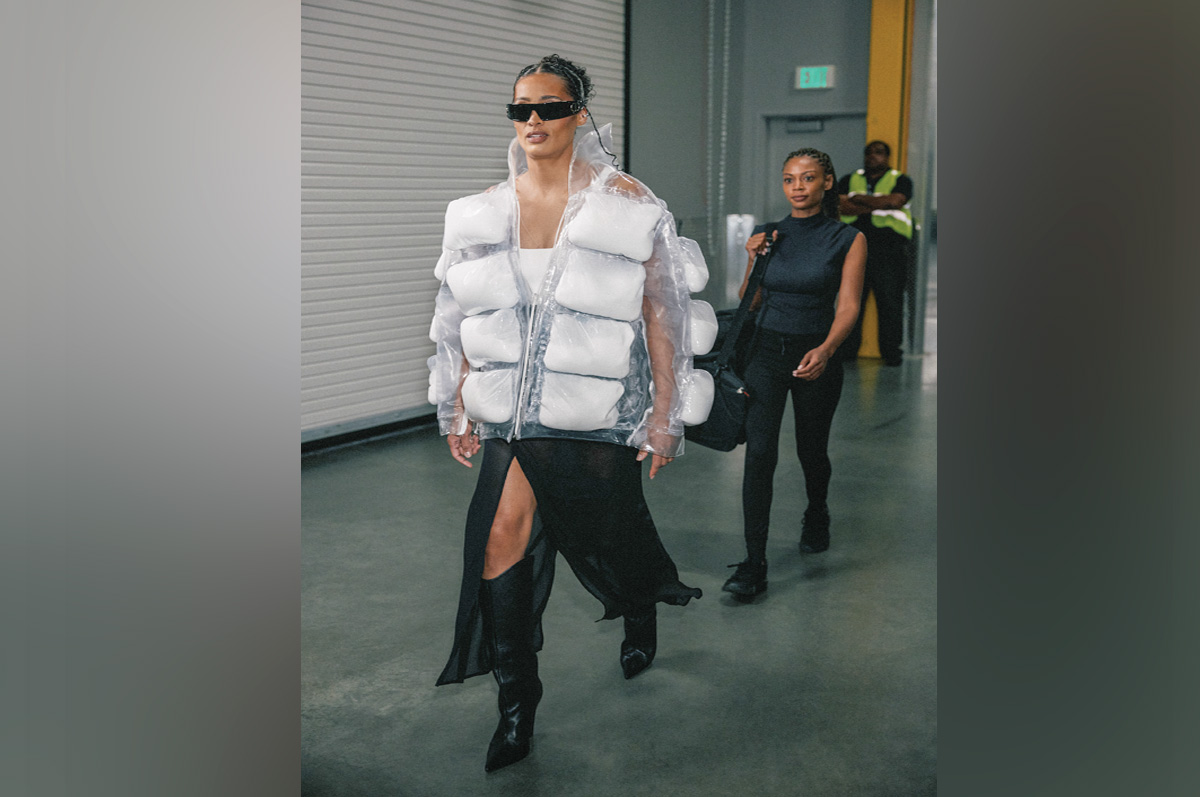
Seattle basketball star and style icon Skylar Diggins made her final entrance of the regular season in a one-of-a-kind protein puffer jacket, crafted with protein sourced from real milk. Courtesy image.
Skylar Diggins debuts puffer jacket made with milk
Earlier this month, Seattle basketball star and style icon Skylar Diggins made her final entrance of the regular season in a piece unlike anything seen before – a one-of-a-kind protein puffer jacket, crafted with an extraordinary 422 grams of protein sourced from real milk.
Milk has always been an essential in sports performance – delivering 8 grams of complete protein in every serving, along with electrolytes and nutrients that support muscle repair and recovery. The "protein puffer" turns an invisible advantage into a physical form, signaling what happens when the fuel behind performance becomes part of fashion culture.
Designed in partnership with Milk and Fonco Studios – a creative studio recognized for material experimentation, immersive design and cultural installations – the protein puffer represents a new chapter in the protein conversation. Fonco translated milk’s nutritional power into a wearable statement, pushing the boundaries of how performance can be visualized.
Styled by Sydnee Paige, the jacket helped channel Diggins’ focus and fuel heading into the final, and critical, last game of the regular season – where every ounce of performance counts.
“Protein is everywhere right now, but milk has always been the original source,” said Diggins. “It’s what I rely on every day for strength and recovery. Turning that into something I can wear takes that idea to another level – it’s performance in every sense.”
The protein puffer is one of one, created not for commerce but a moment in fashion culture.