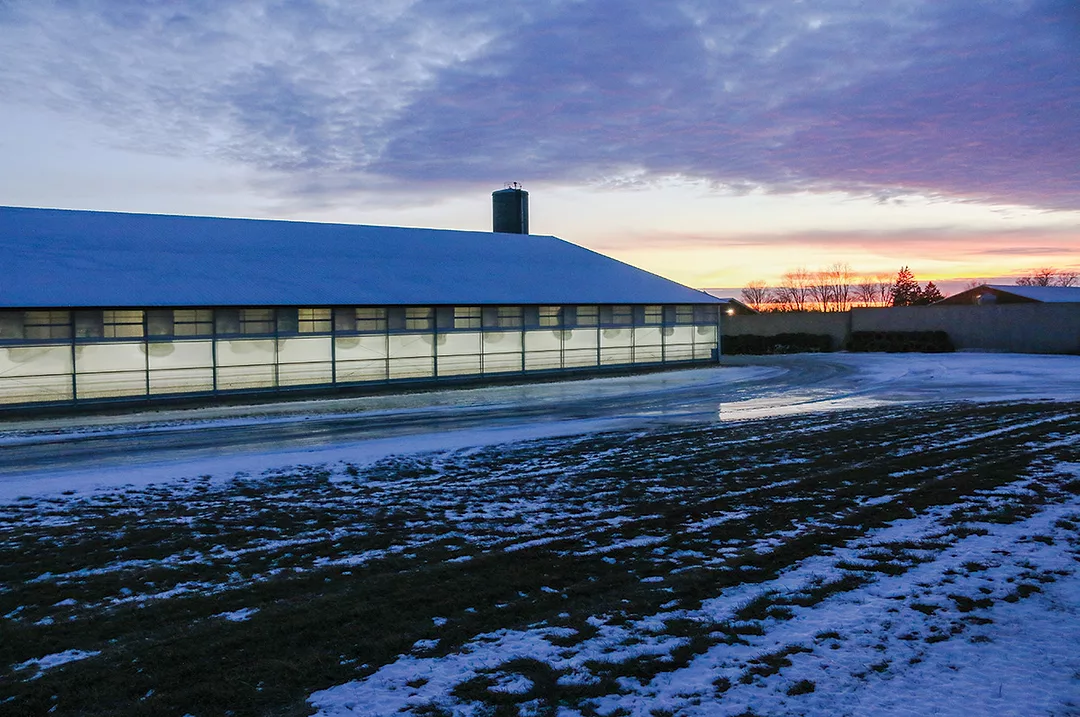
Every dairy manager knows the feeling: Things look sharp during the day, but when you walk the parlor at 2 a.m., something feels different. Not bad, but different. Prep routines get a little shorter. Dip coverage gets a little sloppier. Unit-on times creep higher. Equipment isn’t cleaned quite the same way. The cows could look slightly more on edge, and that tells you what your gut already knows: Protocol drift is almost always worse on the night shift.

This isn’t new, and it isn’t unique to one farm or region. Whether it’s a five-man double-50, a small flat barn or a rotary, night shifts consistently show the highest deviation from standard operating procedures (SOPs). But the real question is, why? And more importantly, what can we do about it?
The night shift has become a mystery on many dairies, but the truth is far simpler. When you understand the underlying human, environmental and operational challenges of nighttime work, the drift becomes predictable but fixable. The solution isn’t blame. It is clarity, communication, structure and leadership.
What follows is a practical and honest look at why the night shift struggles more than any other shift and how managers can build a night shift that performs just as well or better than day shifts.
What really happens at night: The unspoken truths
- Fatigue and low stimulation mean lower engagement – Human performance drops significantly after dark. Fatigue doesn’t just slow people down; it affects judgment, attention to detail and consistency. The parlor becomes louder, the pace slows, the mental stimulation fades and workers naturally cut corners without realizing it. Prep lag timing shortens, dip coverage declines and unit attachment becomes more rushed. These are not character flaws; they are predictable human responses to night work.
- Less oversight equals more shortcuts – Even the best night crews know one truth: Management isn’t watching as closely. The farm owner or herd manager is away for the night. The parlor leader may go home. The expectation might still be clear, but the accountability feels distant. Over time, a night shift version of SOPs forms that's slightly different, slightly relaxed and often passed down silently between employees.
- Communication gaps between day and night – This is one of the biggest drivers of drift. When protocols change, the day shift hears it immediately, often directly from a manager. Night shift hears it last, secondhand or not at all. Instead of being part of the conversation, they become recipients of secondhand information. Misunderstandings compound, and soon the night crew is following old habits while the day crew follows updated procedures.
- Staffing challenges and high turnover – Nearly every dairy uses the night shift as the starting point for new employees after initial onboarding. This means the newest, least trained, least confident and sometimes least fluent English-speaking workers carry the most responsibility for protocol adherence. Add turnover into the equation, and the drift becomes unavoidable without intentional structure.
- Environmental differences after dark – The environment changes at night in ways that management doesn’t always notice. Lighting is often dim or uneven, temperature swings are greater, cow flow changes because cows are naturally calmer or slower, feed push-ups are fewer or alley scraping may be less frequent. All of these impact how workers prep cows, how cows behave and even how the parlor feels to work in. Night shift isn’t worse; it’s simply operating under different conditions.
What protocol drift looks like when it starts
Experienced managers can spot the signs of night shift drift almost immediately:
- Prep lag times shorten or become inconsistent.
- Dip coverage is partial or too light.
- Unit-on time rises gradually.
- Bimodal milkings appear more frequently.
- More unit falloffs and/or kickoffs happen – without the sense of urgency to attach.
- Wash cycles aren’t started correctly.
- Fewer claws are properly cleaned.
The list can go on and on with the things that may seem off. These signs aren’t always catastrophic, but they accumulate and are typically the tip of the iceberg when it comes to other areas. Once drift settles in, reversing it becomes harder the longer it goes unaddressed.
What managers get wrong when trying to fix night shift drift
Before offering solutions, it is important to call out the mistakes many dairies themselves unintentionally make.
- Blaming the people instead of the system – If the night shift hears “do better” without real support, morale tanks, and protocol drift gets worse. Workers don’t intentionally shortcut; they respond to conditions.
- Assuming rules alone will hold – Posting a new SOP on the wall won’t fix behavior. Night shifts need coaching, visibility and accountability.
- Correcting behavior without fixing communication – If the night shift wasn’t told about changes clearly and directly, correcting them feels unfair.
- Not giving the night shift the same respect as the day shift – The night shift often feels invisible. That directly affects pride and performance.
- Underestimating environmental barriers – For example, if lighting is poor or airflow is uncomfortable, workers naturally move with less precision.
Understanding these mistakes helps build solutions that work.
How to solve night shift drift: Solutions that work
The goal isn’t to turn the night shift into the day shift; it is to give them the environment, expectations and support needed to succeed.
- Give the night shift direct access to management – Even simple changes can transform engagement. Consider a nightly WhatsApp group check-in, a weekly five-minute video message or maybe a weekly rotating leadership visit at 3 a.m. Night shift should hear updates directly from leadership, not through rumors.
- Use data to create ownership – Night shift workers respond well to objective feedback. Share night shift milk-flow graphs, unit-on-time comparisons or bimodal percentages. These are just a few examples of what can help keep milkers engaged. This isn’t about shame; it is about showing progress and building pride.
- Rotating strong day shift staff into nights – Even one experienced person on the night shift one night a week can raise the entire crew’s performance.
- Small morale boosts go a long way – Night shift often feels forgotten. Providing occasional hot food, a thank-you note, a visit from leadership and clean break rooms, maintained equally for nights and days, can lift spirits and reduce turnover, which stabilizes protocols.
- Short, clear SOP videos or in-person training – Night shift may learn best visually. Simple 30- to 60-second videos or in-person demonstrations on dip coverage, prep timing or equipment cleaning do more than a poster ever will.
- Create a night shift culture owner – Someone respected, stable and, ideally, bilingual. Not a supervisor but a person others follow. This role alone can reverse drift.
The payoff
A well-supported night shift produces cleaner cows, stronger milk letdown, better teat-end health, fewer equipment failures, a more confident crew, lower SCC and more consistent performance across all 24 hours. The night shift is not a mystery, nor a problem to fix. It is an opportunity. When managers understand the unique pressures and realities of night work and build the right support structure, the night shift becomes not the weak link, but one of the strongest.