From a nutritionist’s perspective, feed inventory is more than a count of tonnes; it’s the backbone of ration consistency, herd health and overall farm profitability. A well-managed inventory connects forage quality, animal numbers, ration design, commodity markets and on-farm feeding practices into one decision-making framework that keeps milk flowing and return over feed (ROF) stable.

Start with the basics: measure then calculate inventory on a dry matter (DM) basis. Determine the volume of your storage structure – such as bags, bunkers, piles, tower silos – and multiply by realistic DM densities (e.g., 192-288 kilograms DM per cubic metre) for bunkers, which represents how well packed the forage truly is) to estimate tonnage; then apply expected shrink to avoid overestimation.
Use practical, validated DM measuring methods like a Koster tester or near-infrared analysis, and increase DM checks in wet weather, since rainfall can significantly change silage moisture and throw off ration accuracy. Modern tools such as spreadsheets and calculators can connect your stored amounts to ration dry matter intake (DMI) and head counts.
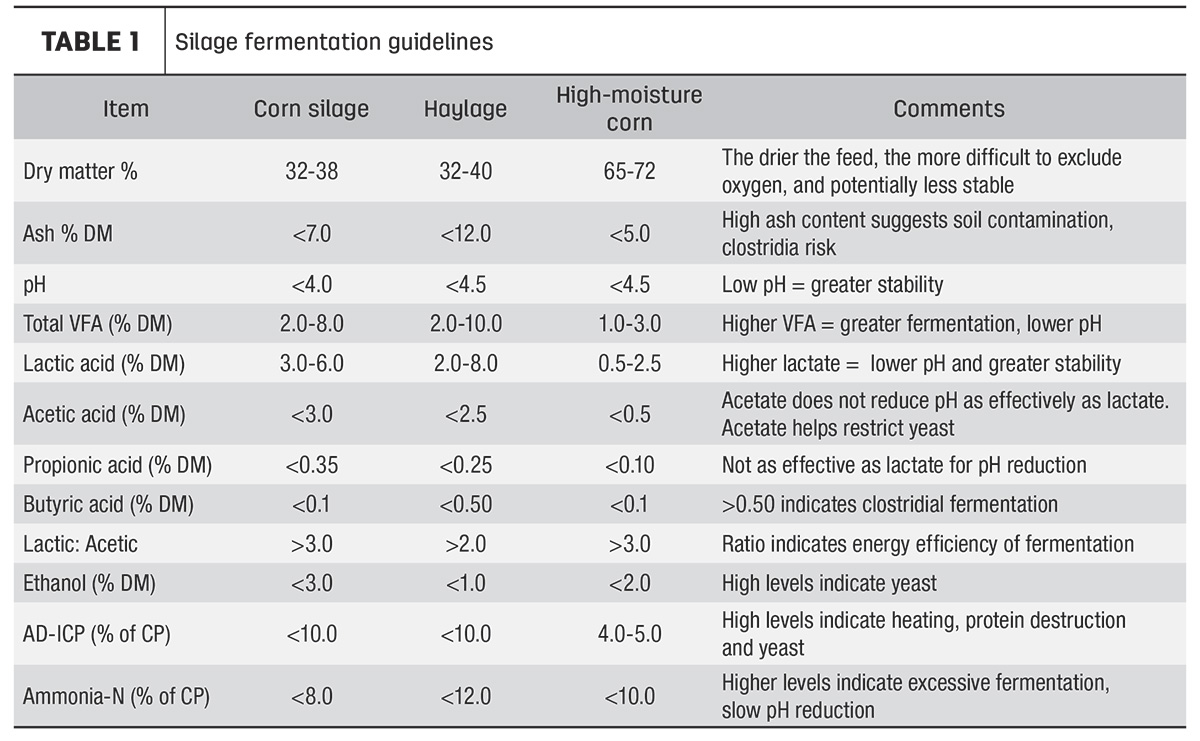
Read your forage analysis like a fermentation report card (Table 1). It provides insight to anticipate DM losses in suboptimal storage conditions and guides feed-out strategies to maximize forage utilization. Accurate and consistent sampling is critical for factoring shrink and spoilage risks into inventory planning.
Align herd size to match feeding capacity. Inventory should drive herd planning: combine lactating, dry and youngstock counts with projected DMI, feed utilization and harvest timelines. Make early adjustments to prevent spring shortages or to avoid forced sales when feed supplies exceed needs.
Link inventory to feed cost and commodity choices. Feed represents a major share of farm expenses, and price volatility requires budgeting and, when appropriate, forward contracting. Tracking ROF and margin alongside commodity economics helps decide when to substitute an ingredient or adjust formulation. Ration optimization models demonstrate how shifting ingredient prices reshape ration composition and costs.
Use CowSignals to validate your inventory plan. Observing behaviours such as sorting, feed refusals, rumen fill and overall eating behaviour provides real-time feedback on whether actual intake matches projections. Calculating accurate DMI based on milk yield, bodyweight and stage of lactation is essential. Underestimating DMI can lead to shortages, while overestimating inflates feed costs and shrink.
Management practices play a major role in bridging the gap between projections and reality. Frequent feed push-ups and timely clean-outs keeps feed accessible and reduces sorting, supporting consistent intake and minimizing waste.
Chop length is another key factor. Proper particle size promotes effective fibre intake and rumen health while reducing sorting and refusals that distort inventory calculations. Feeding frequency also influences inventory turnover. Increasing the number of feedings per day can stabilize rumen pH and improve feed efficiency, but it comes with added labour costs.
These management practices, often made for cow health and performance, directly affect inventory usage and should be factored into your planning.
Strategic forage inventory planning does more than prevent feed shortages; it safeguards rumen stability and overall cow health. When inventory is accurately projected, nutritionists can maintain consistent forage quality and fibre supply throughout the year. This consistency reduces abrupt ration changes, which are stressful for cows and can negatively impact performance.
Planning ahead also ensures that the high-quality forage is reserved for transition and fresh cows, where energy balance is most critical. These animals are under the greatest metabolic pressure, and providing them with top-quality forage supports smoother calving and better peak milk production.
Conversely, poor inventory planning often forces late-season reliance on lower-quality or alternative feeds. This shift can reduce digestibility, increase the need for concentrate and elevate the risk of metabolic challenges such as acidosis or ketosis. These issues not only compromise cow health but also erode profitability through lost production and higher feed cost.
Inventory planning is more than a logistical exercise. It is a proactive management strategy. In short, good inventory planning pays dividends in both animal health and farm profitability.