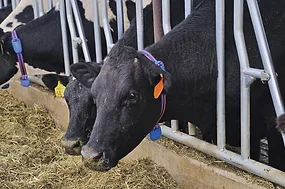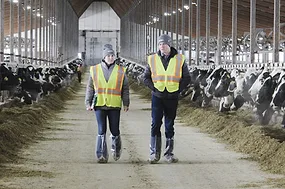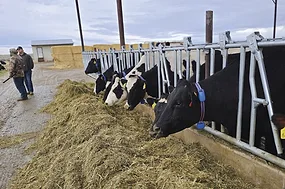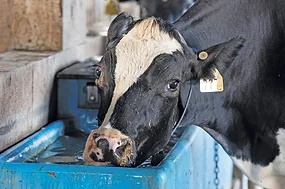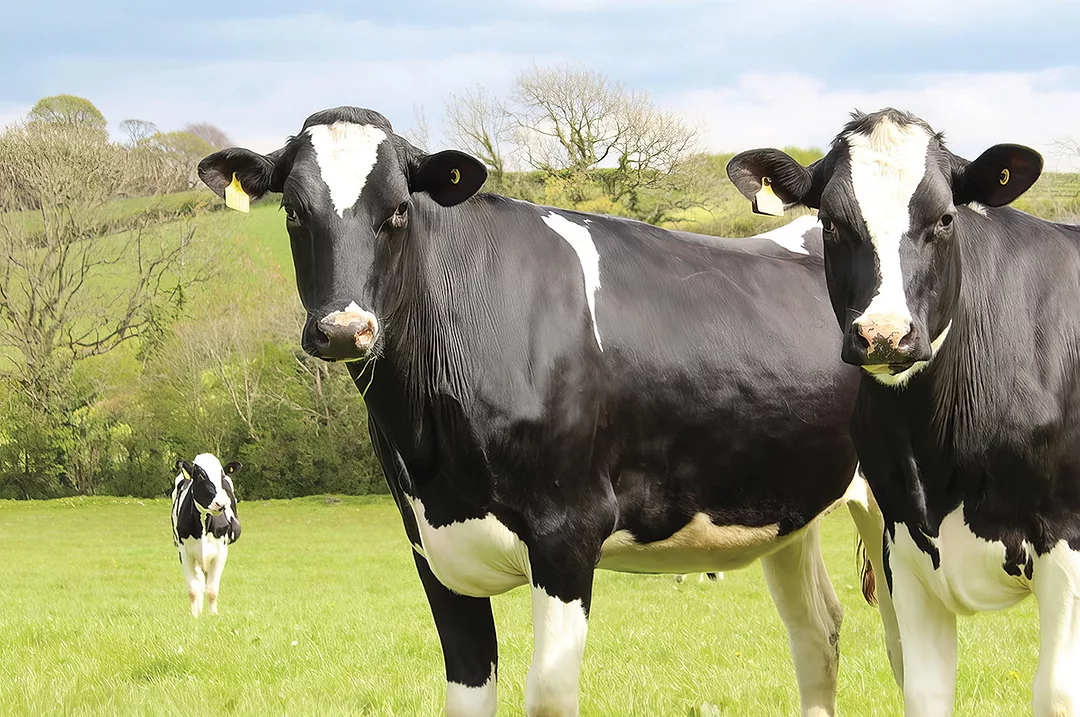
Is this the best dairy in the world? Judging by how long the cows remain in the herd, the answer may be yes. A 400-cow German Holstein dairy producing a 200,000-liter (454,000-pound) cow might sound like a statistical outlier. In this case, however, it is the result of a deliberately designed system. About 150 cows (almost 40%) have surpassed 100,000 liters (227,000 pounds) of lifetime milk. Not because the animals were pushed harder, but because they were managed for longevity.

Reaching that milestone typically requires cows to remain productive for 13 to 15 years and complete more than 10 lactations, a level of durability rarely seen in modern dairy systems. Here, performance is defined by longevity rather than throughput. This leads to a broader conclusion: The most efficient dairies may not be those that ship the most milk each year but those in which cows remain productive for the longest time.
Family-scale, long-term thinking
Despite its remarkable results, this is not a large, industrial dairy. With around 400 cows in total, it operates at a scale comparable to many family-run European farms. There is no focus on expansion for its own sake nor on maximizing short-term output. Instead, the emphasis is on consistency, discipline and cows that stay in the herd year after year. That context matters. Exceptional lifetime performance occurring repeatedly within a small herd is unlikely to be a coincidence. It points to a management philosophy that prioritizes durability and animal well-being over peak production.
Cows do not remain productive for many lactations unless core welfare requirements are met. Sound mobility, metabolic stability, successful recovery after calving and the ability to cope with daily routines without chronic stress are essential. In this herd, cows leaving production in recent years averaged 57,000 kilograms (125,700 pounds) of lifetime milk, demonstrating that longevity is not limited to a handful of exceptional animals, but reflects the system.
From a well-being perspective, longevity may be one of the most honest indicators available. A cow that lasts has not been structurally broken, metabolically exhausted or repeatedly compromised by preventable health problems.
Semen selection: Consistency over fashion
Breeding decisions in this herd do not follow trends or short-term market preferences. Semen is selected according to clearly defined functional criteria, applied consistently over many years. The objective is not to produce spectacular individuals but cows that remain sound, mobile and productive across multiple lactations.
Preference is given to sires that transmit moderate frame size, late maturity, strength and durability, rather than extreme stature or early peak production. Emphasis is placed on feet and leg traits, as experience has shown that structural soundness, especially correct leg angle and claw quality, is decisive for longevity under practical housing conditions.
Bulls are expected to meet minimum breeding values of at least 115 for key conformation traits, with additional requirements for other functional characteristics. A strong focus is placed on relativer zuchtwert nutzungsdauer (RZN), with values above 120 considered especially important. RZN is the German relative breeding value for functional longevity. These criteria help ensure that cows are physically capable of coping with daily routines, high lifetime feed intake and repeated lactations without breakdown. Longevity-focused selection in this herd relies on national breeding values for functional herd life. In Germany, this is expressed through indices such as RZN, where values well above average indicate strong genetic potential for long productive lives. While RZN is specific to the German system, the concept is comparable to U.S. measures such as Productive Life (PL) and Cow Livability, which similarly identify sires whose daughters remain healthy and productive for more lactations.
While this breeding strategy defines the target, it is not applied dogmatically. Occasionally, cows that do not fully match the ideal profile still develop into exceptional lifetime performers. These cases are viewed not as contradictions but as reminders that good management can amplify genetic potential and sometimes compensate where genetics alone would predict otherwise.
Over time, however, the pattern is clear. Longevity in this herd is most reliably achieved when breeding decisions are aligned with functional traits and when semen selection supports the broader goal of keeping cows healthy, mobile and comfortable for as long as possible.
Breeding for function, not extremes
The foundation for long productive lives is laid in breeding decisions that consistently favor function over extremes. Selection focuses on medium-framed, late-maturing cows with strength and resilience rather than early-maturing, high-output types.
Importance is placed on feet and leg conformation, especially claw angle, with preference for a steep claw and adequate heel depth rather than shallow, low-heeled feet that increase lameness risk. Cows with correct rear-leg set and sound feet remain more mobile, eat and rest more comfortably, and are therefore more likely to achieve long productive lives. Mobility determines how comfortably a cow can move, eat and rest, factors that directly influence welfare and longevity. Clear genetic thresholds are applied for functional traits, with strong emphasis on robustness and durability. While individual cows may still outperform expectations, structural correctness remains the most reliable safeguard for long productive lives.
Longevity begins in the calf barn
Lifetime performance does not start at first calving. It begins in the calf barn. Calf management is treated as an investment in the future cow, not merely as a raising phase to be completed at minimal cost. Feeding strategies, growth rates and health outcomes are closely monitored, and practices are adjusted when results fall short. When early attempts to introduce free-choice milk feeding failed to improve growth, the concept was not abandoned.
Instead, benchmarking against high-performing herds revealed that details such as milk temperature and teat design were decisive. Adjusting these factors turned disappointing results into measurable improvements, illustrating how attention to early life management supports long-term welfare and productivity. Nowadays, calves are fed free-access milk rather than at fixed feeding times, allowing intake to match appetite and supporting early strength. Success depended on technical details, milk temperature and teat design, with improved results achieved after switching to teats that better regulated milk flow and sucking behavior.
Transition cows: The decisive phase
If longevity is decided anywhere, it is during the transition period. Feeding and management during this phase are designed to minimize metabolic stress around calving. Disorders such as ketosis, milk fever or displaced abomasum often determine whether a cow will complete many lactations or leave the herd prematurely. Each avoided transition disorder is viewed not only as a health success but as a longevity gain; another lactation is preserved, and thousands of kilograms of lifetime milk are secured.
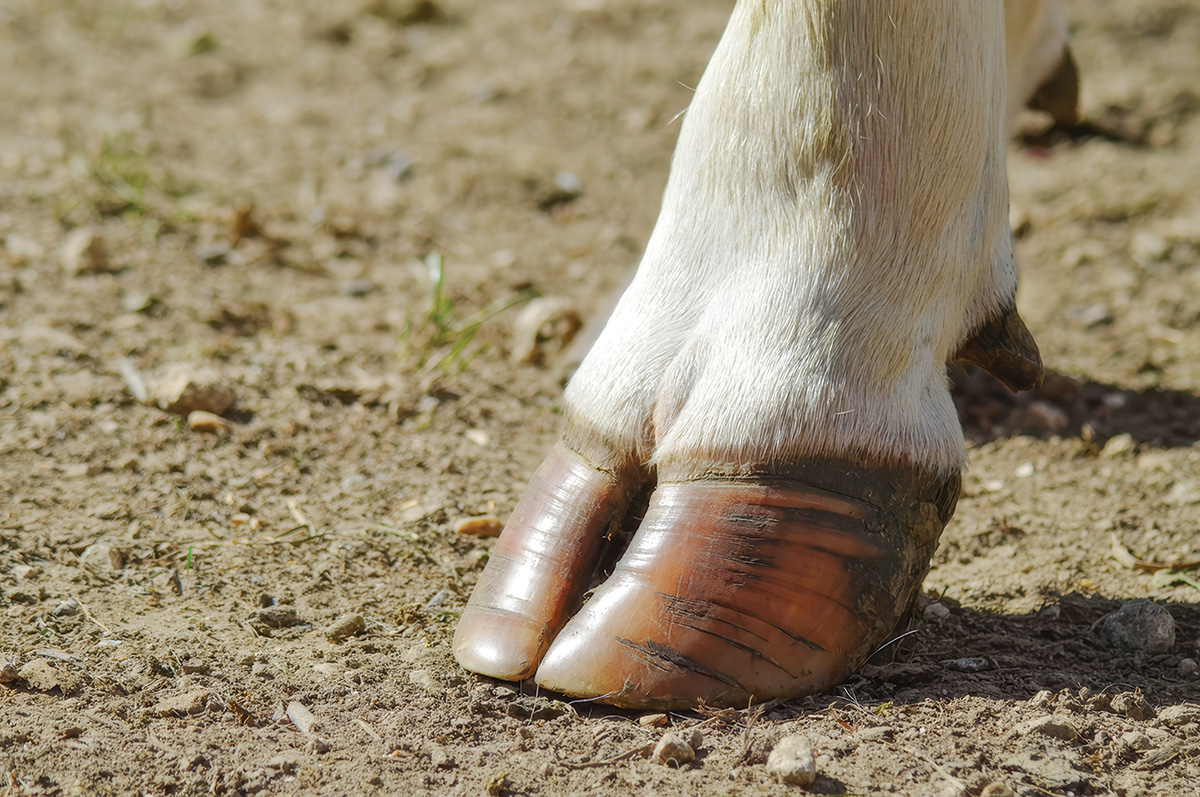
Evaluations showed that cleaning hooves with water in the milking parlor, combined with targeted treatment against digital dermatitis, delivered better results than routine footbaths. Courtesy image.
The same evidence-based mindset applies to hoof health. Traditional routines are not maintained for their own sake. When evaluations showed that cleaning hooves with water in the milking parlor – combined with targeted treatment against digital dermatitis – delivered better results than routine footbaths, footbaths were discontinued. Improved mobility led directly to better cow comfort, more consistent feed intake and fewer involuntary exits from the herd. Longevity improved because decisions were guided by outcomes rather than habit.
Measuring success over time
This dairy does not define success by annual milk shipment figures or record daily yields. Instead, performance is measured in years of productive life. Producing a 200,000-liter cow from a 400-cow herd is not a curiosity; it is a visible outcome of decades of cow-focused management.
So, is this the best dairy in the world? That depends on how excellence is defined. If success is measured by scale or throughput, perhaps not. But if it is measured by how long cows remain healthy, comfortable and economically productive, this family-scale herd makes a compelling case.
Author's note: The farm was deliberately anonymized to focus on management principles and cow well-being rather than on branding.
References omitted but are available upon request by sending an email to an editor.