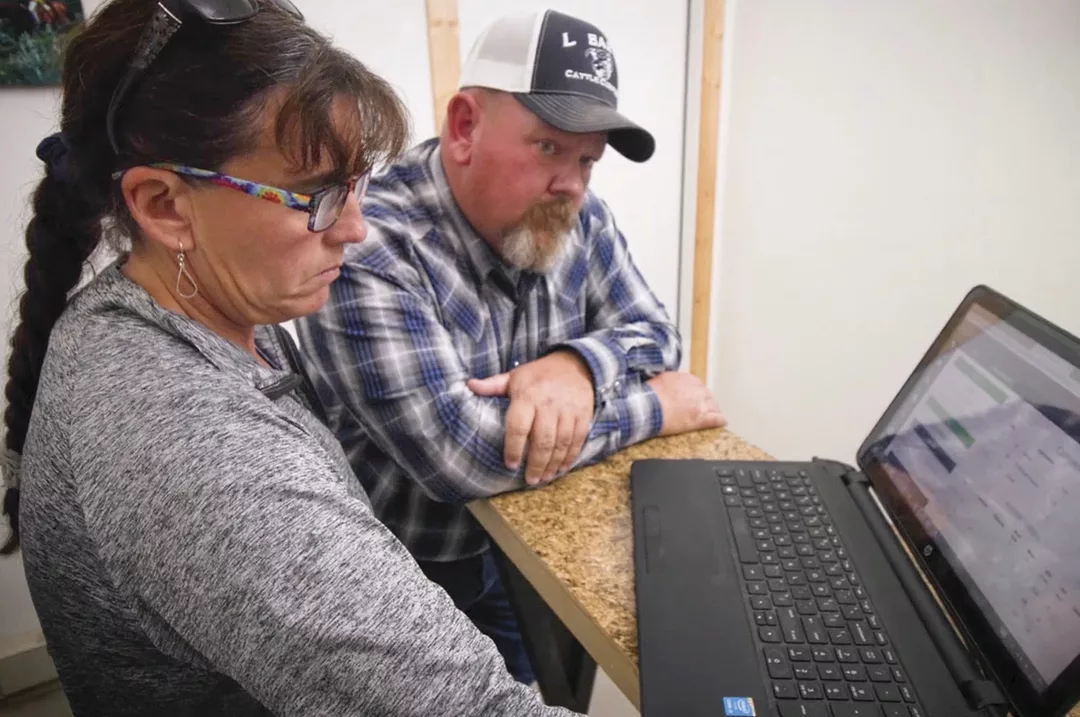
Feeding cattle used to be a pen-and-paper business. Feed sheets, herd health records and inventory notes were written in notebooks, on scraps of paper or in binders tucked in barns and pickup trucks. Now, more producers are relying on cloud-based software to streamline operations, but hesitation remains, especially if internet access is limited.

“We were very hesitant to move forward with digital tools at first – not because of the technology itself but because we don’t have cellphone service where we’re feeding,” says Denise Loyning, a cattle producer in Absarokee, Montana. “We had to really understand how cloud-based software worked without the internet before we felt comfortable using it.”
Life offline: The challenges of limited connectivity
Sarah Low, head of the department of agricultural and consumer economics at the University of Illinois, emphasizes that rural broadband should not be viewed as a simple yes-or-no issue.
“A lot of maps say an area is served, but producers on the ground often say, ‘I don’t have it,’” she explains.
Instead, she encourages thinking about broadband across three key dimensions: speed, reliability and affordability. A connection may technically exist but may be too slow for cloud-based tools, too expensive to justify or unreliable during bad weather. Satellite internet may be available nearly everywhere, but it can be expensive or unreliable during bad weather. Slow or inconsistent service can delay farm operations, limit access to information and contribute to social isolation in rural communities.
“When people think about broadband through these three buckets,” Low says, “the picture becomes much more nuanced – often worse – than what coverage maps suggest.”
Improving infrastructure
Improving rural broadband requires a mix of infrastructure, innovation and collaboration. Fiber optics are considered the gold standard for speed and reliability, but the cost of deployment makes them impractical for many rural areas. Elevated lines on telephone poles are more affordable but remain vulnerable to storms, accidents and extreme weather.
Practical alternatives are gaining traction. Fixed wireless, cellular networks and low earth orbit satellites, such as Starlink, OneWeb and Telesat Lightspeed, offer more accessible solutions for rural areas. Local electric cooperatives often play a key role in deployment, leveraging existing infrastructure and cooperative governance to extend connectivity. State broadband offices, along with federal resources like the National Telecommunications and Information Administration (NTIA) BroadbandUSA map, provide updates, funding opportunities and contacts for local providers.
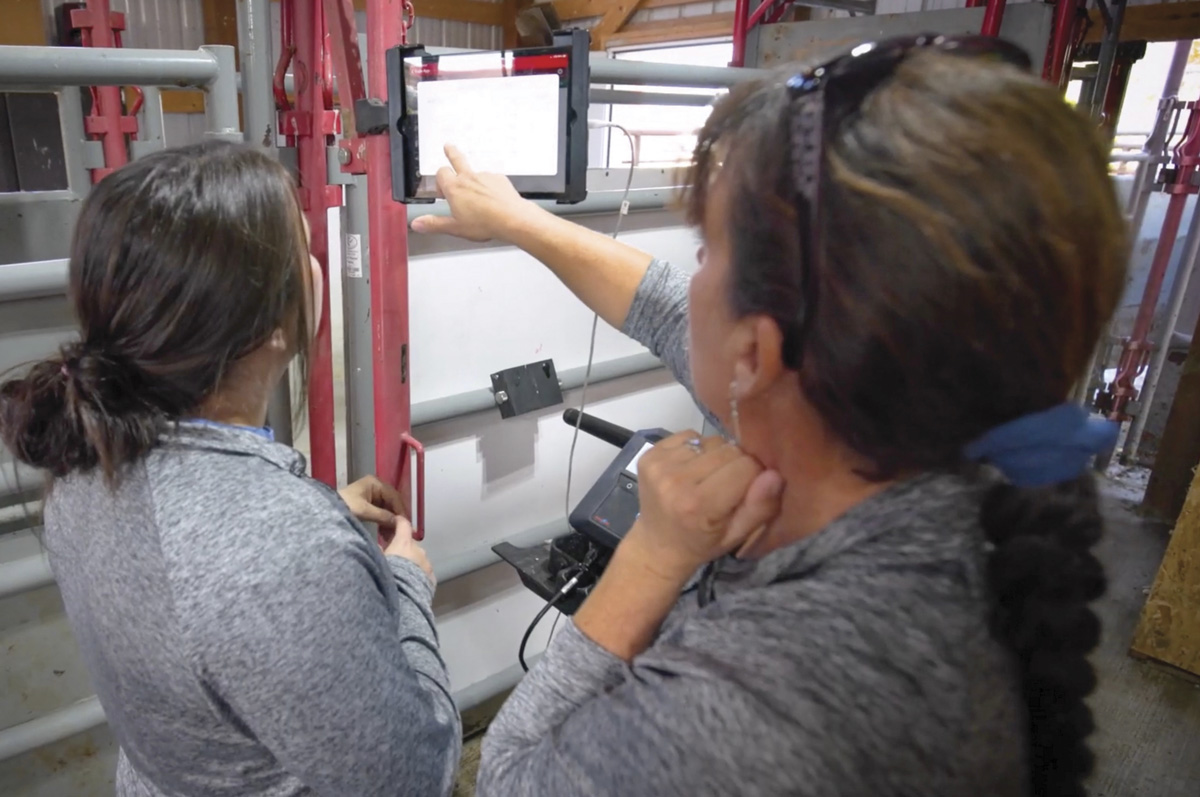
Software allows farmers to track feeding, animal health, financials and inventory from mobile devices, syncing data automatically once connectivity is available. Image courtesy of Performance Livestock Analytics.
Digital transition for feeding cattle
Cloud-based livestock management tools are transforming how producers operate. Software, such as Performance Beef, allow farmers to track feeding, animal health, financials and inventory from mobile devices, syncing data automatically once connectivity is available.
For producers with inconsistent internet, tools that allow offline data entry and delayed syncing can make a significant difference.
“Once we realized the system could work offline and sync later, it changed everything,” Loyning says. “We just had to make sure that when feeding was done, someone got to Wi-Fi or cell service to upload the day’s work.”
Choosing technology that accounts for rural realities is often just as important as improving the connection itself.
A practical checklist before adopting new technology
Before adopting a new digital tool, producers should consider a few key questions:
- Does it work offline for core tasks such as data entry and editing?
- How does it sync data – all at once or with small updates as changes are made?
- Do neighbors or nearby producers with similar internet conditions use it successfully?
- Can internet signal strength be improved with hardware such as antennas or boosters?
Asking these questions up front can help prevent frustration and ensure technology supports daily operations rather than slowing them down.
Low stresses the importance of flexibility. “Don’t wait for the perfect solutions,” she explains. “Embrace technologies that improve access now, even if they aren’t the final answer.”
Progress is possible
Rural broadband remains uneven, but progress is happening. By combining local collaboration, emerging technologies and thoughtfully designed cloud-based tools, producers can improve cattle management and day-to-day efficiency – even in areas with limited connectivity.
“Producers are already on the cutting edge of technology,” Loyning says. “We’re a small percentage of the population, but technology that works in rural conditions adds real value to our operations.”
Better broadband doesn’t happen overnight, but incremental improvements matter. Each connection upgrade, cooperative project or informed technology choice helps move agriculture forward.
Check your local broadband resources
- Each state has a broadband office with updates on funding, policy and local deployments.
- Use the NTIA BroadbandUSA map to find contacts and availability in your area.