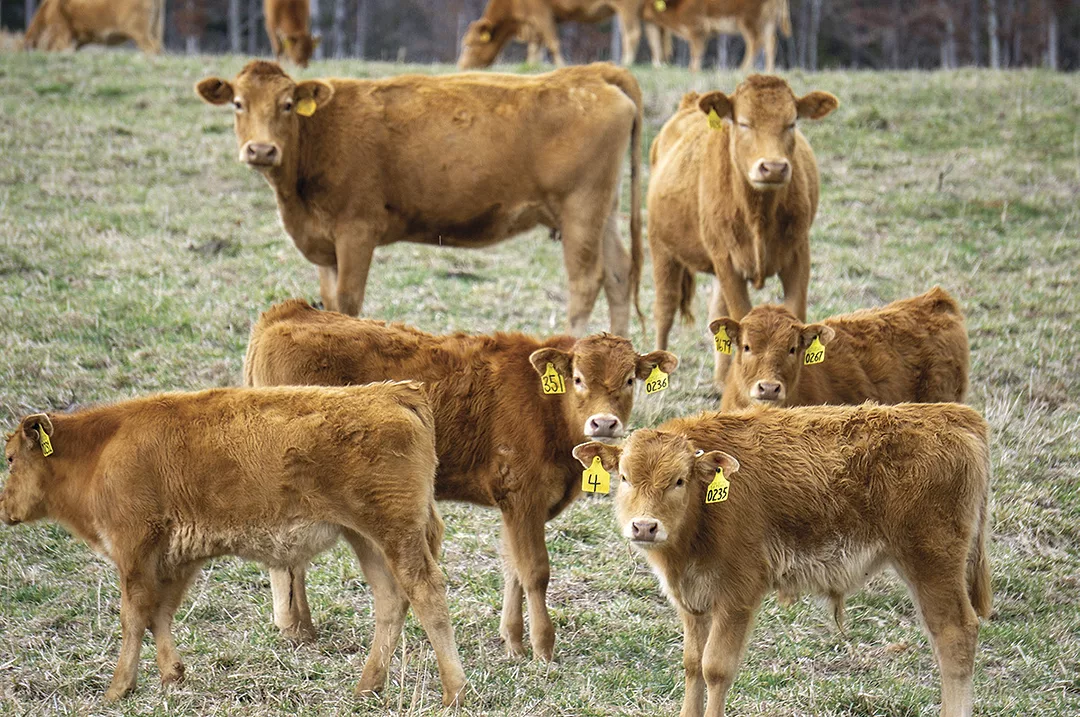
A productive cow can only have one calf per year.
For generations, that biological limit has defined how fast beef producers can make genetic progress in their herds. No matter how elite a female is, her influence on a herd is constrained by time.
In today’s world, that’s not necessarily the case. In vitro fertilization (IVF) is changing the game for beef producers, allowing their best cow to influence an entire calf crop.
Kenzie Corpron, a professional services embryologist at Trans Ova Genetics, explains it like this: “Cows naturally conceive, on average, one calf per year; IVF helps producers achieve accelerated genetic progress by multiplying that number within the same time frame.”
Although often considered a niche reproductive tool used primarily by elite seedstock operations, IVF is increasingly influencing how beef cattle are bred, how genetics are marketed and how producers think about efficiency in a changing industry. Although adoption rates in beef operations remain relatively low, Corpron says the technology’s reach is already extending far beyond the herds actively using it.
Females in the spotlight
At its core, IVF technology provides beef producers with something they have historically lacked: a way to emphasize and preserve female genetics at the same level as male genetics.
“For decades, we’ve been able to spotlight the male side of genetics through artificial insemination (A.I.),” Corpron says. “IVF allows us to capitalize on the female side in the same way.”
Much like semen is collected from bulls and frozen for future use in A.I., with IVF, oocytes (unfertilized eggs) can be retrieved directly from reserves on a cow’s ovaries through a procedure known as ovum pickup (OPU). They are then transported back to the lab, where they are fertilized with semen from a bull of the producer’s choice. After about seven days of incubation, a portion of the oocytes develop into viable embryos ready for immediate transfer into recipient cows or freezing for later use.
“These collections can be done as frequently as every two weeks,” Corpron explains. “Compared with conventional [in vivo] embryo production methods, IVF donors can be open or pregnant during the procedures, as long as the ovaries are safely accessible. The added benefit: a producer can continue to multiply that female’s genetics while she’s still carrying a calf of her own.”
This dramatically shortens natural generation intervals. Instead of waiting years for daughters and granddaughters to enter production, producers can generate multiple offspring from the same female within a single calving season. Not only that, but embryos can also help preserve those important genetics within your herd.
“Say you have a desirable female that might be a cornerstone of your herd; [with IVF] you have the ability to build an inventory of embryos in a short amount of time; think of it as a form of genetic insurance,” Corpron says.
More with less
Being able to make generations of genetic progress quickly – and preserve female genetics indefinitely – is a huge stride pushing the industry forward. Especially in today’s age, where the demand for producers to be efficient is stronger than ever.
“With the ever-shifting consumer perspective and rising pressures from government policy and climate agendas, there’s an unavoidable push for efficiency in the beef industry,” Corpron shares. “Use of advanced reproductive technologies like IVF is going to become a lot more prevalent and necessary in order to keep up with industry demands and to improve overall productivity and efficiency.”
Corpron also doesn’t see this trend being limited to the seedstock industry. Although less than 5% of beef operations currently utilize IVF in their program, she says that’s changing.
“I think that is where we're going to start to see the shift,” she says. “More commercial operations are implementing it in order to keep up with these efficiency demands, specifically taking advantage of heterosis through F1 crosses and improved terminal calf crops.”
Despite its advantages, there is one reason most producers haven’t decided to introduce IVF technology: the cost. Embryos are expensive to make, and in today’s market, many producers don’t see the potential benefits outweighing the cost.
Corpron acknowledges this fact.
“I’m not going to sugarcoat it,” she says. “It’s certainly an investment. As with any advanced technology, you have to assess whether it’s a fit for your operation and a large component of that is its financial feasibility.”
But Corpron believes that while IVF is expensive, it’s a long-term investment that can lead to a higher payout.
“In some programs, we’re talking close to two years from the time of embryo creation before the resulting calf is weaned or that heifer reaches breeding age,” she explains. “It takes time, and it takes money … but when you finally get to see that nice uniform calf crop or group of replacement heifers, you start to realize the long-term outcome often outweighs the initial investment.”
She also says the technology has drastically improved since the first IVF calf was born nearly 40 years ago. As improvements continue to be made, costs will only go down.
“As we become more efficient as embryo companies, the ultimate cost for the producer is ideally going to decrease,” Corpron says.
A new market
Beef-on-dairy is not a new concept; it’s a conversation that’s been happening for years with the evolution of A.I. But IVF is offering a new look at this concept, in a way that’s benefiting both dairymen and beef producers.
“When people previously heard ‘beef-on-dairy,’ they most likely thought of beef semen on dairy cows,” Corpron says. “Now, full-beef embryos on dairy cows have added a completely new element to the beef market.”
By implanting beef embryos into dairy cows, dairies can produce calves that qualify for beef premiums and other market opportunities previously unavailable through traditional beef-dairy crosses.
Corpron says, “It has created opportunities the industry didn’t have before.”
The benefits extend beyond the dairy industry. Beef producers now have a growing market for embryos specifically designed for dairy recipients.
“It has opened a gateway for beef producers to market black-hided, low birthweight genetics to dairymen,” she says. “Within the last few years, we have witnessed more beef producers enter into the business of creating a pipeline of full-beef embryos to market to dairies.”
That growth has been fueled in part by dairy producers’ familiarity with reproductive technologies.
“The dairy industry has been implementing embryo technologies for years,” Corpron says. “They already have established the operational foundation. Now, they’re just taking it a step further, and it has largely benefited the beef sector.”
Looking ahead
While the number of beef producers who currently implement IVF in their herd is low, Corpron believes the growth of awareness and accessibility will fuel change.
“I think first and foremost, there’s still a lack of information and some misconceptions about IVF,” she says. “But as outreach increases and services become more accessible, I do think adoption will continue to grow.”
Mobile labs, strategically positioned haul-in facilities and donor housing options are helping bring IVF closer to producers who previously lacked access. For ranchers wondering if IVF might be the right next step for their operation, there are a lot of factors to consider. But the technology is here to stay, improve and continue changing the industry for years to come.
Even the best cows can still only give birth to one calf a year. But with the help of reproductive technologies, today’s cattle ranchers can progress their herd to meet consumer demands faster and more efficiently than ever.
“It’s plain and simple,” Corpron says. “IVF technology can cultivate opportunities within your herd that may not have been previously feasible with conventional breeding methods.”