In contrast to the start of last year, U.S. dairy markets are in a far more unsettled place to begin 2026.

January Class III prices were $5.75 per hundredweight (cwt) lower than the same month in 2025, while Class IV prices were $7.18 per cwt below prior-year levels. The recent rally on the CME provides a much-needed dose of optimism for dairy farmers. However, even accounting for the improvement, dairy farmers are seeing noticeably lower pay prices than this time a year ago.
Abundant milk supply
On the supply side, milk is expected to remain plentiful around the world – at least for the next few months.
On a component-adjusted basis, milk production from the major exporters – the U.S., European Union (EU), New Zealand, Australia and Argentina – surged in the second half of 2025, climbing 4.5% year-over-year. Collectively, this is the largest year-over-year increase in milk production since 2014.
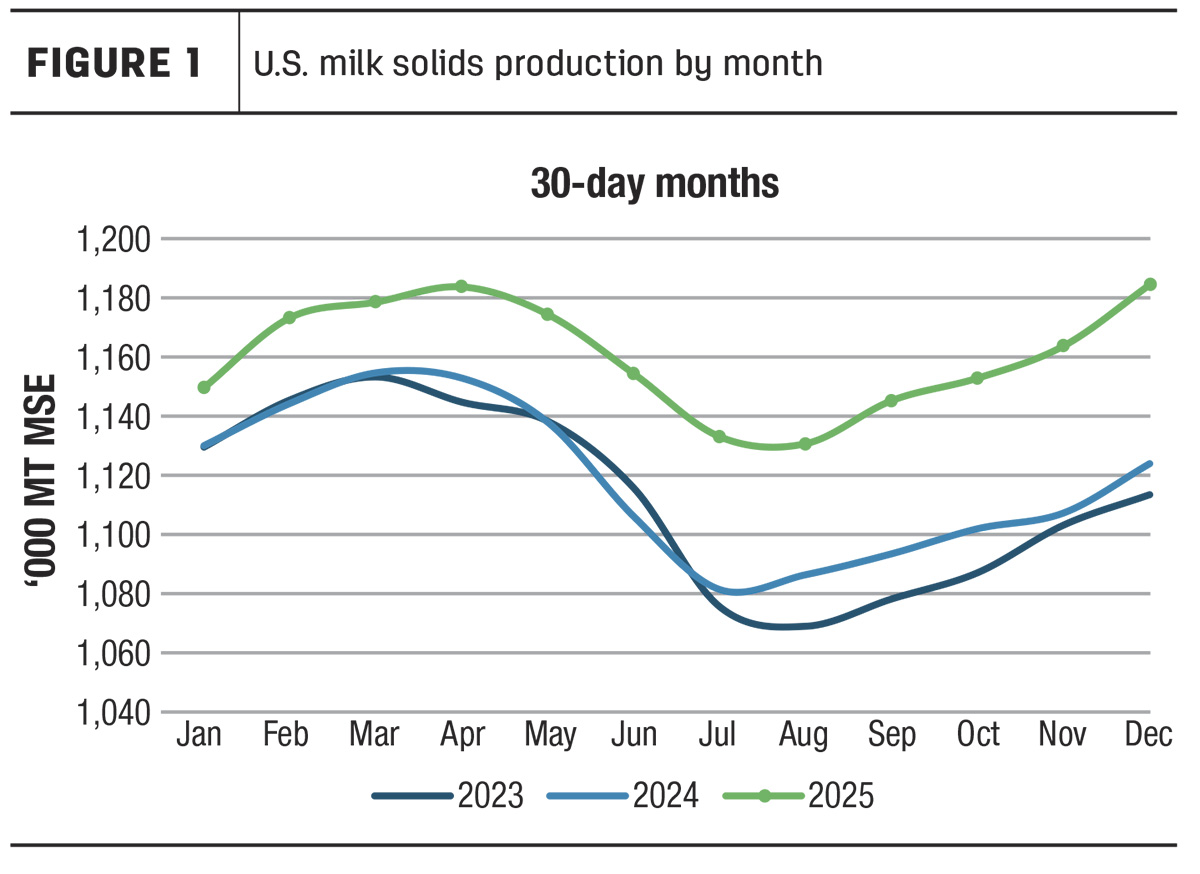
While the U.S. was the first major supplier to record significant milk production growth last year, it was far from the only one. In fact, in every month since August, the 27 member states of the EU increased their milk production by more than the U.S. despite U.S. milk solids production growing by nearly 5% (Figure 1).
As we look at the year ahead, the question becomes whether this dramatic surge in supply will ease.
While U.S. farmgate milk prices are low, strong financial returns for crossbred calves and cull cows are dampening the supply response. Fundamentally, the profitability of crossbred calves has created an incentive to hold onto dairy cows longer. Additionally, component levels continue to grow exponentially, resulting in additional milk supplies on the market, even if the U.S. does not add a single cow to the dairy herd this year.
As such, while we do not anticipate a repeat of the level of growth experienced in 2025, U.S. milk production is likely to remain relatively plentiful through the first half of the year, at minimum, thanks primarily to beef returns. However, it is worth keeping an eye on European milk production where milk prices are falling dramatically, beef returns are far more modest, and farms face a higher cost of production than the U.S. or New Zealand. If European milk supplies were to slow, it could help lift global prices, enabling U.S. prices to rise while still remaining competitive in global markets.
While milk supply is forecasted to remain ample in the near term, the demand picture is far more mixed and varies substantially by product.
Protein pull
On the positive side of the equation, the demand for dairy protein continues to soar (Figure 2).
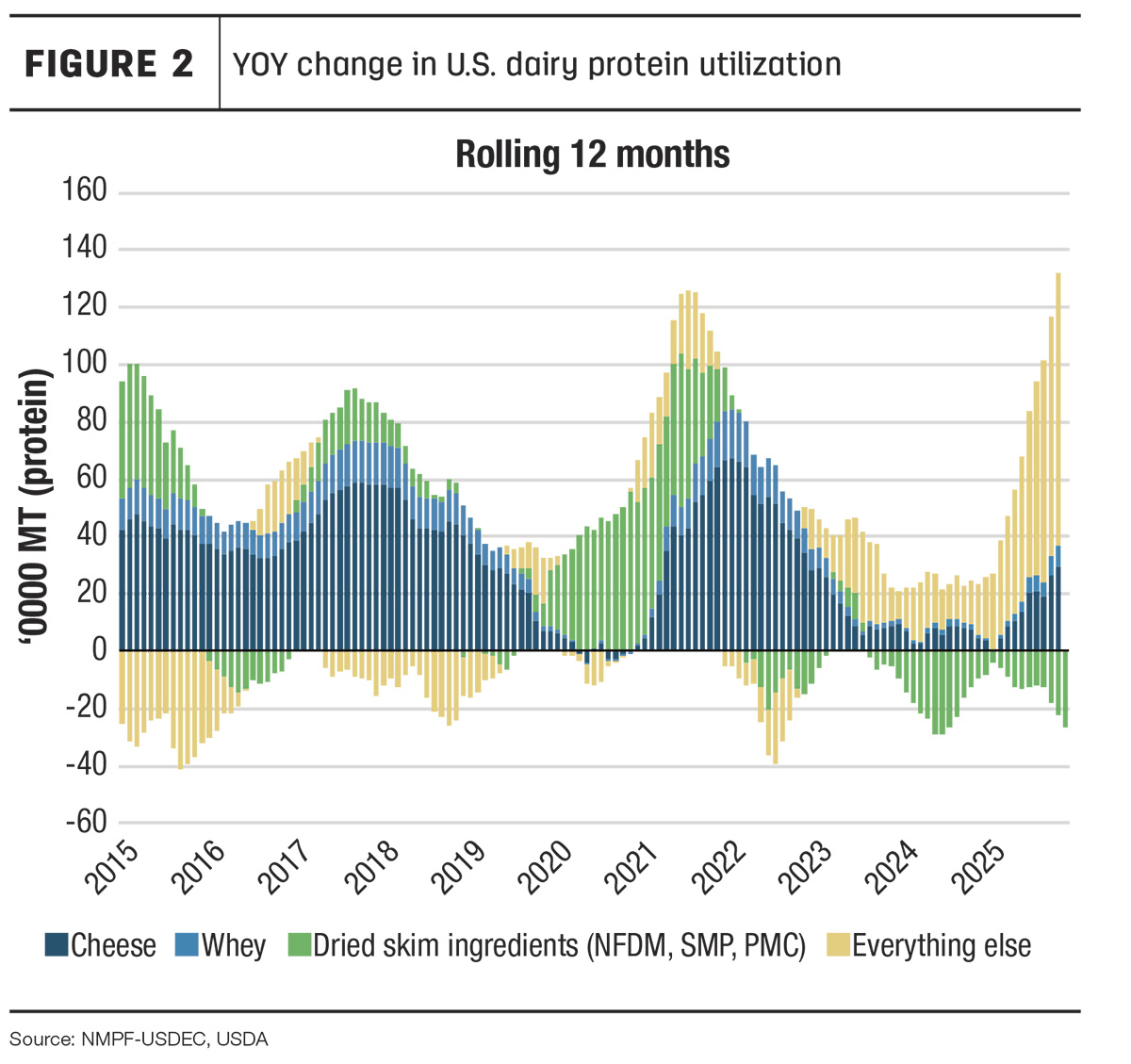
Protein-heavy products, like yogurt, cottage cheese and ready-to-drink beverages, are performing exceptionally well at retail. Additionally, whey protein prices seemingly set new records every month with demand showing no signs of reacting as food and beverage manufacturers continue to explore new frontiers and applications.
While the general trend toward high-protein products predates the rise in glucagon-like peptide-1 (GLP-1) medications, the trend toward high protein has certainly been accelerated by the widespread use of these products. With GLP-1 now launching in pill form and at a substantially lower price point, we should not be surprised to see demand for dairy proteins continue to climb.
Looking ahead for dairy farmers, the demand pull for specialty proteins should continue to keep milk out of the commodity ingredients, resulting in relatively tight markets for both nonfat dry milk and sweet whey powder despite surging milk production.
Butterfat push
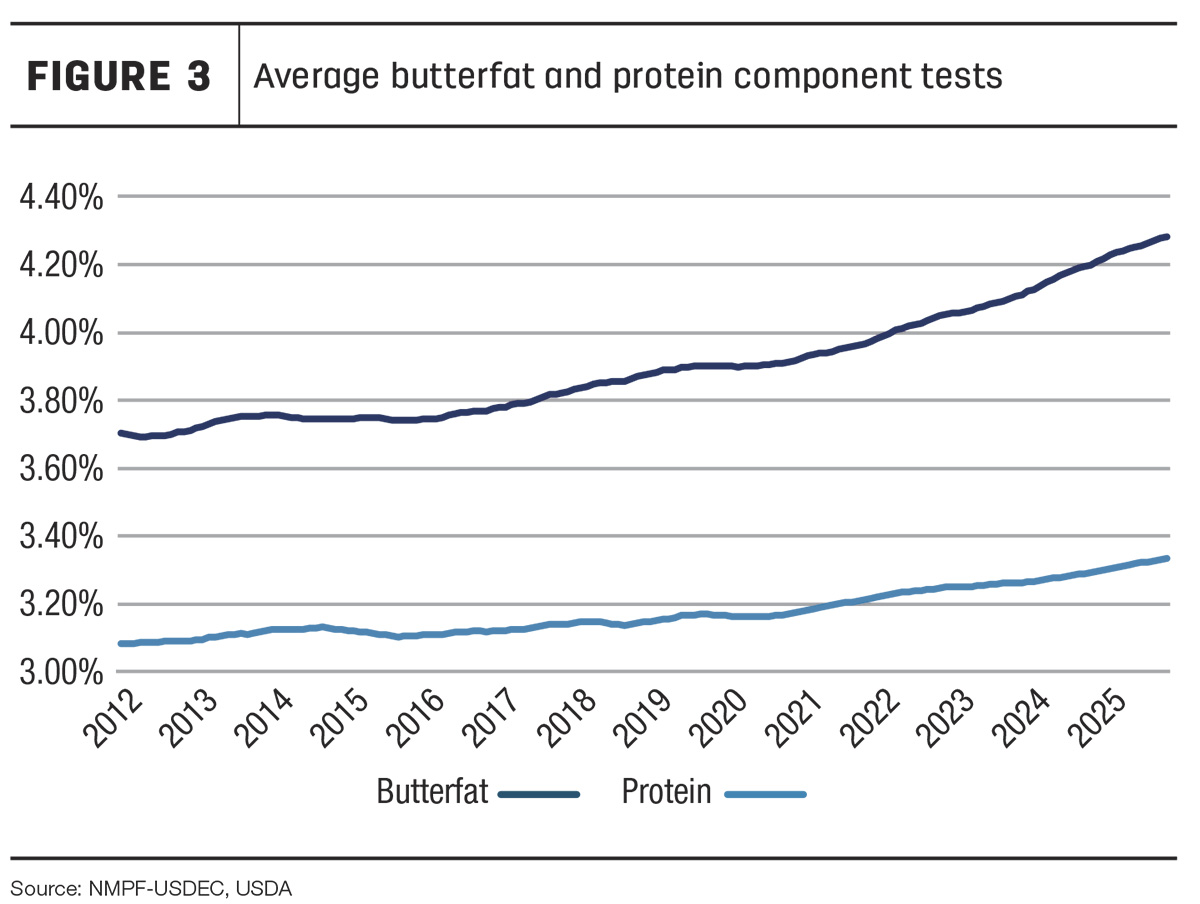
In contrast to protein where demand is largely outpacing supply, U.S. milkfat is in abundance (Figure 3).
The good news is that domestic demand for milkfat was generally positive in 2025. Retail butter sales over the holidays grew by 2.8% even as the USDA’s total domestic utilization of butter showed a slowdown in October and November. Even more positively, demand is poised to improve in 2026, particularly as the latest science continues to support the health benefits of consuming dairy fats, and the Whole Milk for Healthy Kids Act will support additional milkfat utilization once fully adopted.
However, the fundamental challenge for butterfat remains supply. Not only are U.S. dairy farms producing substantially more milk than a year ago, but as a result of improvements in genetics, nutrition and management practices, butterfat tests have been climbing exponentially and have outpaced protein. In fact, the fat-to-protein ratio has increased to such an extent that there is an excess of butterfat in the milk for cheddar cheese production.
As a result, the U.S. has needed to compete for international sales in order to balance the market. Unfortunately, building relationships and securing new business with international customers takes time and investment. The good news is that many butter, anhydrous milkfat and whole milk powder manufacturers are doing just that, with the U.S. posting its best export year for those products in over a decade.
Looking ahead, butterfat supplies are likely to remain plentiful without a broader slowdown in milk production as milkfat tests show little signs of slowing even as farmers adjust rations. As such, accelerating demand for U.S. milkfat at home and abroad will be paramount to seeing sustained price improvement.
Cheese
While U.S. protein and butterfat markets are relatively straightforward, the U.S. cheese market is filled with mixed signals.
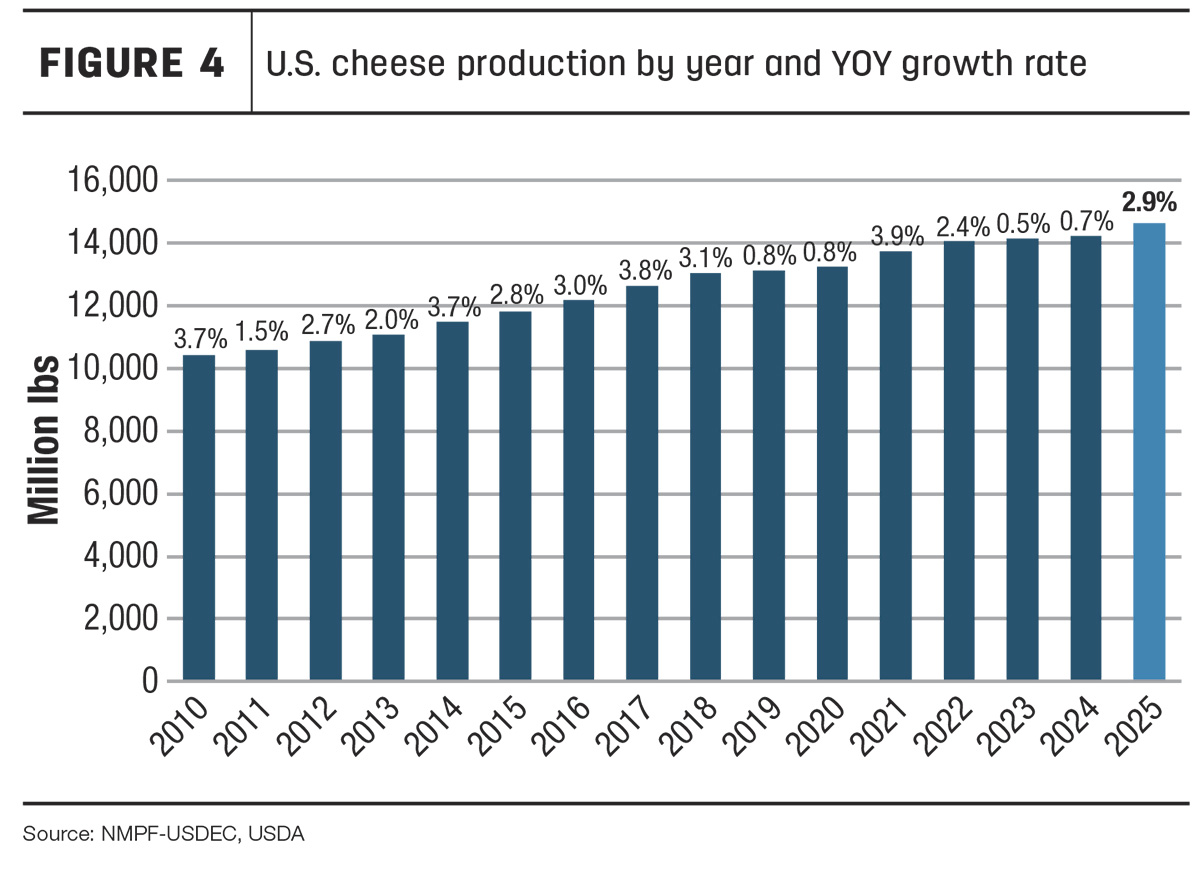
Cheese production is growing at a rapid pace (up 2.9% in 2025), but it has been far from onerous for much of the year. Instead, the biggest challenge has been domestic demand. The USDA’s World Agricultural Supply and Demand Estimates (WASDE) report showed domestic utilization of cheese is virtually flat (up 0.0%) over the last 12 months (Figure 4).
Much of the domestic softness can be attributed to broader economic challenges as consumers eschew foodservice, particularly quick-service restaurants, in search of savings. Foodservice foot traffic trailed prior-year levels for most of the year. Of note, large pizza chains appear to have been hit especially hard as consumers not only order out less frequently but have also leaned toward other cuisines that utilize cheese to a lesser extent.
Positively, U.S. exports of cheese have soared (up 20%), and, with one month of data to go, are well on pace to set a new annual record for the third time in four years, as U.S. manufacturers capture a greater share of growing global demand.
As we move further into 2026, we are optimistic that U.S. cheese consumption should stabilize, and global demand will maintain its bullish pace, which should support positive price movement. However, if the U.S. economy wobbles or GLP-1 adoption truly reduces consumers’ appetite for dining out, prices may struggle to gain much momentum without a supply correction.
Outlook for 2026
Given the relatively abundant supply in the market today and a demand picture that is filled with diverging trends, the state of the dairy market in 2026 leans to the bearish side, with the exception of proteins. In order to see a sustained rally in prices across the dairy complex, at least one of three things will have to happen: either U.S. milk production slows, European milk production cools or U.S. domestic consumption – particularly for cheese – improves. None appear imminent at time of writing, but all are entirely feasible, particularly as we look to the back half of the year.