In early 2026, one of the bright spots in the U.S. dairy industry is the organic sector, where a nationwide shortage of organic milk has resulted in higher mailbox prices.

“The mood is incredible in the organic side of the dairy industry right now,” says Maynard Mallonee from Mallonee Farms in Washington. “Milk prices are profitable and sustainable again, consumers want organic products and the future is exciting for organic dairy farms.”
John Bigham Jr. from Swiss Meadow Organics LLC in Wisconsin says he thinks this time period will be remembered as one of the most competitive periods in organic milk market history.
“There was and still is a lot of competition for organic milk out there. It’s really crazy to see, especially since just four years ago we had an oversupply and strict quota ceilings,” Bigham says.
Larger milk checks are welcome news for organic dairy producers after several years of lower prices.
“The pay price has increased for nearly all producers, with intense competition between buyers. It has reached a level that covers some of the cost increases and allows organic dairy producers to reestablish a positive cash flow after years of low prices,” says Ed Maltby, executive director, Northeast Organic Dairy Producers Alliance.
While milk prices vary depending on components, location and other factors, milk prices increased between $8 and $15 per hundredweight (cwt) for organic producers with the grass-fed certification and $6 to $12 for organic dairy producers without it.
There are currently two grass-fed certifications used by national brands:
- The Organic Plus Trust, which is used by CROPP Cooperative (Organic Valley brand) and Horizon Family brands (Maple Hill Creamery brand)
- American Grass-Fed Association (AGA) standards, used by Horizon Family Brand for their Horizon organic brand
Producers are thankful for the additional income to help offset higher input costs.
“Ever since the COVID-19 pandemic, my milkhouse chemical bill has more than doubled. Everything from supplies to fertilizer seem to be consistently higher,” Bigham says.
Opportunities to reinvest in farm improvements and upgrades
In Oregon, where 22% of Grade A dairy farms are organic, organic dairy producers are experiencing the best milk prices they have seen in a decade. The improved pay price provides extra capital for farm upgrades and for paying down debt, a perk noted by the organic dairy community across the country.
“We are seeing investments in new buildings with equipment upgrades planned,” says Tami Kerr, executive director, Oregon Dairy Farmers Association. “You can only patch a roof and repair equipment for so long. At some point, they need to be replaced. Honestly, it’s nice to see organic producers more relaxed. They now have time to catch their breath and plan ahead. I want the same relief for our conventional producers.”
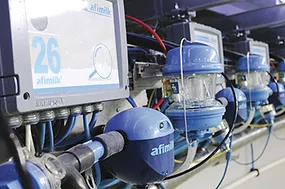
Producers are investing in technologies to improve efficiencies.
“Labor and quality of life demands have led to an increase in the use of robotic milking and other labor-saving equipment and infrastructure,” Maltby says. “Virtual fencing is increasingly being looked at as a tool for grazing that saves capital investment in fencing, daily labor and increases flexibility with grazing.”
Bigham says that there has been very little significant expansions in his immediate area, but technology adoption has been on the rise.
“Many farms are putting robots into retrofitted tiestall barns. This system seems to be popular and works well,” he adds.
Organic milk procurement on the rise
The organic dairy producers surveyed said they have noticed an increased interest from their conventional dairy producer peers in transitioning to organic and encourage them to consider the opportunity if it fits for their operation’s goals.
“Dairying in western Washington looks bleak at the moment, but the organic side of the industry looks promising,” says Andrew Dykstra from Dykstra Farms in Washington. “We’ve had bad times, but our bad times are not the same as bad times for conventional dairies. Organic dairy producers are quite upbeat at the moment.”
Current conditions and future goals have some conventional producers in the Pacific Northwest considering their options.
“There are some farms here in western Washington that are currently making the switch from conventional to organic. Our cooperative is currently procuring milk from family farms that meet our organic criteria, and they offer transition packages for cows and heifers. One dairy in our general area is selling their cows and purchasing heifers as they make the transition,” Mallonee says.
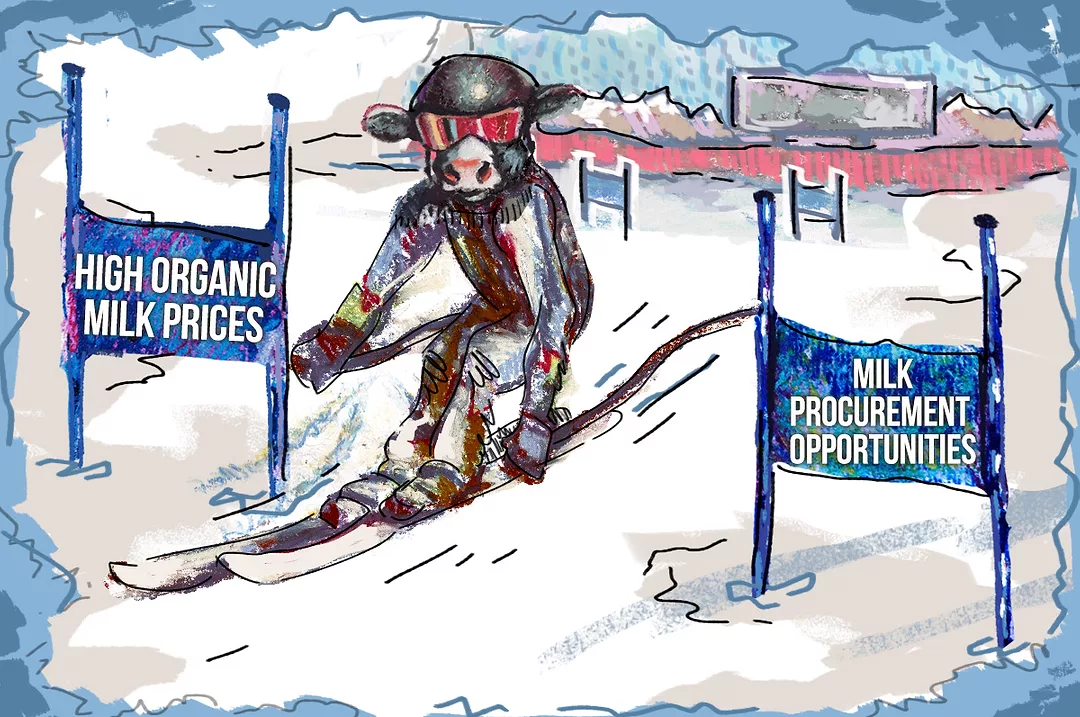
Kathie Arnold from Twin Oaks Dairy LLC in New York agrees that it is an opportune time for small to moderate-sized conventional dairies to transition to organic, especially given the current financial outlook for conventional milk prices. The current shortage of organic milk is creating additional procurement opportunities as organic buyers and cooperatives are open to adding new producers.
Drought and weather top the list of challenges for organic producers
Weather extremes can overwhelm operations dependent on consistent moisture and conditions to grow pasture and stored hay crop.
“The mood among organic producers near me is positive, but other producers here in New York and the Northeast are in a very difficult and tenuous situation given 2025’s weather,” Arnold says. “We had a very wet spring that for many meant late harvest of first-cutting hay, late corn planting and flooded pastures – the latter two were problems for us. Then the rain stopped and led to very dry to extreme drought conditions for much of the Northeast, which is a huge problem for organic dairy producers and especially those shipping 100 percent grass-fed organic milk. We are all highly dependent on the productivity of grass, which is very moisture-dependent. Many had to start feeding winter forage supplies in late summer, which led them to be short on feed for the winter.”
This led to limited organic forage for sale in New England and the Mid-Atlantic regions by the fourth quarter of 2025, further increasing costs to transport it from western states like Colorado and Montana.
“In some cases, they are paying as much for trucking as they are for the organic hay. This has caused cash flow problems, increased culling and selling youngstock to cover forage purchases,” Maltby says.
In addition to unpredictable weather topping the list of challenges for organic dairy producers, the lack of a risk management program is a missed opportunity.
“Despite 10 years of advocacy, there is still no safety net program for organic dairy producers, leaving them very vulnerable to adverse weather conditions, such as drought and flooding,” Maltby says.
Anti-dairy advocacy continues in the West
The West Coast is no stranger to activist groups campaigning against animal agriculture, and those groups continue to create challenges for dairy – both in the conventional and organic sectors.
“Various initiatives and campaigns are being developed by animal rights advocacy groups that highlight their concerns about animal agriculture – with particular attention to organic dairy farms. These efforts may sometimes involve actions that disrupt operations or pose risks to individuals and animals involved,” says Lia Sieler, executive director, Western Organic Dairy Producers Alliance.
Oregon has seen proposals to ban hunting, fishing, controlling rodents and animal agriculture. In California, there has been particular attention on animal confinement practices. Additionally, farms in states like Washington, Idaho and Texas have experienced multiple incidents of attacks.
“Consumers are sometimes persuaded to support initiatives such as the Oregon proposal by being asked questions like ‘Do you want to end animal abuse or cruelty?’ It is increasingly important to provide farmers with resources and opportunities to share their perspectives. Consumers should be informed about the substantial efforts farmers consistently undertake to enhance animal husbandry practices, while also demonstrating responsible stewardship of the land,” Sieler says.
She recommends that farmers exercise diligence in safeguarding their operations by implementing comprehensive biosecurity protocols and stringent visitor policies.
“Posting clear signage to indicate private property is essential for public awareness,” Sieler says. “Additionally, locks should be installed on gates, equipment, vehicles and an alarm system should be utilized in the milkhouse to deter tampering. Surveillance cameras are highly recommended to provide continuous monitoring of the premises. Establishing relationships with local law enforcement agencies is crucial; ensure they have access to facility maps and relevant resources to facilitate efficient enforcement when necessary. Any suspicious activity observed on farms should be promptly reported to law enforcement authorities.”