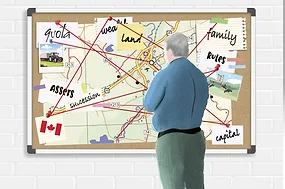
Farm succession planning is rarely simple and almost never comfortable. It asks families to face questions about money, fairness, control, identity and the future of a business that is also a home and a legacy. For many producers, the thought of these conversations can tighten the chest: What if the kids disagree? What if the plan is complicated? What if talking about it causes problems that weren’t there before?

These are real, valid fears. And yet, the hardest truth of all is this: Avoiding succession planning doesn’t prevent conflict – it creates it. Planning early and communicating openly may feel difficult, but it is also the only way to remain in control of what happens next. The farms with the most optimal succession outcomes are often those that retained control of the process, where they were able to manage their tax implications, structure the transition of ownership and spread their succession and equalization plans over longer time periods to allow for more financial viability.
The emotional weight farms carry
Unlike a typical business, a farm represents far more than assets, equity and tax liabilities. It carries generations of sacrifice, family identity and pride. This emotional weight is what makes succession planning uniquely challenging.
Parents may worry about losing purpose or independence. Children may worry about disappointing their parents or being seen as demanding. Off-farm heirs may feel unsure of where they fit. On-farm heirs may hesitate to express their needs, fearing they’ll be interpreted as entitlement.
These emotions operate quietly in the background of succession decisions. Acknowledging them is not weakness – it is a sign of respect for the realities farm families face.
The unspoken expectations that shape every succession conversation
In nearly every farm family, expectations start forming long before anyone uses the word succession.
Often, no one intends to build these assumptions – they form naturally over years of working together, living together and watching the family history unfold. But these unseen expectations are the source of more conflict, hurt and misunderstanding than almost any technical or financial issue.
Here’s why unspoken expectations are so challenging.
Everyone sees the farm differently, depending on their relationship to it
Parents see decades of work, sacrifice, risk and identity. On-farm children see a livelihood, a future, an investment of sweat equity and the place they envision raising a family of their own. Off-farm children may see an asset that represents family stability and upbringing, and although their careers may have taken them elsewhere, the farm often remains a core part of their identity. When these perspectives are not discussed openly, assumptions fill the silence – and silence is rarely accurate.
Families often assume others understand their intentions
A parent might say, “You know the plan,” or “We’ve talked about this before,” even when no formal plan exists. Or a successor might assume they’ll take over because they’ve been involved in day-to-day operations for years. The reality is that although many farms assume there is a plan, approximately only 12% of Canadian farms have a formal succession plan in place.
The problem here is that everyone may believe they’re on the same page, but each person may be holding a completely different mental picture of the future. Without formal planning, we are leaving the future of our farm and family legacy up to debate.
Nobody wants to start the hard conversation
Starting the conversation often feels like we are overstepping, sounding greedy or pressuring others.
So everyone waits. Years pass. The unspoken ideas grow heavier and become further cemented in each other's mind. By the time someone finally brings it up, emotions are already heightened.
Most succession conflicts don’t happen because of the actual plan. They happen because someone expected something that didn’t happen – and no one knew.
These expectations are quiet but powerful: “I thought the farm would be split equally,” “I thought the child working on the farm would simply inherit it,” “I thought Mom and Dad would stay involved forever,” “I assumed Mom and Dad had saved some money for retirement over the years.”
Succession planning brings these silent beliefs into the open where they can be discussed, understood and aligned.
The equalization discussion: Fair and equal are not the same thing
One of the most consistently difficult truths in farm succession is this: You cannot divide a farm equally without risking either its financial or functional viability.
Being equal suggests splitting assets uniformly across children. That may work for investments or savings accounts, but farms are different. They require land, equipment, working capital and often a successor willing to shoulder significant risk.
Fairness, in contrast, considers roles, contributions, needs and long-term viability. Fair may involve non-farm assets, life insurance or other tools that support off-farm heirs without compromising the successor’s ability to operate successfully.
It is not about choosing favourites when it comes to equalization, and each of our children may have a unique outcome. A true equalization plan requires discussion to better determine how we can provide opportunity for each of our children in a unique way that fits each of their own situations.
Control is hard to let go – and that's OK
Founders often face the toughest emotional challenge: stepping back. After a lifetime of managing every decision, every season, every crisis, letting go can feel like losing identity or purpose.
This is normal – and deserves empathy.
But control held too tightly for too long can limit the successor’s ability to grow and puts the farm at risk. A phased transition honours the founders’ experience while empowering the next generation to build their own capacity. This is when it becomes important to remember that succession is not a transactional event; it is a journey. Stepping back from leadership should happen over time and with a roadmap to ensure that the current farm leaders feel comfortable the next generation is truly ready to take the reins. Done well, it is not a loss of control – it is a legacy.
Planning protects families, not just farms
Succession planning is ultimately about protecting:
- Retiring parents financially
- Successors with clarity and authority
- Off-farm heirs with fairness
- The farm’s ability to survive across generations
- Relationships by reducing uncertainty
Most importantly, planning ensures the family – not outside forces – remains in control of the outcome. Without a plan, decisions are made by default. With a plan, decisions are made with intention.
The effort is worth it
Succession planning is hard. It requires courage, patience and honesty. It asks families to confront realities they would sometimes prefer not to think about.
But every difficult conversation is an investment in the future.
A clear, intentional plan gives founders peace of mind, gives successors confidence and gives the family the best chance to preserve both the business and the relationships that matter most.
The work may be hard, but the outcome – a future you choose – is worth it.