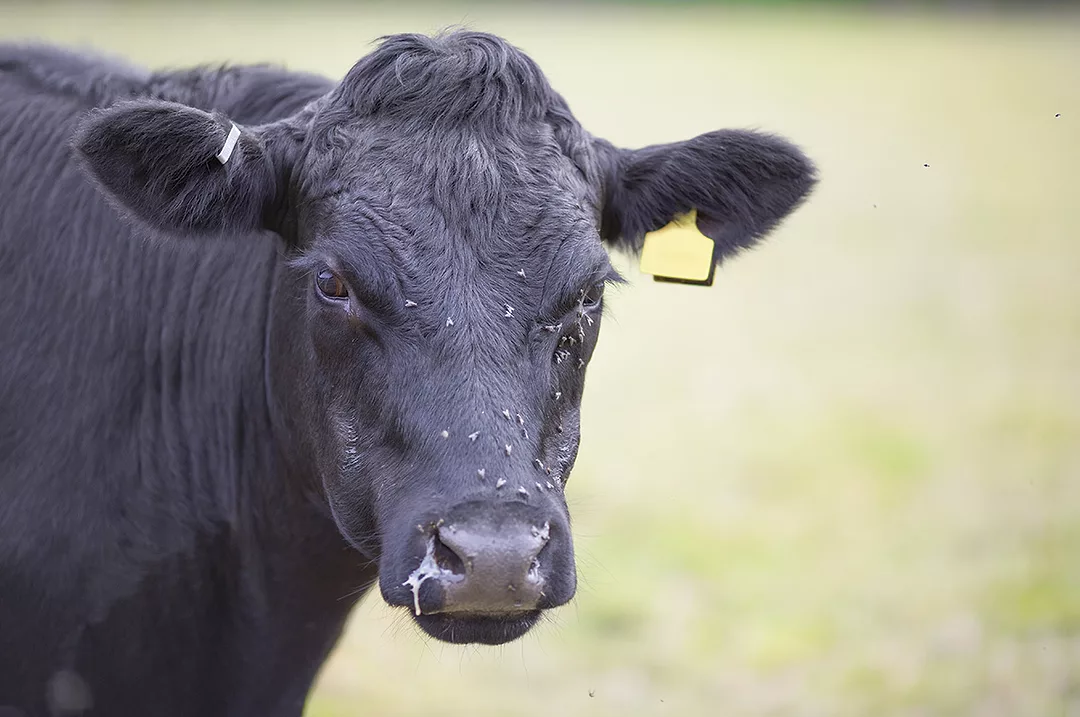
Fly control in beef cattle continues to be an in-demand topic each year as the potential resistance to conventional fly tags and the introduction of garlic as a feed ingredient to mitigate flies becomes more prevalent. Fly control management is important to minimize the spread of disease and to minimize the negative impacts on livestock production.

There are several options available for fly control: dust bags, pour-ons, injectables, feed ingredients, fly tags, insecticide strips placed on mineral feeders or eartags, and back rubbers. There are advantages and disadvantages of each method of fly control, and those should be considered when making management decisions. Ease of use, convenience and labor should also be considered when determining which fly control method works best for the ranch.
Fly species affecting cattle
There are primarily three fly species that we encounter in beef cattle: stable fly, horn fly and face fly. Horn flies can have detrimental effects on cow and calf production. Horn fly eggs are laid in the manure and will hatch within a week, with a 10- to 20-day lifespan. Horn flies are typically located on the back, shoulders and sides and then will move to the belly during the heat of the day. The reason horn flies are such a detriment is because they are blood-sucking. The economic threshold for providing fly control when horn flies are present is when levels reach more than 200 flies per animal. The U.S. beef industry’s economic loss to horn flies is approximately $1 billion annually.
Face flies are located around eyes, mouth and muzzle. Face flies lay eggs in manure and have a life cycle of approximately 21 days. They feed on secretions. The main issue with face flies is they can transmit pink eye throughout the herd. Face flies are typically found on cattle located in shady areas and near waterways. Between 12 and 14 face flies can reduce the grazing time of the cow by up to an hour per day.
Stable flies are mainly located on the front legs and are most common in feedlots and dairies. Larvae are located in decaying organic matter, such as wet hay or in winter feeding areas. Cattle will bunch up, stand in water or stomp their feet to remove the flies, which disrupts grazing. Stable flies are also a blood-sucking species and can reduce production. The economic threshold for treatment is approximately five stable flies per leg.
Fly control methods
Dust bags and back rubbers (oilers) are good methods of fly control, but cattle must be forced to use them and must use them regularly. Placing them near mineral tubs or water tanks can aid in this. Sprays and pour-ons are another effective method of controlling flies, but they must be reapplied every seven to 21 days depending on the product.
Oral products are also an effective method of fly control; however, intake should be consistent to maintain control. Insect growth regulators (IGRs) typically included in mineral tubs don’t kill the mature flies but inhibit larvae from completing development to the pupal stage. Therefore, timing of feeding of the IGR is crucial to mitigating fly populations all summer long. The IGR should be provided 15 to 20 days after the last hard freeze and maintained until 15 to 20 days after the first hard freeze.
Effectiveness is difficult to measure if neighbors are not providing fly control. Flies can travel between ranches, and this may minimize fly control management. When considering fly control management options, make sure to read the label of the products. Some insecticides are only labeled for certain fly species. The only form of stable fly control is in spray form, which is not always economical if cattle need to be treated every seven to 21 days.
In addition to the tools listed previously, fly tags can be an effective method of fly control. There are three main active ingredients for fly tags: pyrethroids, organophosphates and avermectins. However, there has been evidence that horn flies may be becoming resistant to pyrethroids. It is generally recommended that the active ingredient of the fly tag should be alternated every year to aid in minimizing resistance. Fly tags should be applied as late as possible (June 1 or later) to aid in having fly control throughout the summer months. Tags should be applied to cows and weaned calves. Tagging the cow usually provides sufficient fly control for the calf. There are numerous brands and tags on the market; take care to read the label to determine the length of fly control and the active ingredient. Fly tags also come in a wide range of cost. Determining the best and most economical tag for your operation is key to fly control management.
Providing garlic to cattle as a method of fly control has been a hot topic the past few years. However, there has been minimal research conducted in the use of garlic as a fly control option. One study out of Canada did observe some positive impacts from feeding garlic and reducing defensive behaviors and fly abundance in cattle. Therefore, there is optimism this could be used as an alternative to conventional methods and aid in reducing insecticide resistance. However, more research needs to be conducted to determine garlic’s potential as a fly control method.
There are several methods of fly control available, but advantages and disadvantages should be considered when making a management decision. Additionally, economics and feasibility of use should also be considered. Small- and large-scale operations may need different management tools for flies. Feedlots and pasture operations may also need different fly management tools. There is not a one-size-fits-all approach to fly control, and, in some instances, multiple tools may need to be used.
References omitted but are available upon request by sending an email to the editor.