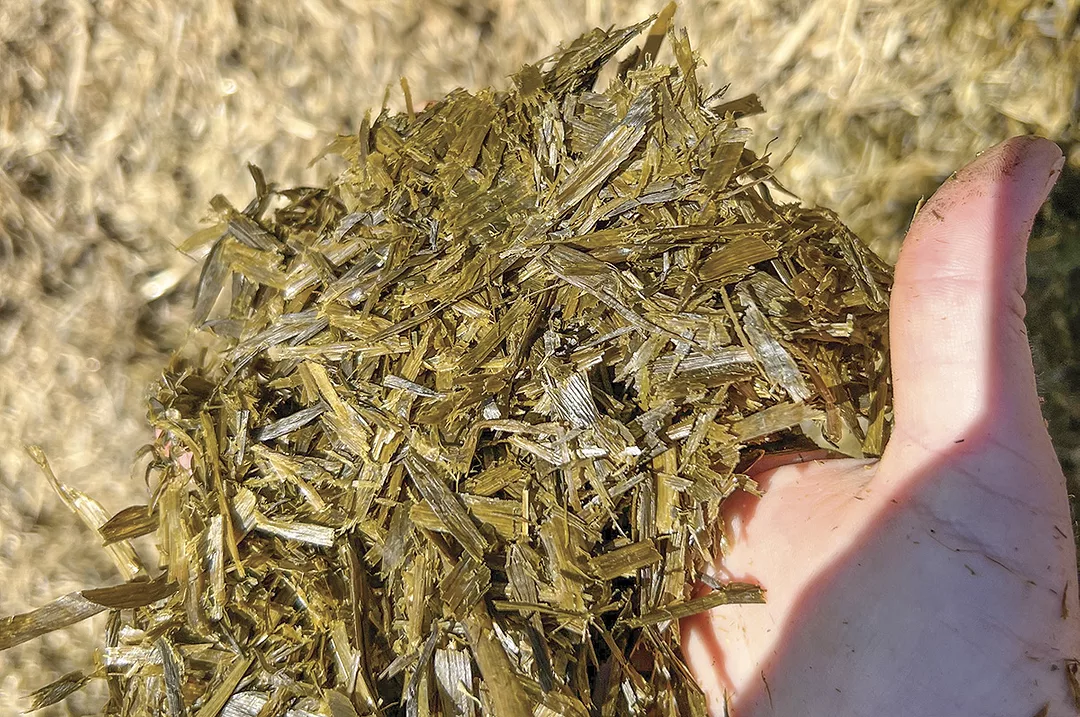
Every silage pile holds a story, and not all of them end the way we expect. One pile feeds predictably for months, while another quietly chips away at intake or milk production. Producing high-quality silage is essential for maximizing dry matter intake and supporting milk production, yet it remains one of the most complex and unforgiving areas of forage management.


As another silage season approaches, it’s worth asking: What did last year’s silage actually tell you?
A “silage CSI” approach treats your fermentation analysis report like a case file. Each result is a clue that helps reconstruct what happened during harvest, ensiling, storage and feedout. Together, those clues can explain why a silage performed the way it did and what adjustments could prevent problems next season. When we connect those dots, silage becomes less of a guessing game and more of a repeatable, manageable system.
Dry matter: The foundational clue
Dry matter (DM) percentage is often the most revealing clue in any silage investigation. It sets the stage for nearly everything that follows, from fermentation efficiency to feedout stability. In corn silage, DM indicates kernel maturity and starch content. In all silages, moisture determines how effectively bacteria can drive fermentation because microbes require adequate moisture to proliferate and rapidly acidify the forage.
Too dry versus too wet
- Silage harvested too dry often shows restricted fermentation, lower lactic acid production, higher pH and poor pack density that traps oxygen, setting the stage for heating and aerobic spoilage. These cases often point back to delayed harvest or the need for finer chop lengths to achieve adequate pack density.
- Silages harvested too wet paints a different picture. Dry matter below 30%, particularly in haylages, favors clostridial activity. Laboratory results often show elevated butyric acid, high ammonia nitrogen (N), protein degradation and measurable DM losses. Visually, these silages may appear dark or slimy and carry a strong rancid odor.
Getting DM right remains one of the most reliable predictors of whether a silage story ends in success or spoilage.
Reading the evidence: Key fermentation metrics
Once DM sets the stage, the fermentation profile reveals how the story actually played out. A fermentation analysis provides a quantitative assessment of silage quality, offering insight into the evidence left behind during ensiling. It captures how fermentation progressed, which microbial populations were active, how nutrients were preserved and whether any anti-nutritional compounds were formed. These reports contain key parameters such as DM, pH, ash, ammonia N, acid detergent insoluble crude protein (ADICP), lactic acid, acetic acid, the lactic-acetic ratio, butyric acid, propionic acid, ethanol, seven-hour starch digestibility, yeast and mold counts, and mycotoxin presence.
Among the most telling indicators are the fermentation acids.
Lactic acid
Lactic acid is produced predominantly by lactic acid bacteria (LAB) naturally present on the crop or applied through inoculants. It is the most powerful driver of rapid pH decline and long-term preservation. Faster lactic acid production means quicker stabilization and fewer nutrient losses. Well-fermented corn silage typically contains 4% to 7% lactic acid (DM basis), while haylage often ranges from 6% to 10%, depending on sugars and moisture.
Acetic acid
Acetic acid contributes less to pH reduction but plays a critical role in suppressing yeast and mold growth, improving aerobic stability. When either lactic or acetic acid appears at excessive levels, it can point to inefficient or uncontrolled, wild fermentations with negative impacts. For example, acetic acid levels above 4% can begin to depress intake.
Inoculant choice leaves a clear fingerprint here. Combination products containing heterofermentative strains such as Lactobacillus buchneri (L. buchneri) intentionally increase acetic acid production to enhance stability at feedout.
- Target lactic-acetic ratios are approximately 3-to-1 for silages without L. buchneri.
- Ratios closer to 2-to-1 are common when L. buchneri is used in an inoculant.
- Ratios approaching 1-to-1 or lower signals a microbial imbalance, often the result of uncontrolled natural lactic acid bacteria populations or other poor fermentation conditions.
Applying the right inoculant at harvest helps steer fermentation toward a fast, controlled outcome rather than letting native populations dominate.
Ash content
Ash content provides insight into both mineral composition of the forage and potential soil contamination. Elevated ash increases buffering capacity and slows the rate of pH decline, complicating fermentation, particularly in wet silages. Typical ash levels are 3% to 6% for corn silage and 12% to 15% for grass and legume silages. High ash combined with excess moisture creates a nearly ideal environment for clostridial growth, often leading to butyric acid production, excessive ammonia N and the need for supplemental protein in diets.
Acid detergent insoluble crude protein
Acid detergent insoluble crude protein indicates the presence of heat-damaged, indigestible protein. High ADICP levels point toward a delayed pH decline and prolonged aerobic respiration driven by management lapses such as harvesting overly dry forage that packs poorly, inadequate packing density that traps oxygen or weak or delayed sealing that allows air intrusion during storage. Additionally, elevated ash from soil contamination slows acidification, extending the exposure window for heat damage. Secondary heating at the feedout face, caused by slow removal rates, rough/undercut faces or excessive plastic removal can also raise ADICP, especially in surface layers.
Starch digestibility
Starch digestibility reveals how accessible starch is to the cow. It generally increases with storage time as the protein matrix surrounding starch granules break down. This natural breakdown of proteins releases ammonia N, which means elevated ammonia N does not always indicate clostridial fermentation. As with any forensic investigation, no single clue should be interpreted in isolation. Context is everything.
Ethanol, yeast, mold and mycotoxins: Signs of instability
Ethanol concentration
This adds another layer of evidence to the silage case file. Normal ethanol levels in corn silage and legume silages range from 0.5% to 1.5%. However, ethanol above 3% typically indicates high populations of naturally occurring yeasts utilizing lactic acid as a feed source under aerobic conditions. This is a red flag signaling instability. Once silage is exposed to oxygen at feedout, these yeasts become active, consuming lactic acid, raising pH, generating heat and accelerating spoilage.
Yeast counts
Counts above 1 million cells per gram dramatically reduce aerobic stability. High yeast levels are also associated with reduced dry matter intake and rumen upset, which is clear evidence of a compromised feed source. While yeasts are often the first organisms to leave clear fingerprints in cases of aerobic spoilage, molds and the mycotoxins they may produce represent a serious issue.
Mold
Mold can develop in the standing crop under field stress or develop later from oxygen exposure caused by poor packing, weak sealing, slow feedout rates or compromised face management. Once oxygen enters the system, molds can colonize the pile or bunker and create visible white, red, green, blue or black growth. However, the most concerning evidence they leave behind is often invisible to the naked eye. Certain mold species can produce secondary metabolites known as mycotoxins.
Mycotoxins
Mycotoxins are remarkably stable and can persist long after the mold itself has died. This means otherwise good-looking silage may still harbor active toxins that originated in the field or developed after harvesting. Mycotoxins can impair immune function, reduce DMI, disrupt rumen efficiency and contribute to a variety of herd health challenges.
Feedout follow-through: Where cases are won or lost
Even a well-fermented silage can fail at feedout. Poor feedout practices can undo months of good management, triggering nutrient losses, heating and spoilage.
The primary objective at feedout is to remove silage at a rate fast enough to prevent oxygen from penetrating the face:
- Typically, 6 to 12 inches per day during colder months
- Up to 18 inches per day in the summer
Once oxygen infiltrates the exposed surface, yeasts reactivate and begin consuming lactic acid, the very compound responsible for keeping pH low and silage stable. As lactic acid disappears, heat rises, pH increases and the environment shifts in favor of molds and secondary spoilage organisms. This deterioration can occur not only at the exposed face but also in any drop piles created during defacing.
If you find that silage is heating in the bunk, a CSI-style sampling approach of collecting samples immediately after defacing, again at the feed center and finally from the total mixed ration can help identify where oxygen first gained access and pinpoint the true source of the problem.
Closing the case
Producing high-quality silage requires managing every step with precision and evaluating the process like a silage CSI investigation. A fermentation profile serves as the final case report, revealing what truly occurred during ensiling. When pH, acids, ammonia N, starch digestibility, ash and microbial counts are interpreted together, they provide a complete picture of fermentation success or failure. Using these clues to guide improvements in moisture targets, harvest practices, inoculant selection and face management helps protect forage quality and support consistent animal performance and farm profitability.