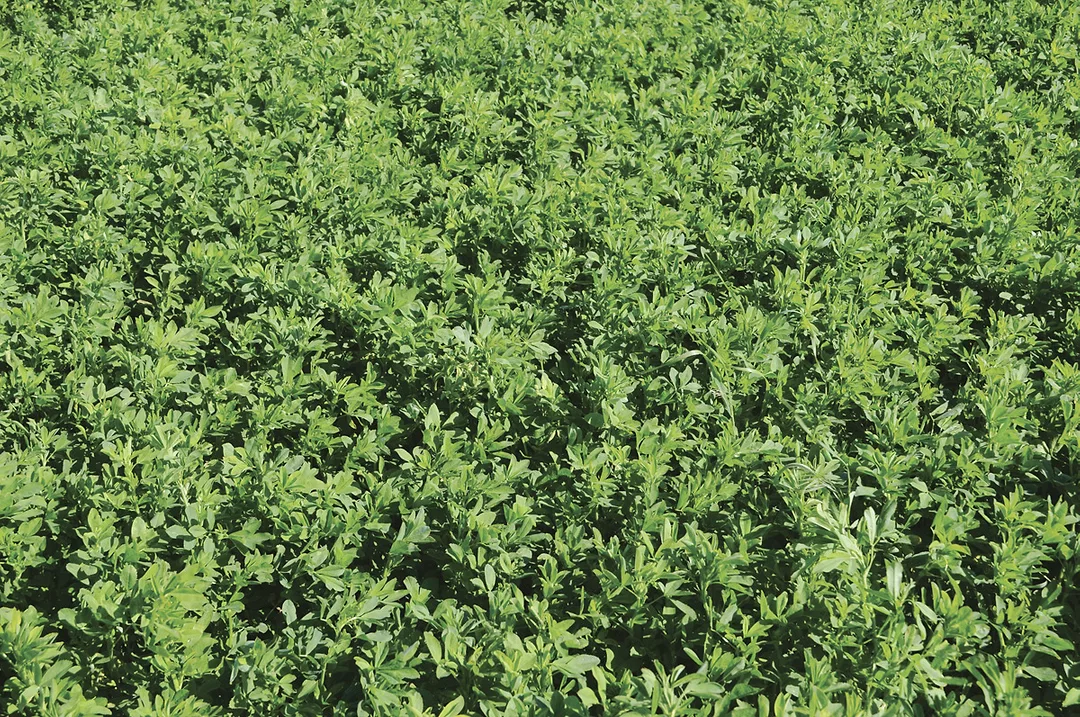
Hay acres are climbing again this season – up roughly half a million acres nationwide, with some of the biggest increase in Iowa, Missouri and Wisconsin. As more operations take on additional ground ahead of first cutting, the pressure to stay timely only grows. That makes equipment sizing, field efficiency and weather‑window management more critical than ever.

To understand what producers should watch for as they scale up – and how to know when it’s time to rethink the lineup before quality slips – I asked an equipment specialist who works directly with forage operators across the central U.S.
Alan Osterhaus is a territory product specialist with Claas covering the central U.S. and has over seven years of hands‑on experience working with forage equipment. His work centers on machine settings, optimization and operator training. Throughout the season, he rides along with customers during demos, startups and on‑farm visits to help fine‑tune performance under real‑world conditions. During the off‑season, he develops training materials and leads customer clinics, giving him a clear view of how equipment decisions play out across a wide range of operations.
First cutting sets the rhythm
Weather remains the defining pressure point. Too much or too little rainfall can shift crop maturity quickly, tightening the window to hit forage quality targets. Many farms are also juggling planting at the same time they need to switch gears for first cutting.
“Operations that are in the middle of planting and having to switch gears quickly in order to get first cutting complete is another pressure beyond weather constraints,” says Osterhaus. “Probably working with some employees that already have put in extra hours planting and then asking for a good start to that forage season can be challenging.”
Because first cutting establishes the pace for the rest of the year, delays early on tend to ripple through the entire harvest season.
Equipment demand: Steady, with regional shifts
With corn acreage decreasing and soybean acreage increasing, forage equipment demand is holding steady overall – but increasing in areas where hay acres are expanding. Beef operations continue to drive much of the increase.
“Demand for new forage equipment is steady, with small increases in demand that have a heavy presence of beef cattle,” says Osterhaus. “Most others are rolling into new or newer equipment if they have determined that their older equipment is too tired.”
Upgrading equipment is a major investment, but so is losing forage quality. The first step is understanding cost of production per pound of milk or gain, then comparing homegrown forage quality to what’s available on the market.
“This year there is limited snowpack in the central Rockies, so we can expect that hay producers in those areas will be demanding a premium for their alfalfa,” adds Osterhaus. “Producers should be prepared to place an emphasis on high‑quality forage this season to protect their bottom line.”
One practical indicator is how much forage quality drops from the start to the end of a cutting window. If it takes five days to harvest and quality declines sharply – even under stable weather – the equipment lineup may be undersized.
“If we see relative forage quality drop by more than a small amount between cutting and final packaging, that indicates a bottleneck somewhere in the harvest process that is reducing overall forage quality,” says Osterhaus.
Clues your equipment doesn’t match your acres
When acres increase but equipment stays the same, the first warning signs often show up in labor and downtime.
“If we add acres but don’t add labor to cover the longer hours, that can become a bottleneck,” Osterhaus says. “As machines rack up more hours, the usual buffer between breakdowns disappears. Suddenly that pause you used to count on isn’t there, and you’re left asking, ‘Who fixes this machine while the rest of the fleet keeps running?’”
This becomes especially challenging when the person who normally fixes equipment is also the primary operator.
Signs your equipment is operating beyond its limits
There is no universal acres‑per‑hour benchmark, but consistency is the clearest indicator of whether a machine is keeping up.
“As long as the crop flow is smooth, then we must be doing something right,” Osterhaus says. “When tons per hour or bales per hour become sporadic, it signals a bottleneck – and the issue isn’t always the machine you’re looking at. Sometimes it isn’t the harvesting machine – maybe it was an issue with the merger, rake, tedder or mower in front of the chopper that is creating this challenging crop flow.”
Frequent failures of high‑stress components are another warning sign.
“Belts either slipping or completely failing on a pretty regular cadence – knotter issues, engines overheating,” he says. “If all of a sudden, we’re burning through clutch discs on a faster‑than‑normal basis, that would be another indicator.”
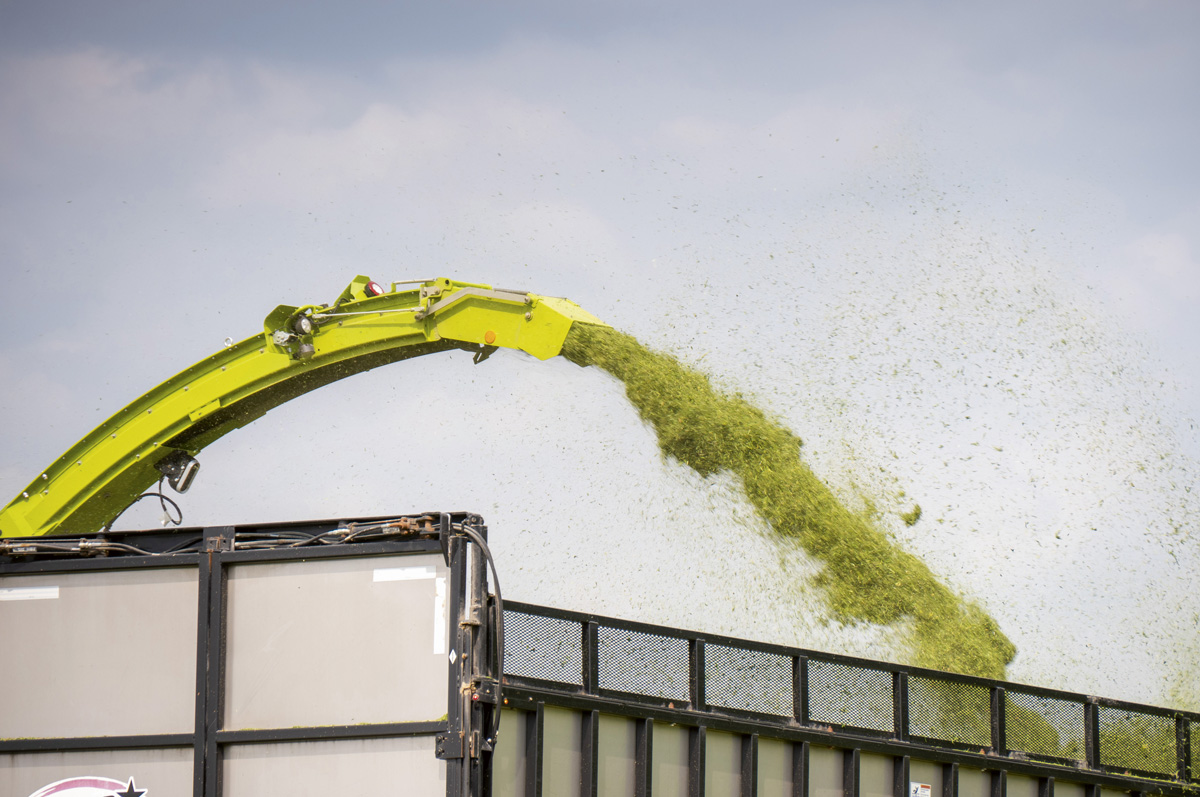
A forage harvester fills a truck with haylage during harvest. Image courtesy of Claas.
Aligning equipment capacity with acres and timing
Evaluating mower, rake, baler and forage wagon capacity starts with identifying the bottleneck in the system. The slowest step determines the pace of the entire harvest chain.
“The capacity of your complete harvest chain is going to be driven and determined by the capacity of that bottleneck,” Osterhaus says, referencing the theory of constraints. “Once identified, producers can either add capacity at that point or adjust cutting strategy – for example, harvesting 500 acres at a time instead of 1,000.”
Uniformity in forage wagons or trailers also matters more than many realize. Mixing short and long trailers can disrupt the entire cadence of chopping, hauling and packing. Matching box size smooths the flow and reduces pile‑side variability.
Weather variability is narrowing the window
Shorter, less predictable cutting windows are pushing more farms to evaluate whether they need additional capacity. Some are moving to larger machines; others are adding more units of moderate size.
“There’s trade-offs for both,” he says. “Larger machines reduce operator needs but create bigger disruptions when they break down. More, smaller machines require more labor but offer redundancy.”
The most common misstep is assuming the existing lineup can simply work longer hours. Without adjusting labor, maintenance planning or machine capacity, downtime increases and quality declines.
“Given that additional usage on that equipment and planning for it is where many farms fall short,” adds Osterhaus.
Small changes that make a big difference
Sometimes the most effective improvements aren’t new machines but better support systems. Keeping high‑use parts and tools closer to the field – either in a nearby shop or in the transport truck – can significantly reduce downtime.
“That helps keep uptime that we’re looking for, which we can directly correlate right to crop quality,” he says. “Dealers offering preseason parts programs also help ensure critical components are on‑farm when needed.”
Looking ahead
As hay acres expand and weather windows tighten, producers are taking a closer look at whether their equipment lineup can keep pace. Identifying bottlenecks, monitoring crop flow, watching maintenance patterns and planning labor needs all help ensure forage quality stays high – even as hay acres grow this year.
To read the report, visit the website.