There is a stretch of time on every dairy that quietly determines how well a cow will perform during her lactation. It lasts just a few weeks before and after calving, but its impact shows up for months. The transition period is when cows either get off to a smooth, productive start or begin a chain reaction of health and performance problems that are hard to fix later.

What’s interesting is that the latest research hasn’t dramatically changed what we thought we knew about transition cows. Instead, it has refined it. It has taken familiar concepts, like energy balance, protein levels, mineral programs and fiber, and made one thing very clear: Success doesn’t come from pushing harder. It comes from balancing smarter.
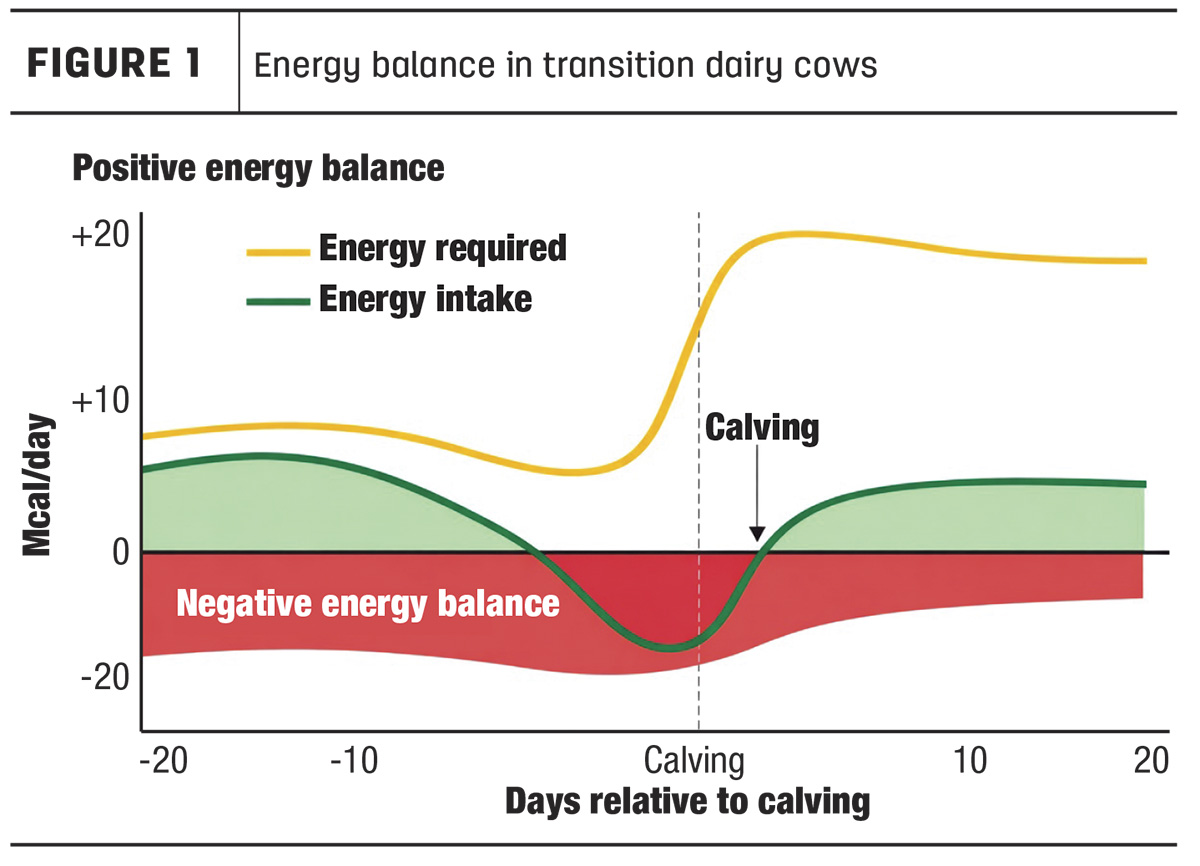
Energy remains the starting point of the conversation, and for good reason. Nearly every metabolic issue in early lactation traces back, in one way or another, to how energy was managed leading up to calving. It is tempting to think that feeding more energy before calving will give cows a head start, but the reality tends to be the opposite. Cows that are overfed during the dry period often become overconditioned, and those cows are the ones that back off feed just when they need it most. Intake drops before calving, stays low afterward, and suddenly the cow is mobilizing large amounts of body fat to keep up. That’s when ketosis, fatty liver and other metabolic problems start to surface.
The most successful herds today take a more controlled approach. Rather than pushing energy into dry cows, they focus on maintaining steady, consistent intake with diets that are higher in forage and fiber and lower in energy density. It may not look aggressive on paper, but it sets cows up to transition more smoothly. Once the calf is on the ground, the strategy shifts. Energy is increased, but not all at once. Starch is introduced carefully, allowing the rumen to adapt while supporting the rapid rise in milk production. It is less about how much energy is fed and more about when and how it is delivered (Figure 1).
Protein nutrition has gone through a similar shift in thinking. For years, the focus was on hitting crude protein (CP) targets, often with the assumption that more was better. Today, that approach is being replaced with a more precise understanding of how protein actually functions in the cow. It is not just about the protein concentration in the diet. It is about whether the right amino acids are available and whether they are being utilized efficiently.
Recent work has highlighted the importance of key amino acids like methionine and lysine, showing that when they are properly balanced, cows respond with improved milk production, better metabolic function and stronger recovery after calving. But even that only works if the rest of the diet supports it. Protein and energy are tightly linked, and when they fall out of sync, the system breaks down. Excess protein without enough available energy doesn’t translate into performance; it turns into waste. Nitrogen is excreted, energy is lost in the process, and the cow is left trying to catch up.
That is why the current approach is more about precision than abundance. Moderate protein levels, carefully balanced amino acids, and a close match between protein supply and energy availability are what drive results. It is a quieter, more efficient way of feeding, but it consistently outperforms the old “more is better” mindset.
While energy and protein often get most of the attention, minerals, especially calcium, continue to play a decisive role in transition success. At calving, the cow’s demand for calcium increases dramatically, and her ability to respond to that demand determines how well everything else functions. When calcium levels fall short, intake drops, immune function weakens, and the risk of issues like retained placenta, metritis and displaced abomasum rises quickly (Figure 2).
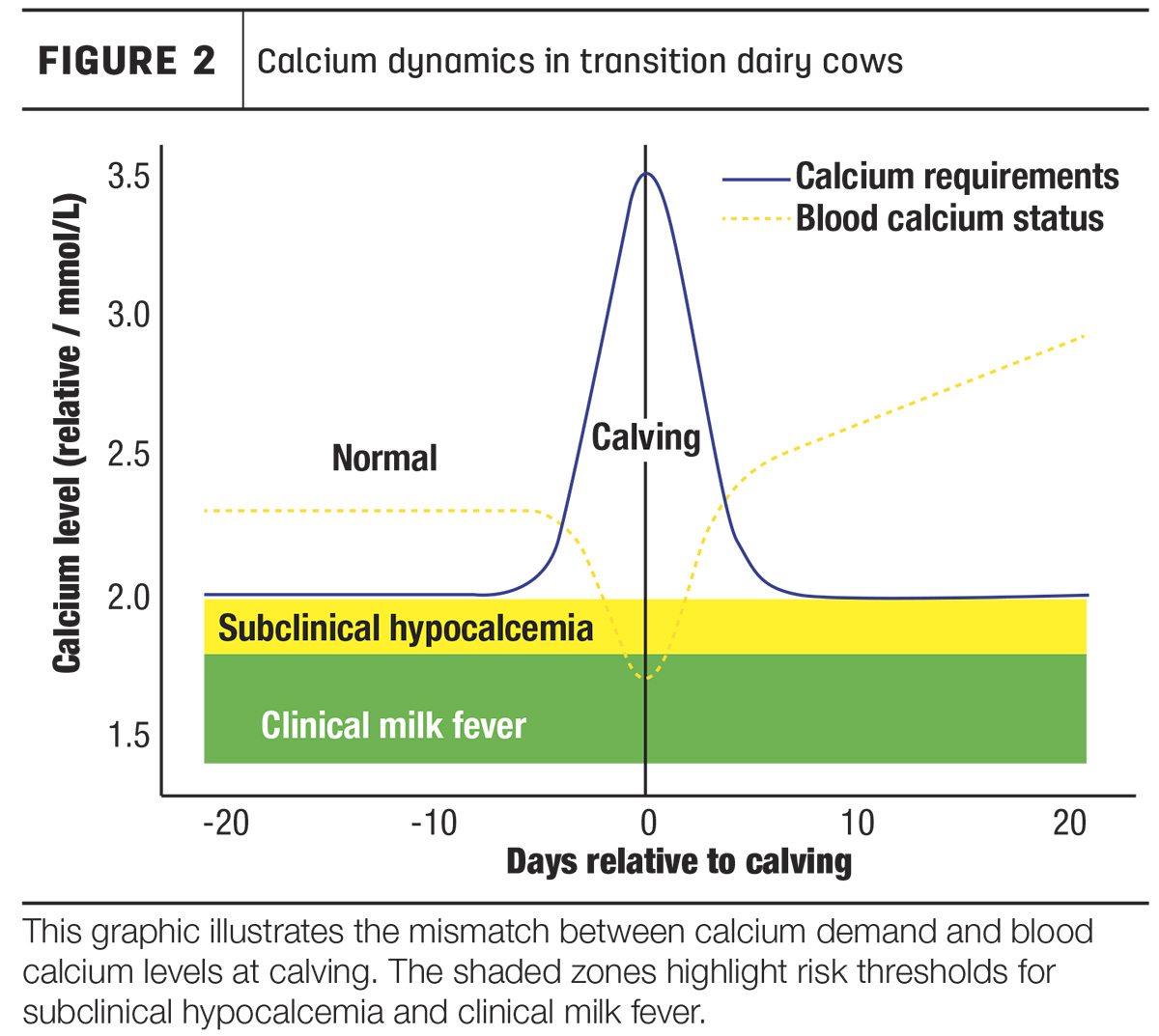
This is why calcium management remains one of the most reliable investments a producer can make. Prepartum diets designed to create a slight metabolic acidosis, commonly referred to as negative dietary cation-anion difference (DCAD) diets, help cows mobilize calcium more effectively at calving. It is a strategy that has been around for years, but it continues to prove its value. What is evolving is the broader understanding of how minerals fit into the whole system. Magnesium, for example, is essential for proper calcium metabolism, and trace minerals like zinc and selenium are now recognized for their roles in immune function and inflammation control. Even so, the core principle holds steady: When calcium is managed correctly, many other problems become easier to avoid.
Then there’s fiber. It is the component of the ration that rarely gets much attention outside of nutrition meetings but quietly influences nearly everything happening in the cow. Fiber is what helps regulate intake before calving, keeping cows from overconsuming energy while maintaining rumen fill and function. After calving, it becomes the stabilizing force that allows higher-energy diets to work without tipping the rumen into acidosis.
But fiber’s effectiveness depends on more than just numbers on a ration sheet. It depends on how the feed is delivered and consumed. Inconsistent mixing, sorting at the bunk, or irregular feeding schedules can all undermine what looks like a well-balanced diet on paper. In that sense, fiber is not just a nutrient but also a management tool. It helps control the system, but only if the system is managed well.
What ties all of this together is the growing recognition that none of these factors operate independently. Energy, protein, minerals and fiber are all connected, and a weakness in one area tends to show up in others. Overfeeding energy can reduce intake and limit protein utilization. Poor fiber management can disrupt rumen function and reduce energy availability. Inadequate or unbalanced mineral programs can suppress intake and amplify metabolic stress. It is a system, and it works best when it is treated as one.
The dairies that consistently get the best results during the transition period aren’t necessarily the ones using the most complex rations or the newest additives. More often, they are the ones that execute the basics with discipline. Their dry cows are managed to maintain condition. Their diets transition smoothly from prepartum to postpartum. Their feeding practices are consistent day after day. And they pay close attention to how cows respond, not just to what’s written on paper.
When that level of consistency is in place, results tend to follow. Cows come into lactation healthier, peak higher and breed back more easily. Health events decline, treatment costs drop, and the entire system becomes more predictable.
Transition cow nutrition isn’t about chasing the next breakthrough; it is about applying proven fundamentals with greater precision and accuracy.