In the age of information, social media drives misinformation and fear. Mismanagement and large lawsuits in one sector of agriculture can quickly direct public distrust against an entire industry, even when unrelated. As fewer Americans are involved in farming practices, more people learn of the industry through negative news. Unclear headlines and reporting can lead to misunderstanding around agricultural practices such as manure application.

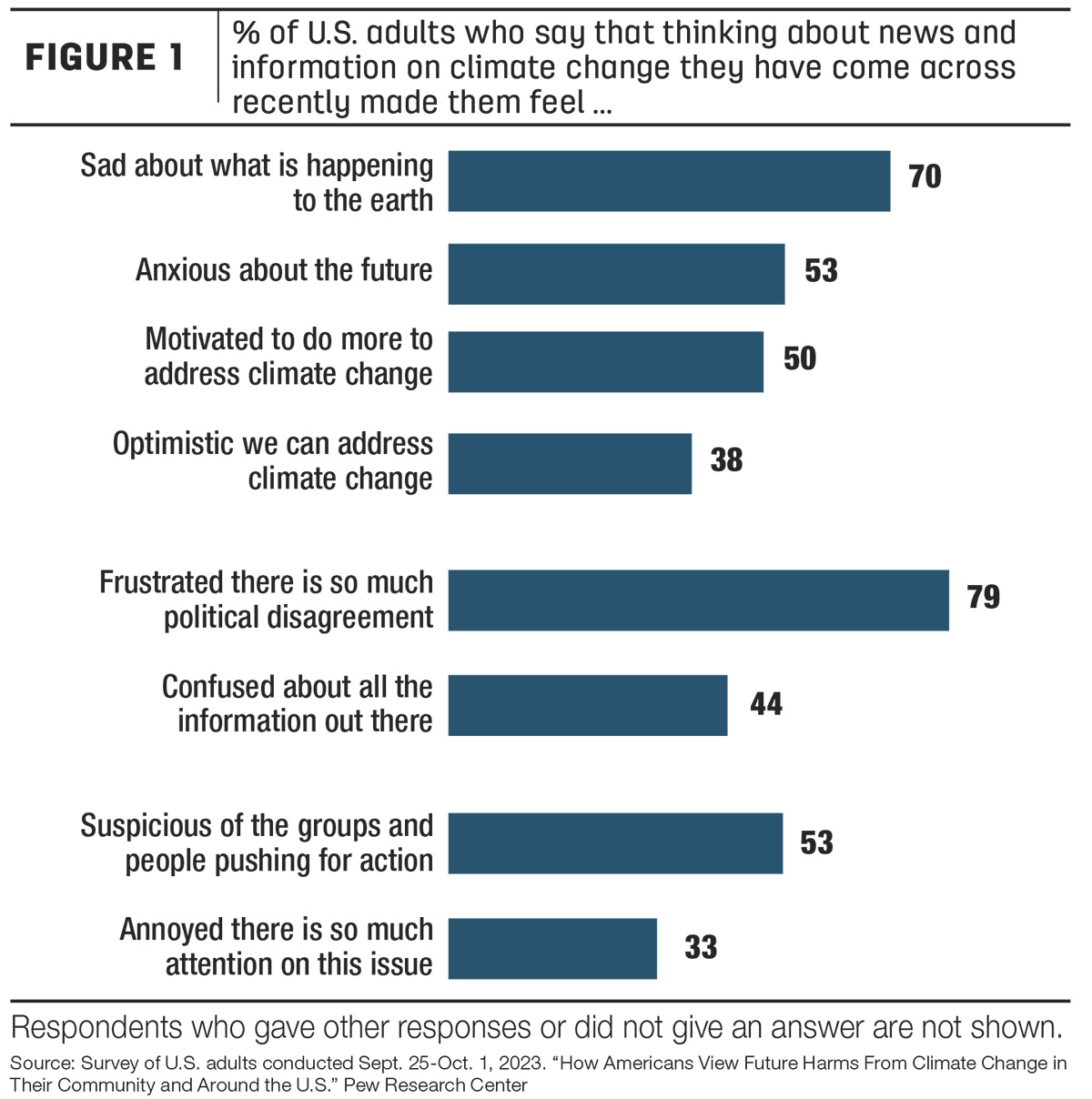
Younger Americans have been found to care more about climate change and the impact certain industries have on the environment. The notion has been around for decades but has increased exponentially in recent years. Studies from organizations such as Pew Research Center and the World Economic Forum (Figure 1) suggest that around 70% of Gen Z and younger report that they are extremely or severely worried about climate change.
Whether it is something you consider serious or not, the market indicates that customers, particularly future customers, are concerned about a climate crisis. Agricultural companies have a direct relationship with the land and the weather that affects it. The connection raises expectations to be conscious of the environmental practices being used as those in agriculture can be among the first to feel the effects of environmental change. Branding your dairy production or custom application business as environmentally friendly positions you to anticipate a long future of working with the land.
Sustainability as a concept regarding the environment is specifically about the longevity of protecting the resources that make your business possible. Highlighting that your company is investing in a sustainable future shows end consumers and local neighbors that your company plans to still be operating to see that future. Fortunately, best practices for beneficial and efficient manure application often lean on the side of being environmentally friendly when done with care.
Framing manure as an environmentally friendly alternative to fertilizer
One of the easiest reasons to convince someone of manure application is the availability of the material. Not only is it locally sourced, but it is going to be produced whether you want it or not. Unlike commercial fertilizers, manure is found within a few miles of the field needing nutrient application. There is less fuel cost and no chance of tariffs, making it environmentally and economically favorable.
The application of manure, particularly when transferring slurry with a dragline, can have a variable impact on the land depending on administration. Manure can be considered more sustainable and eco-friendly than applying commercial fertilizer, but the method of manure application often differs by region and geographic obstacles.
The rate of manure application and how many gallons is applied to the field is determined by a third-party crop consultant or adviser. These experts look at environmental factors and regional nutrient management regulations to determine appropriate application rates.
Highly erodible land (HEL) areas may require less disturbance, but intentional tillage with nutrient additions can be beneficial when possible. Dairy manure is preferably applied deeper in the soil, extending far enough below the surface to reach the root zone of crops like corn. The depth is determined by application rates and the tillage desired by the landowner. Higher rates of liquid manure application require deeper cavities to hold the slurry and prevent runoff.
There are two different types of nitrogen found in dairy manure: slow-release organic nitrogen and the readily available ammoniacal nitrogen. The ammoniacal nitrogen is comparable to commercial fertilizer, and the nitrogen loss can be lost very quickly when exposed to the air. For this reason, injecting manure is considered a best practice when applying nutrients, as it retains about 97% of available nutrients when compared to other application methods.
Manure injection, compared to incorporation, broadcasting or spraying, leads to less runoff and fewer nutrients in the water, which is a point of contention in the media. Field injection of slurry also supports the four R principles of nutrient stewardship: right source, right rate, right time, right place. Not only do the four R's promote environmental protections, they provide the structure to reach production and profitability goals.
Bonus benefits
Dragline manure application has more benefits to community members than just environmentally sound practices. The less time manure is in contact with the air, the less odor it produces. Agitating and applying manure below the surface greatly cuts back on unpleasant smells while retaining the most nutrients. Additionally, the use of hose lines and booster pumps over manure tankers minimizes traffic on roads, cutting back on road dust and gravel displacement.
Letting the field sit as untouched as possible after application for nutrients to absorb minimizes the creation of mud and mess. Less disturbance keeps nutrients in the ground and minimizes runoff. Working the end rows first can create an absorption zone to retain manure in the field. This both looks pleasing to the eye and acts as a visual aid to neighbors that you are working against the growing talking point of nitrates in the water. Sometimes something as simple as a visual demonstration of working with the public to prevent their concerns can be beneficial in easing potential relationships and earning good graces.
Talking the talk includes walking the walk
Addressing the concerns of someone unfamiliar with agricultural practices is an opportunity to educate someone when done respectfully. If a person is outspoken enough to ask questions of a stranger they believe to be in the wrong, they are outspoken enough to relay your response to their peers. No one is immune to misinformation, and it is not fair to assume that questions regarding your practices are a personal attack. You’ll catch more flies with honey than vinegar, and you’ll correct more misgivings with a respectful conversation than arguments. How they choose to receive the information is in their hands, but you can say you’ve done your part to provide accurate information of your work.
Convincing skeptics that your job is beneficial to the community, on both a local and national level, includes practicing what you preach. Many companies across industries in recent years have been accused of greenwashing, which never looks good for the exposed company. Greenwashing is a term that describes the marketing spin on products to make them seem more environmentally friendly than they are. One common example is single-use plastic water bottles depicting nature scenes on packaging that populates landfills.
Owning or working acres of land is a serious responsibility. The best businesses are the ones that plan for the future, and investing in the best environmental practices is necessary for the future of agriculture. Good stewardship of the land can help ensure that your children’s children can enjoy the same opportunities, if not more.
Conclusion
No matter your opinion on climate change or environmentally sustainable practices, they can be visually and scientifically beneficial. Sustainable branding in an industry that works directly with the land and its resources is vital to showing forward thinking, intentional planning and care for the work you do.