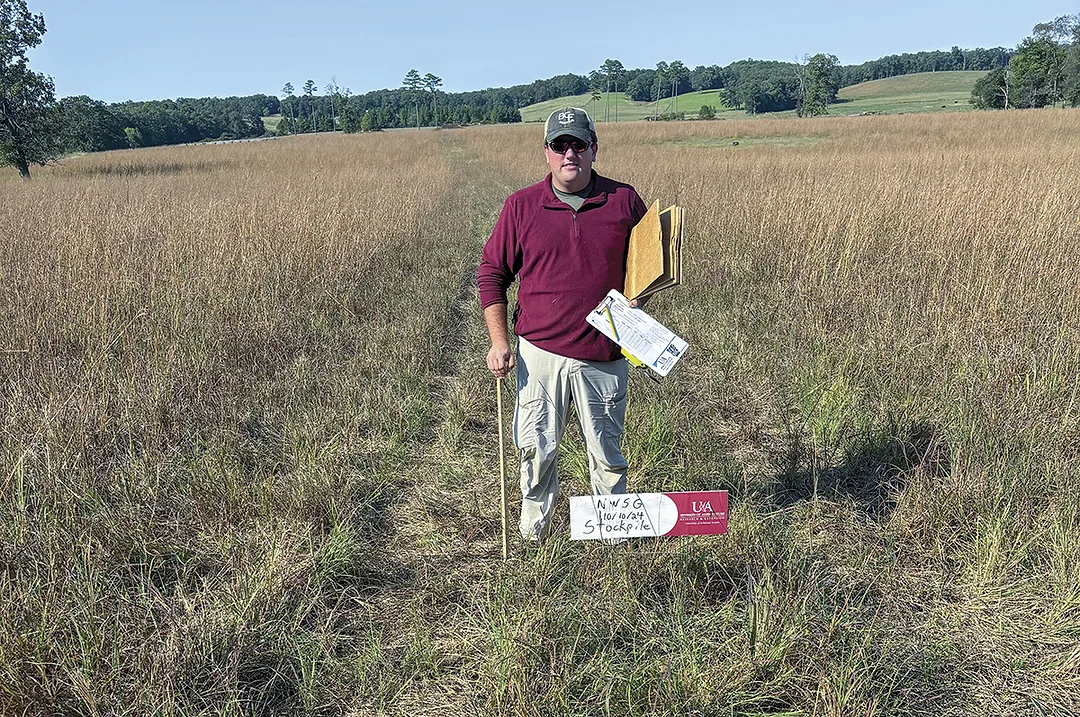
Grazing management is never easy in the U.S., but in some places, it may be more or less difficult. In particular, the transition zone of the U.S. between the Fescue Belt and Bermudagrass Belt – that is, the lower Midwest, Upper South and Mid-Atlantic – has the advantage of growing almost any cool- or warm-season forage. But forage production in the transition zone presents challenges during the fall months.



In this region, tall fescue growth is limited by heat and low precipitation during the fall, and warm-season forages, such as bermudagrass and bahiagrass, grow slowly due to cooler night temperatures. This results in a forage gap from September through November, when neither forage flourishes.
Improved grazing management, such as the management systems described in the Arkansas 300 Days of Grazing Program, can reduce the amount of hay fed over the calendar year. Much of a sound grazing program comes down to stacking forage options and then planning out grazing opportunities. This approach has led to several solutions for the fall forage gap. The fall forage gap can be closed at either end through improved use of existing forage bases or the use of winter annuals. These forages can reduce the need to feed hay prior to and after the fall forage gap. Solutions to filling this gap historically have been to stockpile fescue, bermudagrass or bahiagrass or to plant annual forages in late summer. Concerns about drought tolerance for these traditional options and what seems to be a shifting weather pattern have led to interest in exploring alternative forage options.
Native warm-season grasses (NWSG) (such as big and little bluestems, as well as indiangrass) were present historically across most of North America. These species have been used recently during the growing season to mitigate fescue toxicosis, enhance animal performance and reduce parasite loads. These species are known to have better water use efficiency than many traditional forages. These attributes make them an attractive option for summer grazing. However, their off-season use in the humid southeastern U.S. has been limited. A study conducted in Tennessee used dormant NWSG in the winter, but the heifers on test required aggressive supplementation. Given current recommendations for other warm-season grasses, what if NWSG could be used in the fall?
We sought to develop a stockpiling strategy comparable to those used for other warm-season forages and to determine if native grasses could help fill the fall forage gap. We studied native grass stockpiling in Booneville, Arkansas; Batesville, Arkansas; and Drasco, Arkansas. We selected stands of big bluestem or big bluestem mixtures and initiated a stockpile in early August by clipping the stands to an 8-inch stubble height with a rotary mower.
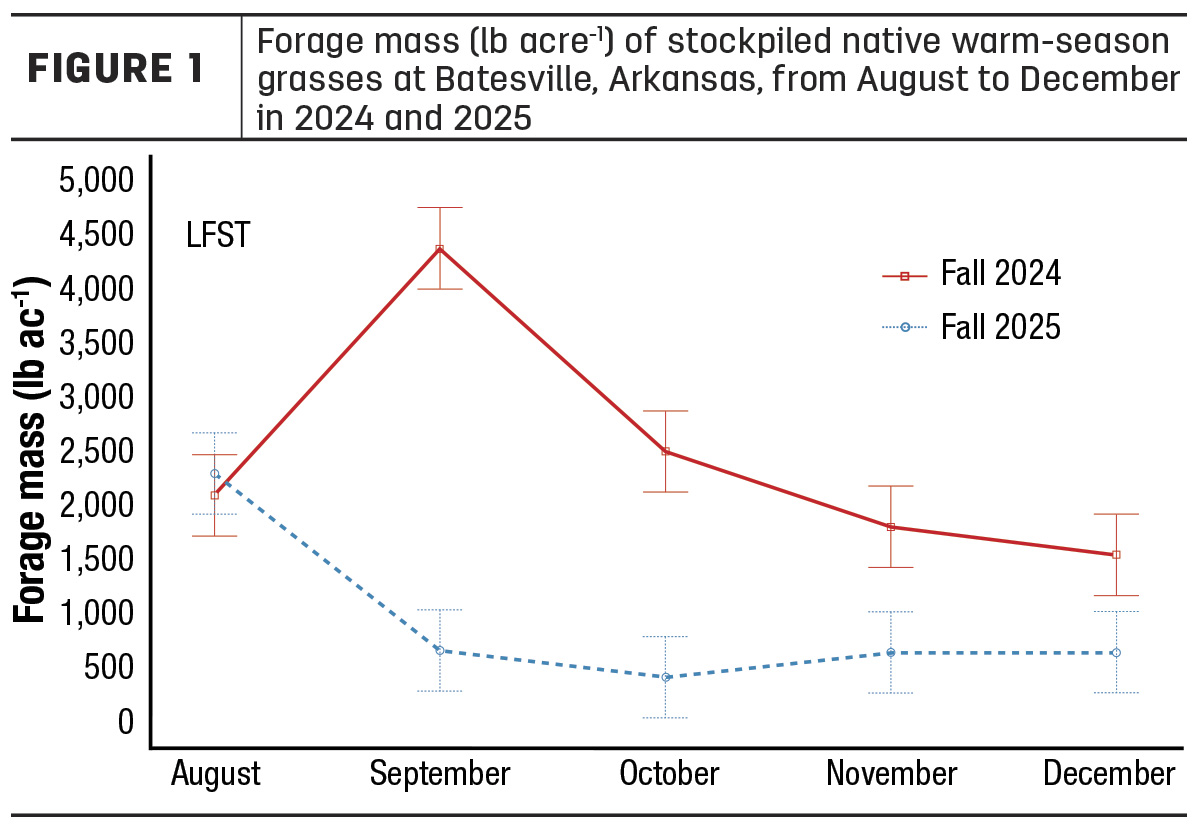
Stands were allowed to accumulate forage from August to December (Figure 1). We sampled monthly to monitor forage accumulation above an 8-inch stubble, nutritional value and the botanical composition. Samples were oven-dried, weighed and ground for nutritive analysis using near-infrared reflectance spectroscopy (NIRS).
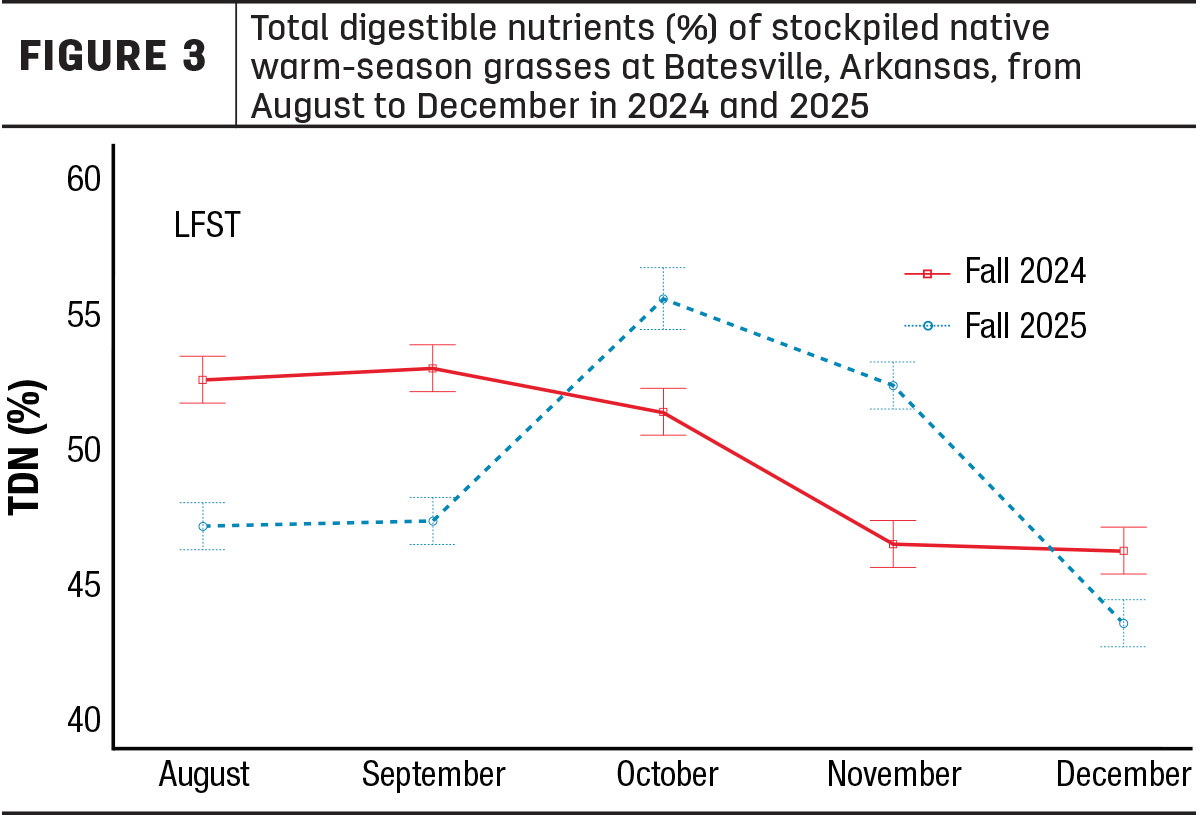
The trials showed a classic tradeoff in quantity and quality in both years across locations. We traded a large quantity of mature, end-of-season growth for vegetative, leafy growth when we initiated stockpiling. Stockpiling improved the nutritive value of the forage, particularly between September and November (Figure 2). However, after the first hard freeze, the nutritive value quickly declined in stockpiled stands (Figure 3). Our locations faced dry spells and moderate drought in 2024, but in 2025, two of our locations remained in severe drought (D2) for the duration of the test. We did not harvest any samples below an 8-inch stubble, though we could potentially graze the dormant stands even lower. Extreme drought may limit the production of the native stockpile, but our estimates allow for some strategic overgrazing even at lower levels. More importantly, we didn’t see any stand damage in the growing season after stockpiling stands.
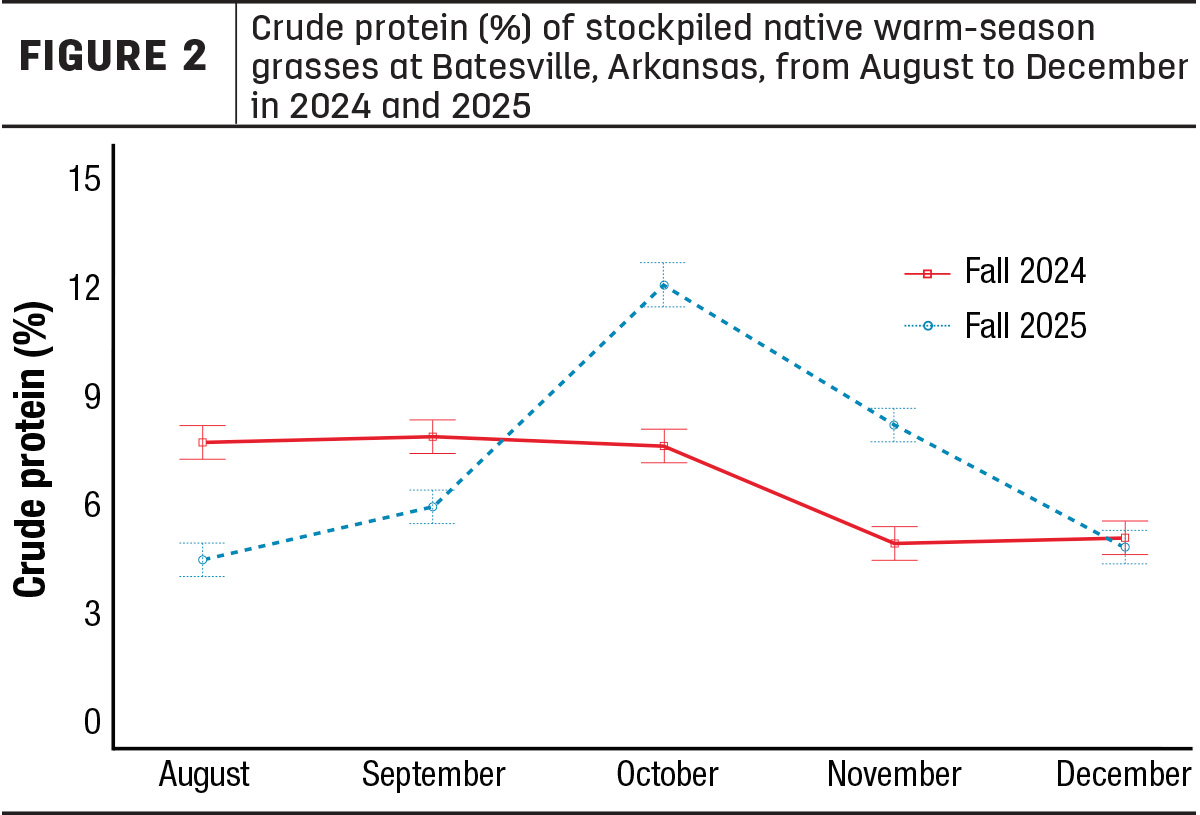
Our nutritional values in October and November seemed to fit carrying dry cows or providing limited supplementation to lactating cows. Spring-calving cows may graze stockpiled NWSG through the fall transition period, especially at lower stocking rates (1-3 acres per cow, depending on grazing length), without added supplementation. If supplementation is necessary for these cows, it can be minimal and may be accomplished with lower-cost feedstuffs such as soybean hulls, which may also allow flexibility in stocking rates.
Fall-calving cows will require more supplementation, likely necessitating something such as dried distillers grains or a transition to a different forage due to their increased requirements from lactation. These fall-calving cows would probably also need to be stocked at a lower rate (2-4 acres per cow, depending on grazing length), as their intake will be higher given their nutritional needs. Using our Arkansas Forage Advisor, we even saw potential for using the material for flushing goats and ewes. Our potential supplementation needs are much lower in contrast to that earlier Tennessee study.
Results reinforce that warm-season stockpiles should be used in the fall between frost and before freeze. Still, these results suggest that growing heifers or stockers should not graze stockpiled NWSG, unless a producer fully plans to provide an aggressive level of supplementation in order to achieve favorable growth. When comparing this approach with traditional fall options, native warm-season grasses seem to align with stockpiling bermudagrass or bahiagrass nutritive values. Tall fescue and late summer annual plantings might have higher nutritive value during this period, but they might ideally be saved for grazing even later into the fall and winter.
Stockpiling NWSG has more potential in the geographical transition zone than previously suggested. When incorporated into a proper grazing system, these stands might bridge gaps in both warm- and cool-season growth. Instead of pressuring tall fescue or bermudagrass acreage, grazing might work in October and November for NWSG fields. While it may not carry the entire herd, it can carry a sizable portion of the herd. For folks with these native grass stands, there seems to be an opportunity to get another 30 days of use off a special forage crop.