We use cookies to provide you with a better experience. By continuing to browse the site you are agreeing to our use of cookies in accordance with our Cookie Policy.
  • Sign In
  • Create Account
  • Sign Out
  • My Account
subscribe / renew
  • Topics
    • All recent articles
    • Breeding
      • Dairy Genetics
      • Dairy Reproduction
    • Cow Care
      • Cow Health
      • Dairy Welfare
      • Hoof Care
    • Dry & Transition Period
    • Equipment
      • Farm Equipment
      • Milking Equipment
      • Technology & Software
    • Facilities
      • Comfort & Cooling
      • Dairy Barns
      • Manure Management
      • Pest Control
    • Feed & Nutrition
      • Dairy Feed & Diets
      • Forages
    • Milk Quality & Production
      • Milking Hygiene
      • Production & Components
    • Youngstock
      • Calf Health
      • Calf Nutrition
      • Heifer Raising
      • Youngstock Housing
    • Business Management
      • Employees & Consultants
      • Farming with Family
      • Finances & Profitability
      • Succession Plans
    • Canada Farm Features
  • Blogs
    • From the Editor
    • Guest Blogs
  • News
    • Canada Dairy Issues
    • Dairy Consumption
    • Dairy Trade Agreements
  • Buyers Guide
  • Magazine
    • Current edition
    • Past Issues
  • Advertise
  • Ask AgProud
USFR

Progressive Dairy

Progressive Dairy Canada

PD Canada en Francais

Progressive Cattle

Progressive Cattle Canada

Progressive Forage

Agproud Idaho

Home

Home » Topics » Progressive Dairy — Canada » Milk Quality & Production

Milk Quality & Production
Milk Quality & Production RSS Feed RSS

Canola meal adds persistent milk yield throughout lactation

A 10-week trial shows new results for canola meal and lactation persistency.
June 1, 2023
Brittany Wood and Essi Evans

Persistency is usually considered a genetic trait. However, a new study shows that nutrition may play a larger role than originally thought.


Read More

Mastitis control: Prevention is better than cure

Technology and automation help dairy farmers deal with the daily demands of parlor management, and provides prevention and protection against mastitis.
May 4, 2023
Warwick Cross

Technology and automation are helping the modern farmer deal with the daily demands of herd and parlor management. There is also technology to help with the identification of mastitis cases within the herd, known as automated mastitis detection (AMD).


Read More
56575-thomas-double-a-dairy--workers-milking-cows.jpg

How to create better stimulation in the parlor

Understanding the biology behind milk letdown can increase productivity.
April 24, 2023
Brandon Treichler

Let’s be very clear – we do not use vacuum to “suck” the milk out of the cow. She must give it to us voluntarily. If we want to milk cows more gently, quickly and completely, the goal must be to improve milk flow rates through better stimulation and milk letdowns.


Read More
57299-mcbride-20221128_170958.jpg

Cow comfort influences low somatic cell count at Skyline Dairy

Skyline Dairy understands that happy cows create high volumes of quality milk. Generating an environment for their herd to do exactly that has resulted in success for the Manitoba operation.
April 18, 2023
Matti McBride

There’s not one specific detail that has helped Skyline Dairy maintain a somatic cell count (SCC) of 50,000, but it is rather a team-based focus on cow comfort.


Read More
56751-johnson-graphic.jpg

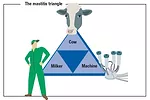
Consistency and the 'mastitis triangle'

A cow's environment, milking routine and milking equipment are key to avoiding mastitis outbreaks.
March 6, 2023
Andrew Johnson

The cow and her environment, milking routine and milking equipment are the three legs of the "mastitis triangle" – areas to pay close attention to avoid mastitis outbreaks. Read all about it here.


Read More
0619ca lee lely 6

Udder health in robotic milking systems

Robotic milking systems have many differences from a traditional parlor – especially when it comes to udder health. Managing by exception, teat health and robot maintenance are important steps in ensuring udder health.
January 25, 2023
Doug Marty

How does managing udder health differ in automated milking systems? 


Read More

Keeping it old school when it comes to mastitis treatment

As the dairy industry has changed dramatically over the past 50 years, new innovations have come with it. Treating mastitis today is similar to treatment 50 years ago, and still just as effective.
December 9, 2022
Justine Britten

Clearly we have not “solved” the problem of mastitis and the risk it poses to milk quality. While it is tempting to look to the latest sensors, supplements, on-farm tests or other technologies to hit the market to resolve this problem, let’s take a step back and review what we have learned and know to be true about mastitis control.


Read More
Finance_-_Getty.jpeg

How often are you performing a milk quality audit?

Continually analyzing milking protocols can prove to aid in profitability.
November 8, 2022
Jason Reid

How often should you do an audit in your milking parlor and adjust your protocols? Let's analyze a few different dairies around the country and consider the success they saw when conducting an audit.


Read More

Tested and true: Five strategies that improved herd performance in 2022

October 27, 2022
Amelie Mainville

Five dairy farms across Ontario decided to try something new in 2022 and came out the other side with new strategies for success on their dairies. From new feed mills to new reproductive strategies, each new practice held the key to more milk production.


Read More

The parlor: The most important place on your dairy

Appropriate timing, forestripping, pre- and post-dip, properly functioning equipment and more can ensure a productive parlor.
August 22, 2022
Jason Reid

The milking parlor is where you harvest your crop. All your effort in breeding, feeding and herd management shows up in the parlor. I often encourage employees by reminding them that they work in the "most important place on the dairy."


Read More
Previous 1 2 3 4 5 6 Next
  • Progressive Dairy — Canada
  • 8 proactive measures to add to your farm’s biosecurity plan

    July 23, 2026
  • 63651-leach-corkboard.jpg

    The state of Canadian dairy succession in 2026

    July 21, 2026
    • Fertilizers, oil and the Middle East: How international politics affect Canadian dairy

      July 16, 2026

FREE NEWSLETTERS

Award-winning coverage of in-depth news and analysis to make your business more profitable.

SIGNUP TODAY
Advertisement
THE GUIDE

How do I get my company listed in your Buyers Guide? 
Submit a request to be listed for FREE in the Buyers Guide here. 

Why can I only see so many articles before I have to register for the site?
Find out why here.

How do I listen to the Progressive Dairy podcast?
Listen here.

How do I submit an idea for an article? 
Click here.

SUBSCRIBE OR RENEW YOUR SUBSCRIPTION to Leading Industry Magazine

Award-winning coverage of in-depth news and analysis to make your business more profitable.

SUBSCRIBE OR RENEW TODAY
Advertisement

I'm looking for ________

Find the right products and services for your farm, ranch or operation.

CHECK OUT OUR BUYERS GUIDE
Advertisement
PERSONALIZED CONTENT
Create an account and see website content tailored to your operation.  It only takes a few seconds!
SEE RECOMMENDATIONS NOW!
Copyright © 2026 Progressive Publishing

MORE INFORMATION
  • About Us
  • Terms & Conditions
  • Privacy Policy
  • FAQs
  • Advertise
  • Shop
  • Stats Posters

OUR MAGAZINES
  • Progressive Dairy
    • Facebook
    • Twitter
    • Linkedin
  • Progressive Dairy — Canada
    • Facebook
    • Twitter
    • Linkedin
  • Progressive Dairy — en français
    • Facebook
  • Progressive Cattle
    • Facebook
    • Twitter
    • Linkedin
  • Progressive Cattle — Canada
    • Facebook
    • Linkedin
  • Progressive Forage
    • Facebook
    • Twitter
  • AgProud — Idaho
    • Facebook
    • Linkedin

CONTACT INFORMATION

Progressive Publishing
238 West Nez Perce (physical)
PO Box 585 (mailing)
Jerome, ID 83338


info@progressivepublish.com
(800) 320-1424
(208) 324-7513 (Main)
(208) 324-1133 (Fax)