We use cookies to provide you with a better experience. By continuing to browse the site you are agreeing to our use of cookies in accordance with our Cookie Policy.
  • Sign In
  • Create Account
  • Sign Out
  • My Account
subscribe / renew
  • Topics
    • All recent articles
    • Animal Welfare
      • Animal Handling
      • Cow Behavior
      • Welfare Standards
    • Barns
      • Barn Design
      • Bedding
      • Bird Control
      • Cow Comfort
      • Cow Cooling
      • Cow Flow
      • Expansion
      • Flooring
      • Fly Control
      • Lighting
      • Pen Design
      • Stalls
      • Ventilation
    • Calves & Heifers
      • Calf & Heifer Health
      • Calf & Heifer Nutrition
      • Calf Housing
      • Colostrum
      • Heifers
    • Feed Ingredients
      • Additives
      • Byproduct Feeds
      • Carbohydrates
      • Fiber
      • Minerals
      • Protein
      • Supplemental Fats
      • Trace Minerals
      • Vitamins
    • Feed Management
      • Bunk Management
      • Feed Evaluation
      • Feed Storage
    • Forage Types
      • Alfalfa
      • Alternative Forages
      • Grasses & Grazing
      • Silage
    • Genetics
      • Breeding Protocols
      • Breeding Strategy
      • Crossbreds
      • Indexes
      • Purebreds
      • Traits
    • Herd Health
      • Animal Monitoring
      • Antibiotics
      • Diagnostic Tests
      • Digestive Issues
      • Dry Cows
      • Fresh Cows
      • Infectious Disease
      • Mastitis
      • Metabolic Disease
      • Vaccination
    • Hoof Health
      • Digital Dermatitis
      • Hoof Care
      • Lameness
      • Lesions
    • Manure
      • Carcass Disposal
      • Greenhouse Gases
      • Manure Analysis
      • Manure Application
      • Manure Handling
      • Manure Solids
      • Manure Storage
      • Nutrient Management
      • Renewable Energy
      • Solid-Liquid Separation
    • Milking Equipment
      • Milk Storage
      • Milking Robots
      • Milking Sanitation
      • Milking Systems
      • Parlor Types
      • Teat Prep Equipment
    • Milk Quality
      • Udder Hygiene
      • Parlor Hygiene
      • Milk Production
      • Milk Components
    • Ration Formulation
      • Digestion
      • Dry & Transition Cow Diets
      • Lactating Cow Diets
    • Reproduction
      • Breeding Equipment
      • Repro Management
      • Repro Technology
    • Technology
      • Management Software
    • Business Management
      • Consultants
      • Employees
      • Finances
      • Profitability
      • Risk Management
      • Succession Planning
      • Training Tools
      • Working with Family
    • Dairy Farm Features
    • Special Topics
      • Christmas
      • Dairy Activities
      • June Dairy Month
      • Niche Marketing
      • State of the Dairy Industry
      • Women in Dairy
  • News
    • Dairy Demand
    • Dairy Foods
    • Dairy Industry Issues
    • Dairy Trade
    • Events
    • Milk Marketing
    • Milk Processing
  • Blogs
    • From the Editor
    • Guest Blogs
    • Faber’s Food for Thought
    • HERd Management
    • Just Dropping By
    • Life on the Family Farm
    • The Milk House
    • Tim the Dairy Farmer
  • Podcasts
  • Buyers Guide
  • Magazine
    • Current Issue
    • Past Issues
  • Ask AgProud
UsCa

Progressive Dairy

Progressive Dairy Canada

PD Canada en Francais

Progressive Cattle

Progressive Cattle Canada

Progressive Forage

Agproud Idaho

Home

Home » Topics » Progressive Dairy

Progressive Dairy
Progressive Dairy RSS Feed RSS

0811pd cooley dmsp fg 1

Estimating the impact of DMSP on 2009 margins: An apple-to-apple-to-orange comparison

May 16, 2011
Walt Cooley
Though dairy producers would like to forget 2009, it’s still the center of attention when talking about reforming dairy policy. The severity of depressed milk prices and feed margins in 2009 makes it the extreme case study to test just how intrusive a proposed supply management program would be for U.S. producers. Since the beginning of the year, three different reports have been released analyzing the effect of the Dairy Market Stabilization Program (DMSP) on producers in 2009. DMSP would establish a temporary milk production base when the margin between milk price and feed cost narrows. Click here or on the image at right to view it at full size in a new window.
Read More

Mr. Chairman, Credit remains available to agricultural producers

May 16, 2011
On April 14, Rep. Jeff Fortenberry (R-Nebraska), chairman of the House Agriculture Committee’s Subcommittee on Department Operations, Oversight and Credit, held a public hearing to review credit conditions in rural America. A number of institutions provide credit to our nation’s farmers, ranchers and rural constituents. Members of the subcommittee heard from two panels of witnesses that provided insight into the availability of credit for producers and the potential risks. Here are excerpts of testimony presented during the hearing:
Read More

Ideas for improving peak milk production

May 16, 2011
R. Tom Bass
Why is peak milk important? • Increased milk yield. The vast majority of dairies generate the vast majority of their incomes through milk sales. The correlation between peak milk yield and actual 305-day milk production is highly positive. Each additional pound of peak milk should translate into an additional 200-280 lbs of milk in mature cows and 300+ lbs in first-calf heifers across the entire lactation. Conservatively, each one-pound increase in herd average peak milk production should generate at least 20,000 lbs more milk per 100 cows per year.
Read More
0811pd lettieri 1 full

Good cow records can make a big difference

May 16, 2011
Damian Lettieri
Are you getting your milk quality bonuses frequently? How much money are you leaving on the table every month? How are you using your cow records to help you with your milk quality? With the current milk prices, you need that extra income more than ever. I will discuss some common cow record issues that will help improve your herd health and the quality of the milk you harvest. With good information and a hospital SOP, you could reduce your treatment costs and have healthier cows that will produce more and better quality milk to increase your dairy’s profitability.
Read More

Preventing mastitis equals profitability

May 16, 2011
John Hibma
The fresh cows on any dairy are the most profitable cows in the herd as they reach their peak milk production. But this is often the time in which they are experiencing the most stress due to the hormonal changes associated with calving and the excessive demands of milk production. Proper nutrition both pre-calving and post-calving will aid in the prevention of overstressing the immune system. A healthy immune system will help in preventing mastitis. Mastitis is considered to be the most costly disease affecting the dairy industry. One study concluded that 1/3 of all dairy cows will experience mastitis in at least one quarter. Lost milk production was estimated to be over 800 pounds of milk during a lactation.
Read More

Don’t ignore your milk cooling equipment – it could cost you

May 16, 2011
Jeff Johnson
We’ve all heard the stories … a producer ends up dumping a tank of milk because the “hot milk” was refused. No one likes to think about milk cooling until they have a problem and, let’s face it, the equipment necessary for good milk cooling isn’t cheap. Ignoring your milk cooling equipment, thereby risking milk quality, can be a producer’s downfall. As the average dairy size continues to grow, much of today’s milk cooling remains outdated and inefficient. With increasing restrictions on energy consumption nationwide, as well as the rebates available for refrigeration system replacements or retrofits in some areas, it’s an issue every producer and service professional should educate themselves on.
Read More
0811pd thomson 1 full

Why and how to reduce environmental mastitis

May 16, 2011
Roger S. Thomson
Human nature requires that before we can correct a problem, we must first admit to a problem. This author believes there are three important reasons to define environmental mastitis as a problem. REASON #1: The 400,000 SCC limit for salable milk is coming to America As I wrote in a Progressive Dairyman article last fall, reducing this country’s SCC limit is long overdue. Now is the time to evaluate your dairy’s SCC history and decide if you are ready for the new regulations.
Read More

Stray voltage testing: Who can you trust?

May 16, 2011
Emily Caldwell Gwin
Imagine watching your cows’ herd health decline while the somatic cell count continued to rise. Now picture bringing in a wide array of dairy industry professionals, only to have them all pointing toward a different solution that never seemed to solve the problem completely. This was a reality for more than 11 years for Joan Hohag and her husband, Dean, on their 175-cow operation in Waverly, Minnesota. The problems started escalating in 1999, when they put in a new facility. Minnesota requires an equipotential plane, which is installed in a concrete floor, connected to the electrical grounding system and supposed to reduce stray voltage.
Read More

New national research program to benefit U.S. dairy farms and communities

May 16, 2011
Representatives of the U.S. dairy industry announced an agreement to work jointly with a national energy research laboratory to advance the science and best management practices of renewable energy, environmental stewardship and life cycle analysis of dairy systems and processes. The Innovation Center for U.S. Dairy, the Dairy Research Institute and Idaho’s Center for Advanced Energy Studies (CAES) are working to develop a national research program focused on enhancing the economic viability of dairy farms and rural communities.
Read More

AFACT joins the Alliance to Feed the Future

May 16, 2011
American Farmers for the Advancement and Conservation of Technology (AFACT) has joined the Alliance to Feed the Future to help tell the story of modern farming from the heart of the family farmer. AFACT is comprised of farm families from across the country that seek to help all participants in the food chain to understand the benefits of technology used to produce affordable food with minimal impact on the environment. Misperceptions about how food is produced on modern farms are common, and AFACT farmers want consumers to have access to fact-based information that provides peace of mind about how today’s food is produced.

Read More
Previous 1 2 … 1650 1651 1652 1653 1654 1655 1656 1657 1658 … 1931 1932 Next
  • RECENT ARTICLES
  • 1026pd-digital-edition-feature-spot.jpg

    June 12, 2026 Progressive Dairy digital magazine

    June 12, 2026
  • 63471-coyne-63471E.jpg

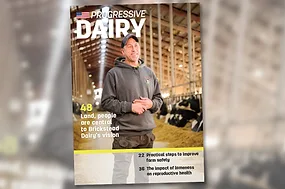
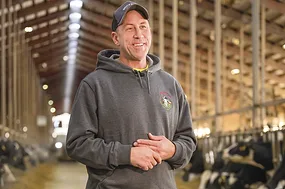
    Brickstead Dairy at forefront of industry progress

    June 12, 2026
    • The Courage to Evolve: Mothers

      June 12, 2026

FREE NEWSLETTERS

Award-winning coverage of in-depth news and analysis to make your business more profitable.

SIGNUP TODAY
Advertisement
THE GUIDE

How do I get my company listed in your Buyers Guide? 
Submit a request to be listed for FREE in the Buyers Guide here.

Why can I only see so many articles before I have to register for the site?
Find out why here.

SUBSCRIBE to Leading Industry Magazines

Award-winning coverage of in-depth news and analysis to make your business more profitable.

Subscribe/Renew
Advertisement

I'm looking for ________

Find the right products and services for your farm, ranch or operation.

CHECK OUT OUR BUYERS GUIDE
Advertisement
  • FEATURED PODCASTS
  • [Podcast] Changing the Rules of Pre-Fresh Dairy Cows

    Progressive Dairy
    Podcasts
    SPONSORED BY Applied Biotechnologies Inc.
  • [Podcast] Selling Calves in a Record Market: What Ranchers Need to Know Right Now

    Progressive Cattle
    Podcasts
    SPONSORED BY Superior Livestock Auction
PERSONALIZED CONTENT
Create an account and see website content tailored to your operation.  It only takes a few seconds!
SEE RECOMMENDATIONS NOW!
Copyright © 2026 Progressive Publishing

MORE INFORMATION
  • About Us
  • Terms & Conditions
  • Privacy Policy
  • FAQs
  • Advertise
  • Shop
  • Stats Posters

OUR MAGAZINES
  • Progressive Dairy
    • Facebook
    • Twitter
    • Linkedin
  • Progressive Dairy — Canada
    • Facebook
    • Twitter
    • Linkedin
  • Progressive Dairy — en français
    • Facebook
  • Progressive Cattle
    • Facebook
    • Twitter
    • Linkedin
  • Progressive Cattle — Canada
    • Facebook
    • Linkedin
  • Progressive Forage
    • Facebook
    • Twitter
  • AgProud — Idaho
    • Facebook
    • Linkedin

CONTACT INFORMATION

Progressive Publishing
238 West Nez Perce (physical)
PO Box 585 (mailing)
Jerome, ID 83338


info@progressivepublish.com
(800) 320-1424
(208) 324-7513 (Main)
(208) 324-1133 (Fax)