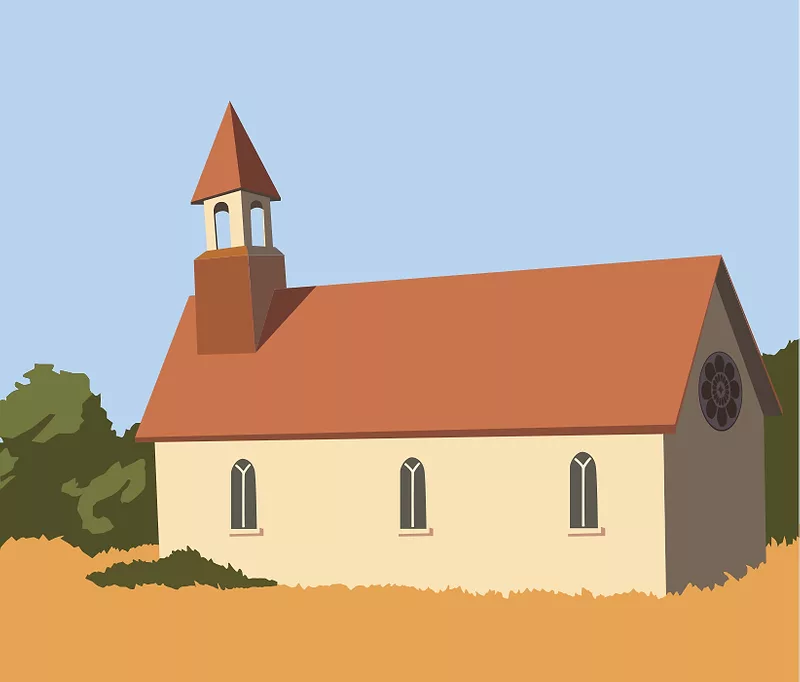
The school calendar used to follow the harvest. Children needed to help with harvesting and canning the produce, which they had spent the summer growing as a family. The first day of school was after Labor Day and ended at the end of May. The day went from 8 a.m. to 4 p.m. with two long recesses and an hour for lunch. Recesses were baseball games, kickball, jacks and hopscotch. Now, some schools go year-round, broken into segments of work and vacation time. We have charter schools, private schools and home schools. We have computers equipped with state-of-the-art programs for math, reading and science. It was nothing like that when I was growing up.

I remember the quiet days I spent in a country school in Heber, Arizona. We had Dick and Jane books to read. Each day we had spelling, writing and math. We had time for music, art and drama, but the same teachers taught them all. When I began school, I went to first grade because kindergarten wasn’t available. Mrs. Ella Capps was my teacher. She was a tiny redheaded lady who stood about 4 feet, 6 inches tall. She was a kind, gentle lady, but strict in her discipline. In Sunday school, the teachers wouldn’t make me participate if I ducked my head and murmured, “I don’t want to.” Mrs. Capps wasn’t that way. She tapped with her long pointer on the chalkboard. “Yevet, come up and read this.” I shyly ducked my head and said, “I don’t want to.” She calmly but firmly said, “We don’t say that in school. Come up here.” I went up to the chalkboard fast. I never said, “I don’t want to” again in Mrs. Capps' class.
Mrs. Capps played the piano, and we would sing every day. We spent time playing in the sun and talking about the things of the Earth. We had a song, a prayer and saluted the flag every morning.
Mrs. Hays taught my second grade year. She was a short lady with black hair that she wore in a bun on top of her head. She wore glasses and had a pleasant disposition. I remember her so well because she had us draw a picture of her. After we finished, she placed them on the bulletin board. I was proud because she made me feel like I was the best artist in the class. I know she did that with everyone, but it made an impression on me. For years, I wanted to be an artist.
Mrs. Hays was a buxom lady. We sat around her chubby knees when she told stories or taught us new concepts. One day, one of the boys said, “Somebody busted my pencil.” She took the opportunity to correct his grammar and explain what busted meant. She put her hand on her oversized bosom and said, “This is a bust.” I was shocked. I never said the word busted again. When we left Mrs. Hay’s class, she kissed us all goodbye. That would be practically a felony today.
My third and fourth grades were spent under Mrs. Capps. Mom and I made a map of Heber that really impressed Mrs. Capps. She hung it on the wall and kept it there for years. Mrs. Capps always had the art projects that I loved. She would ditto off animals and other pictures on her strange old machine that fascinated me. It worked something like an old printing press. Each paper would be placed separately onto the master. The top of the machine would be pressed down. Each paper came off the press damp, smelling like ditto fluid. She made little rabbits, ducks and flowers. We’d spend Friday afternoon coloring them. I colored two ducks once that had a cute cap and bonnet on their heads. I took them home and Mom used them to make a pattern for a baby quilt.
I went to fifth grade with Mrs. Shoffett as my teacher. She was a short, heavy-set woman with salt-and-pepper hair. I wrote my first poem in her class. It was a poem about spring. I was so proud of it. Mrs. Shoffett gave me a taste for literature. Every afternoon, she would read to us. She read books like, My Friend Flicka, Freckles, Laddie, The Black Stallion, Thunderhead and a host of others. Reading time was my favorite time of the day. I learned to love books. I read my first book in Mrs. Shoffet's class. I felt such a sense of accomplishment. I found the book not so long ago in the Taylor School library. It was a Virginia Dare book. It has about 50 pages in all, with large type and lots of illustrations. It wasn’t much, but I was so proud that I had read the whole thing. Mrs. Shoffett took each student right where they were and made sure they made progress. Every day, we had oral reading time. She didn’t care if it embarrassed us to read aloud. I was often mortified when it was my turn, but I read anyway. She never patted me on the back with “It’s OK,” or pampered me. She let me struggle. She understood that the struggle would make me strong, and over time, it did.
Mr. Earl L. Smith was my teacher in sixth and seventh grade. He was a nice-looking man with auburn hair. He had a delightful sense of humor. Whenever we’d ask his name, he’d say “Earl L. Smith. The L stands for lovely.” We never believed him, but we’d laugh. If we asked him what day it was, he’d say, “Monday all day if it doesn’t rain.” I could never figure out what that meant, but it made us all laugh. In seventh grade, we memorized several poems along with the Gettysburg Address. "The Highwayman," "Casey at the Bat" and "The Cremation of Sam McGee" were long narrative poems. Teachers today might say, “What a waste of time.” They don’t understand the value of training the mind to remember and the ability to stand before peers and recite.
In those years, we didn’t have computers, tablets, smartphones or artificial intelligence to help us think. We didn’t have standardized tests or professional assessments. We simply spent time learning the basics the old way. We all learned with our pencil, paper and books. Lots of books.
We live in a world of stuff. I think we are overstuffed. Children are trained by devices that change every second with the touch of a finger. No wonder we have so many children with attention deficits and illiterate graduates. Little bodies haven’t had a chance to discover the world. They have never walked the rows of a garden and watched the flowers grow. They have never stood on an old stump and pretended to be a great orator or an actor. They have never walked through the forest and noticed the wonder of a squirrel leaping from branch to branch with an acorn in its mouth.
We wonder why our children can’t read or write. The government spends billions of dollars on new programs and better equipment and more stuff to stuff in our children’s minds. We come up with new and better textbooks, bigger and better bulletin boards, and more programs. Many schools cut music and the arts because they take time from our learning block. We replace arts and music with the internet and more visual and computer time.
Schools have become a place of competition. We compete with other states and countries for a place on the list of the most educated. We have winning schools and failing schools. There is a report card for the teachers. Teachers have less and less control of what and how they teach. There is no room for coloring ducks or drawing pictures of the teacher. There is no time for students to memorize long narrative poems and recite them to their peers. There is no time for teachers to joke and play with their students or join the baseball game at recess. Quotas must be met and standardized tests must be passed. If there is a failure, the answer is to retrain the teachers, the staff and the children with a new program. When programs fail, we seldom look at the problem; we just get another program. Programs, handheld devices and AI can never take the place of the relationship that happens between a teacher and a student.