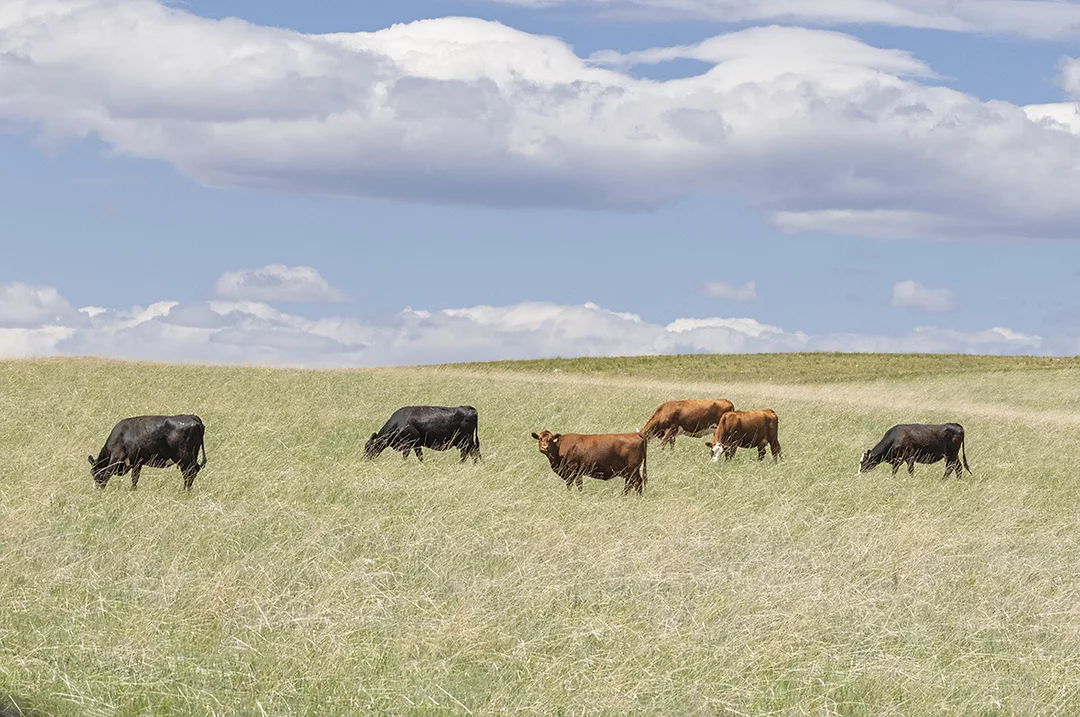
Resiliency is defined as the capacity to withstand or recover quickly from difficulty. In grazing systems, this can be interpreted as the ability to withstand or recover from disturbances. This can include resilience to natural disasters, such as drought or wildfire. But it also includes the ability of perennial forages, such as pasture and rangeland, to recover from grazing and maintain productivity.


The resilience of a grazing system is influenced by a variety of factors, including, but not limited to, diversity of forage type, plant species diversity and grazing management. These factors influence a rancher’s ability to be flexible and adapt management in response to a disturbance.
Good grazing management is the key to maintaining forage and livestock production with any grazing system or strategy. Timing and utilization are two management decisions that can have lasting impacts on forage production. Grazing before plants reach the appropriate stage of growth for grazing readiness causes a reduction in herbage production by as much as 60%, which can reduce carrying capacity (number of livestock or length of grazing season) and/or animal performance. Grazing readiness for most domesticated pasture is at the three-leaf stage, whereas grazing readiness for most native range grasses is the three-and-a-half leaf stage. Additionally, repeatedly grazing a pasture at the same time of year will result in a decrease in the grasses available at that time of year, reducing diversity and forage production.
The recommended utilization level for forage is 40% to 60%. However, not all grasses are created equally, so some can handle 60%, while others only 40% over an extended time. At this level, rangeland utilization is fairly uniform, with 65% to 80% of the height of desirable forage species being grazed. Livestock should be removed when this level is exceeded. When you exceed this level, desirable forage species will be cropped closely, and livestock will begin consuming low-quality species. North Dakota State University (NDSU) Extension has found heavy grazing use (over 80%) in the fall can reduce forage production of cool-season-dominated rangeland and pasture by over 50% the following grazing season.
To achieve optimal forage and livestock production, a grazing system should be planned around the type of grazing resources available. Many ranchers graze a combination of tame grass and native rangeland pastures. In this region, tame grass pastures are typically comprised of cool-season species that exhibit rapid growth in the spring. Tame grass pastures typically reach grazing readiness in April-May and will have a flush of new growth in the fall, when moisture is adequate.
Native rangeland consists of a mixture of cool- and warm-season grasses; in the Northern Plains region, native rangeland tends to be dominated by cool-season grasses. Cool-season native grasses typically reach grazing readiness when they achieve three to three-and-a-half leaves. Warm-season grasses need warmer temperatures to initiate growth and reach grazing readiness two to three weeks after cool-season grasses.
Integrating annual forages provides opportunities to extend the grazing system earlier in the spring and later in the fall. These additional forage options provide for greater flexibility in management, reducing the stress of early grazing and/or over utilization on pastures. Fall-seeded winter cereals, such as winter wheat, winter rye and triticale, allow ranchers to start grazing earlier in the growing season, while avoiding the negative impacts of grazing pastures prior to grazing readiness. Depending on planting date and conditions, these forages may also provide a limited amount of fall grazing. Remember, you need to plan for grazing winter cereal forages, as you will need to seed four to six weeks prior to soil temperatures dropping below 40ºF in the fall (September-October) for grazing the subsequent year. Spring-seeded annual forages can provide additional grazing or hay in the summer, whereas summer-seeded annual forages can provide late-season grazing in the fall and/or winter. For more information on annual forage options, refer to the NDSU Extension publication, Annual Cover Crop Options for Grazing and Haying in the Northern Plains.
A grazing system on lands including both cool-season and warm-season plants has greater resilience. In grasslands, the production of cool-season grasses is dictated by precipitation falling between April 1 and June 30. Whereas, the production of warm-season grasses relies on precipitation between June 1 and Sept. 1. Having a diversity of cool- and warm-season grasses helps reduce susceptibility to drought, ensuring some level of forage growth regardless of timing of precipitation. Diverse grasslands are also better able to meet the nutritional needs of grazing livestock, as grasses in the vegetative stage have higher protein and energy.
Similarly to rangelands, when establishing an annual forage for fall or winter use, we recommend planting a diverse cover crop mix that includes both cool-season and warm-season species. This will increase the chance of establishment and reduce the overall risk of a failed crop. A diverse cover crop will also have the potential to produce a higher-quality forage with less risk of toxicity in the event of a drought.
The success of any grazing system depends on monitoring and the ability to adapt management based on monitoring. Monitoring can be simple or complex depending on your management goals. At minimum, we recommend ranchers monitor grazing readiness of key grass species and grazing utilization to prevent overuse of key forage species. Grazing use should be monitored frequently to determine when livestock should be moved to a new pasture or forage source. NDSU Extension has developed The North Dakota Grazing Monitoring Stick to estimate utilization of pastures.
Monitoring grazing readiness and grazing utilization can ensure that pastures have adequate rest and are able to recover from grazing. Providing adequate time for grasses to recover helps maintain forage production and the overall health of a pasture. In addition, monitoring allows ranchers to make early and/or frequent adjustments to their grazing management plans. This ability to quickly adapt is critical to maintaining and/or improving the resilience of a grazing system.
A grazing system with multiple pastures also provides greater flexibility in moving cattle and increases resiliency of the entire unit through grazing recovery, intensity and distribution. During drought years, you can minimize overuse to one pasture – versus the entire unit. A one-year overuse will not have long-term negative impacts and often promotes a positive response in increased plant diversity as long as you provide sufficient recovery the next year.
Grazing systems also flourish during moist years. They promote harvest efficiency through more uniform grazing distribution and grass regrowth. The more moisture you have, and the better your grazing distribution is, the more regrowth – and forage – you produce.
When it comes to grazing management, it is important to remember that every system is unique and there is not a one-size-fits-all approach. It is critical that every ranch has a grazing plan in place with well-defined triggers and actions for drought and other disturbance, so they can respond quickly and build the resilience of their ranch.