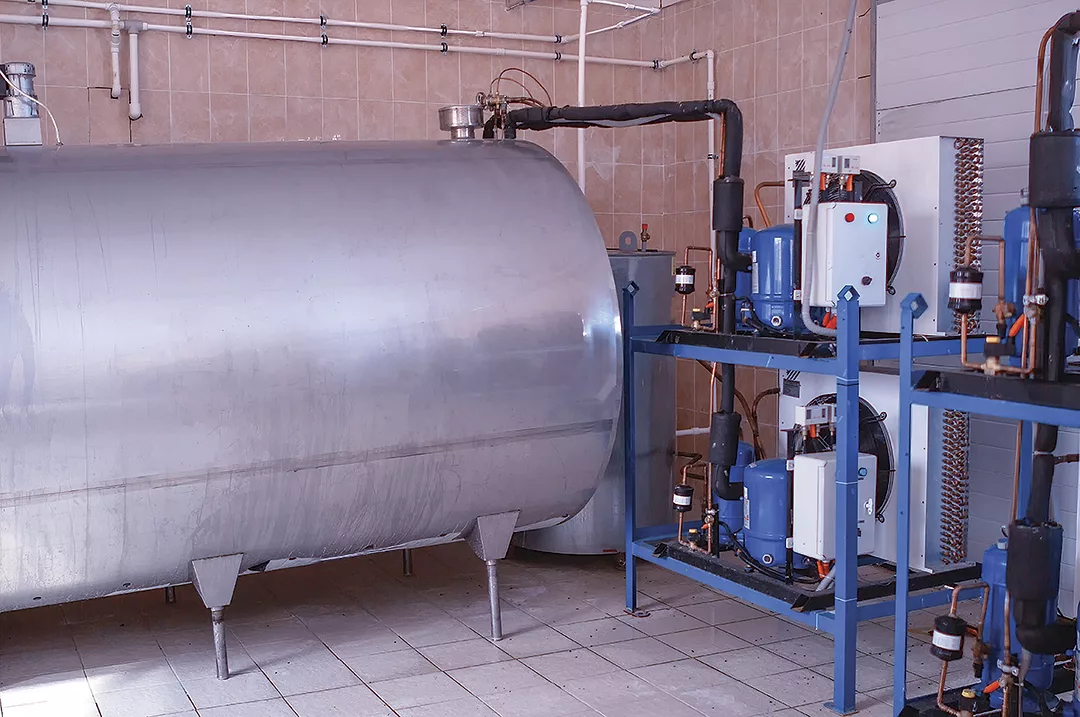
There are many ways to optimize the efficiency of farms, but one of the most effective manners is by doing so with the equipment already installed on the dairy. And, with hot weather not too many months away, now may be the time to consider equipment tune-ups.

“The way I look at tune-ups is that first hot week of the year, Memorial Day weekend, and you have to make a service call. Maybe it’s the refrigeration guy and it’s 2 in the morning,” Kevin Weiler said. “If you can get the tune-up done before that first hot weekend, it's going to save you guys some peace of mind where the equipment's tuned up and running most efficiently.”
Weiler and his colleague Joel Roltgen, both energy advisers for Focus on Energy, spoke on the importance of routine equipment tune-ups, particularly with milk cooling systems, at the 2025 Dairy Strong conference in Green Bay, Wisconsin.
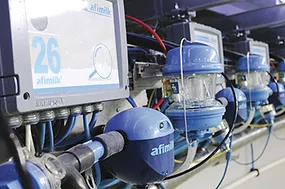
When considering the most energy-consuming systems on any particular dairy, ventilation, milk cooling and lighting almost always make it to the top of the list.
“In terms of factors on your farm that are driving energy consumption, [it's] milk cooling,” Weiler said. “So that’s kind of a low-hanging fruit, we call it.”
Roltgen added, “Ventilation tends to be the highest one, but if you are doing natural ventilation, then milk cooling is very likely far and away the most expensive portion of your enterprise. So, you definitely want to be taking care of that.”
Routine tune-ups help optimize equipment performance by ensuring the equipment is running efficiently and reliably. Benefits of tune-ups include lower operating costs, reduced energy use, reduced risk of breakdowns and time lost, and avoiding disruptions of the dairy’s daily functions.
For compressor systems, a tune-up may include blowing out all the fins, checking the coolant level and searching for any leaks.
“We’ve had guys that do a tune-up, and they end up finding some other repairs,” Roltgen said. “Say your heat reclaimer has a leak and needs to be replaced. They’re likely able to do that within the next week. Capacitators are failing, they can catch that.”
Weiler agreed. “And, it’s probably going to save you a service call where you’d be paying the emergency rate,” he said. “That’s peace of mind.”
These tune-ups come with a price. However, utility companies across the nation are required to offer some type of energy savings program to provide funding back to their customers, allowing these tune-ups to be more cost friendly. Companies work with organizations such as Focus on Energy for the incentives.
“We have streamlined the dairy refrigeration tune-up, so we are working with your dealers,” said Weiler, as an example. “The dealers are passing along the credit to the customer. It saves dealers time, saves us time, saves the farmer time.”
Weiler and Roltgen provided insight into what trade allies have noticed with these incentive programs and how they are assisting dairy operations. Roltgen said a vast majority of dealers are cutting emergency service calls by 80%.
“That means you folks are calling your dairy equipment guys 80 percent less for emergency service repairs,” he reiterated. “So, it’s good for your equipment, but it’s also significantly cutting down on costs, downtime, equipment upgrades and things like that, all because you are maintaining the equipment you already have.”
Weiler agreed. “There’s long-term cost savings,” he said. “You get an efficient system and you’re avoiding interruptions during peak production times. Regular tune-ups are a simple, proactive step toward cost-effective and sustainable dairy farming.”
It is recommended to develop a tune-up schedule annually, or even more frequently, if need be.
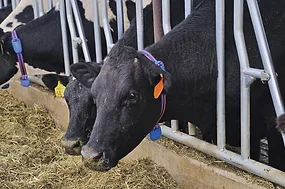
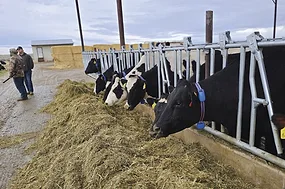
The presenters shared a success story of a central Wisconsin dairy farm that is milking 1,000 cows. Since 2017, the dairy operation has upgraded its milk cooling equipment, ventilation and lighting using energy-efficient incentives. The dairy owners schedule tune-ups twice a year.
“Milk prices might be low next year, and these tune-ups are easy offerings to make sure you’re not having to pay the price for those emergency service calls and give yourself a little peace of mind,” Weiler said.
Roltgen agreed. “Once people start doing these tune-ups, a lot of times they get on a regular cadence with their dealer, and the dealer starts doing them year after year without really asking,” he said. “Talk with your dealer, obviously, but the point is that tune-ups become such an integral part of the farm that it just becomes a basic routine, and it’s expected every year.”