If you walk through your pens right now, do you know how many of your cows are dealing with some level of lameness? If you’re like most of us, your gut reaction is probably to say, “It’s low – definitely under 10 percent.”

But industry audits and veterinary research tell a much tougher story: On average, about 20% to 25% of dairy cows are walking around with a noticeable limp.
The truth is, we’re pretty good at spotting the obvious ones. But it’s the mild, subclinical cases that quietly eat away at milk production, reproduction and overall performance before we even notice.
On a lot of dairies, hoof health is handled completely reactively. We play catch-up, treating problems only after a cow is noticeably hurting. But if we shift that mindset and treat lameness prevention as a team effort instead of a one-man job, we can get ahead of issues and keep more cows in the herd – protecting the bottom line and our animal care reputation.
More dairies are starting to move in that direction – away from reactive care and toward a coordinated, team-based approach, driving major improvements in the process.
Three big wins of a team approach
1. Better animal care outcomes
The most immediate and measurable benefit of a team approach is improved health and performance. When lameness prevention is shared across the team, cows are observed more frequently and from different angles. Milkers can spot subtle changes in stride, feeders may notice shifts at the bunk, and trimmers or consultants can identify lesion patterns faster when they’re working together.
That kind of awareness leads to earlier detection, which is where real gains happen. Issues such as white-line disease or sole bruising are much easier to manage when caught early. If they’re missed, they tend to turn into more serious problems that require more time, more treatment and longer recovery. Catching them sooner reduces pain we can’t always see, improves welfare and gets cows back to normal production quicker.
A coordinated team doesn’t just react faster – it prevents problems in the first place. When lesion trends are shared, nutrition and meaningful management changes can follow.
2. Stronger team buy-in
Hoof health isn’t just about cows – it is about people too. When it is treated as a shared responsibility, employees feel like they are part of the solution instead of just going through the motions. They know what to look for, how to respond and why their role matters.
That ownership changes behavior. People are more likely to report other issues early, follow protocols consistently and take pride in how the herd performs. Instead of hoof care being someone else’s job, it becomes a team priority. And when teams are aligned, they can see the impact of their work – fewer lesions, smoother cow flow and healthier animals.
Teams that are bought-in are also more open to learning and improving. As new tools and technologies get introduced, that matters even more. Whether it is interpreting activity data or responding to automated alerts, the team still has to make the right call. Technology can point you in the right direction – but it is people who make it work. In a time where labor is already a challenge, building that kind of ownership goes a long way in keeping good people around.
3. Fewer setbacks and more predictable results
Even the best hoof health plans fall apart without consistent execution. A team approach helps keep things on track so you’re not dealing with the same problems over and over. When everyone knows their role – whether it is footbath management, trimming, recording data or reviewing results – there are fewer gaps.
Strong teams also define what good looks like day to day. That includes locomotion scoring, trimming schedules, footbath management and how data gets recorded. When expectations are clear and shared, consistency improves – and with it, more predictable results.
Data plays a big role, but only if it is accurate and used the right way. If lesions are recorded incorrectly, it is tough to solve the real issue. The teams that get ahead focus on capturing clean data, reviewing it together and using it to guide decisions. More operations are also using technology to collect that information faster and earlier. But the advantage only shows up when that data is trusted, shared and acted on consistently.
Putting it into action: The game plan
The benefits of a team approach are clear – but getting there doesn’t happen overnight. You can’t just tell the crew to watch for lame cows and expect results. It takes a plan, consistent coaching and a team that’s committed to success, despite setbacks.
The operations that get ahead don’t overcomplicate it – they focus on a few fundamentals and execute them well.
Shared vision
Every strong team starts with a clear goal. Whether it is lowering lameness, improving recovery rates or keeping cows in the herd longer, everyone needs to understand what you are working toward – and how to get there.
When that vision is clear, decisions get easier. The team stays focused on long-term results instead of short-term fixes. Everyone understands how their daily work connects to the bigger picture.
Team training
If you want consistency, you have to train for it. Everyone on the team should know what to look for, what to do and how to do it the right way.
Strong programs focus on:
- Reliable and routine locomotion scoring
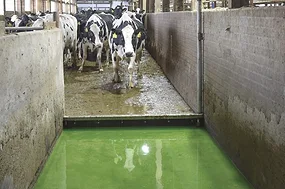
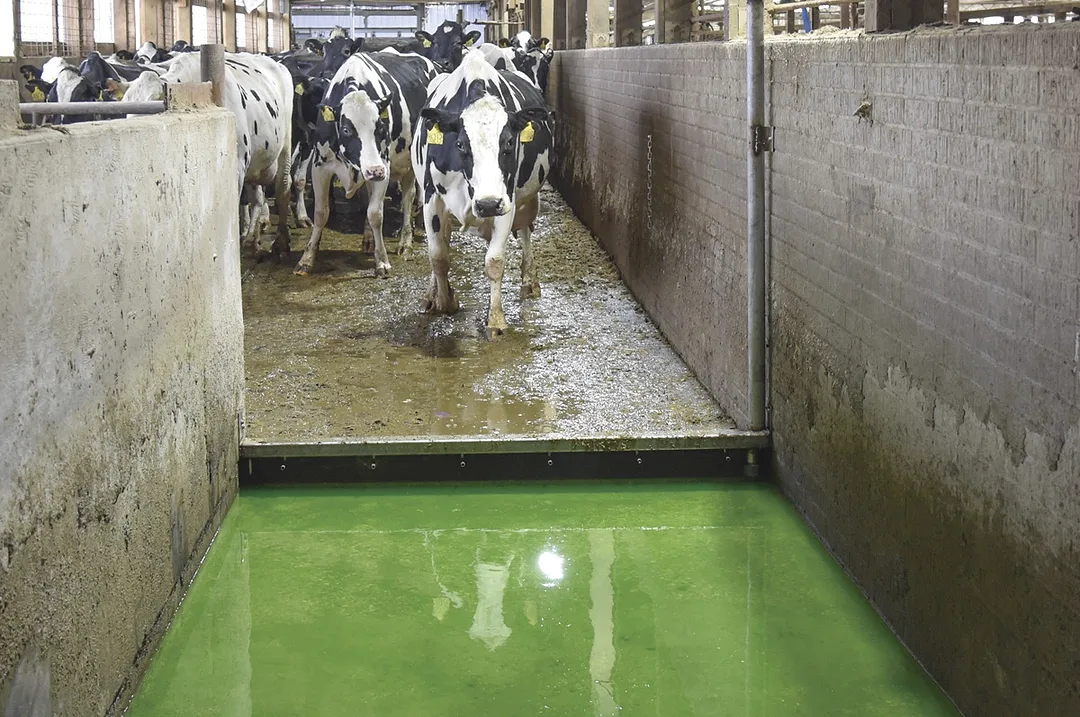
- Consistent footbaths and accurate product application
- Trimming cows when they need it, not just when it is convenient
- Accurately recording lesions and tracking data
Just as important, the team needs to know what “good” looks like. That means clear standards – how cows should move, what a healthy hoof looks like and how protocols should be carried out. As new technologies get added, training needs to keep up so the team knows how to use it and how it helps. When everyone’s working from the same expectations, you take the guesswork out and get more consistent results.
Frequent communication
Bottom line – this only works if people talk to each other. Observations need to be shared, patterns need to be discussed and decisions need to be made as a group.
It doesn’t have to be complicated. Quick, regular check-ins between managers, employees and hoof health partners go a long way. The goal is simple: No one works in a silo, everyone understands how their role impacts the cow and everyone has a chance to speak up on what they’re seeing.
Proactive, continuous improvement
If you are always reacting, you are always behind. The best teams look for ways to improve before problems show up.
One practical way to do that is through routine hoof care audits that evaluate facilities, cow flow, trimming data and how well protocols are being followed. Catching gaps early lets you fix small issues before they turn into bigger, more expensive ones.
As the industry tightens standards on lameness rates, having the right partners in your corner matters. Experienced advisers can help take a hard look at new management practices and emerging technologies – figuring out what actually helps, what fits the operation and what is just noise.
A team approach to hoof health isn’t just “nice to have” anymore – it is how top dairies stay competitive. When people are aligned, communicating and executing consistently, you see it in the cows and in the numbers. The strongest operations aren’t relying on one perspective – they are bringing the right people together, aligning around the data and making decisions as a unified team.
If you are looking to tighten things up, start by taking an honest look at where the hoof care gaps are. That is usually where the biggest opportunities are found.