The arrival of spring always offers a sense of renewal and a promise of new beginnings as the fields turn green, making it the ideal time to set haylage quality goals for the year. Generally, when discussing haylage quality, the conversation is usually centred around forage quality for the lactating herd, as it makes up the largest percentage of feed being consumed. However, this focus ignores the other 40% or more of animals on a typical dairy operation.

This raises an important question: Should we be targeting different haylage quality goals for the various life stages on-farm? By considering this, we can explore opportunities to improve forage quality for each stage of life.
While not every farm is set up to easily separate forage types or forage cuts based on quality for specific animal groups, having these targets in mind at the start of the season can influence how to respond to different growing conditions, weather events, equipment breakdowns or feed storage changes.
The quality of a forage is relative to how well it matches the nutrient requirements of the group of animals to whom it is being fed. For example, a 21% protein haylage with 38% neutral detergent fibre (NDF) and 2.8% potassium may be ideal for a lactating cow, but it would not necessarily be the forage of choice for a dry cow, as it could increase the risk factors associated with several transition cow diseases.
While it is possible to find solutions to make a specific haylage work in a variety of diets, it often means from a nutritional standpoint that either extra costs are incurred, or there may be additional risk factors that could challenge the animal’s health status.
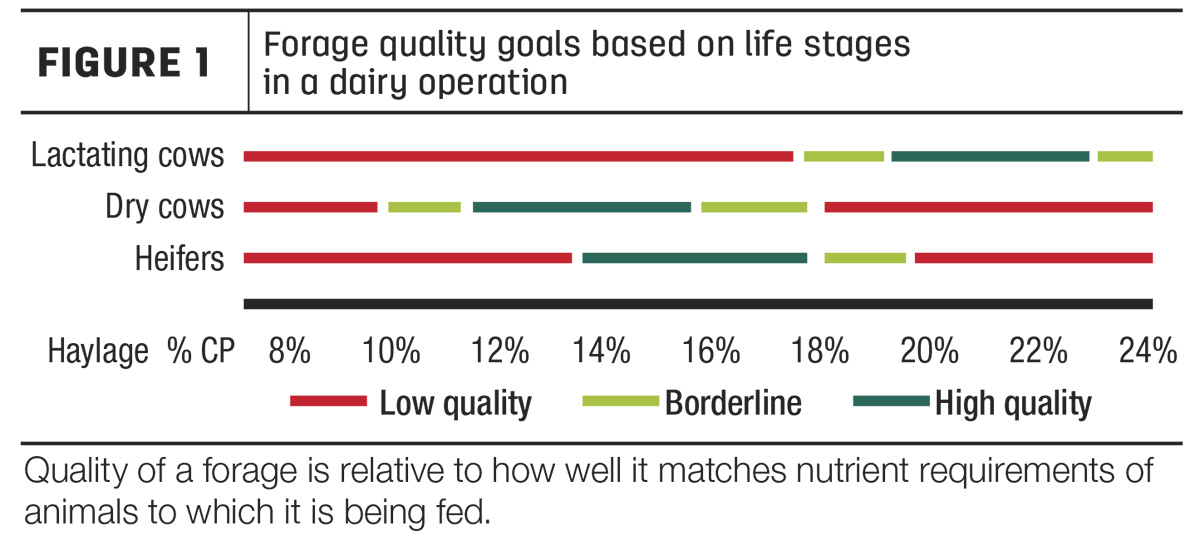
So what are the ideal haylage quality targets for the different life stages? Figure 1 provides a visual comparison when looking at haylage quality from a protein perspective and highlights the ranges of protein that tend to work best for each specific group of animals.
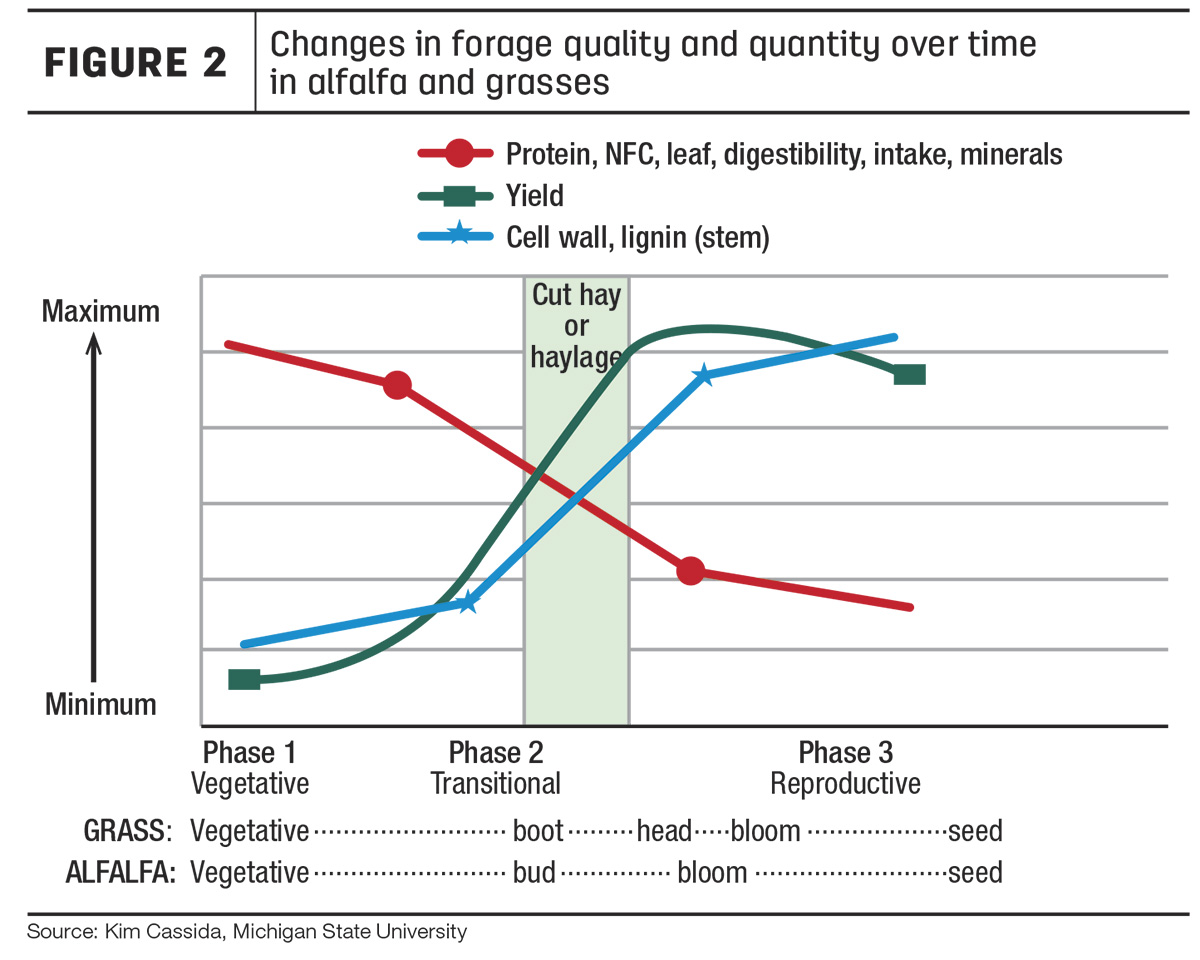
Protein is only one part of the story, but it is typically correlated to other important nutrients such as NDF and NDF digestibility, as shown in Figure 2, making it a practical choice for quality targets. Protein and NDF rate of digestibility tend to follow a very similar trend in terms of dropping rapidly once the plant transitions from the vegetative phase and moves toward the reproductive stage, while NDF moves in the opposite direction during that same time period.
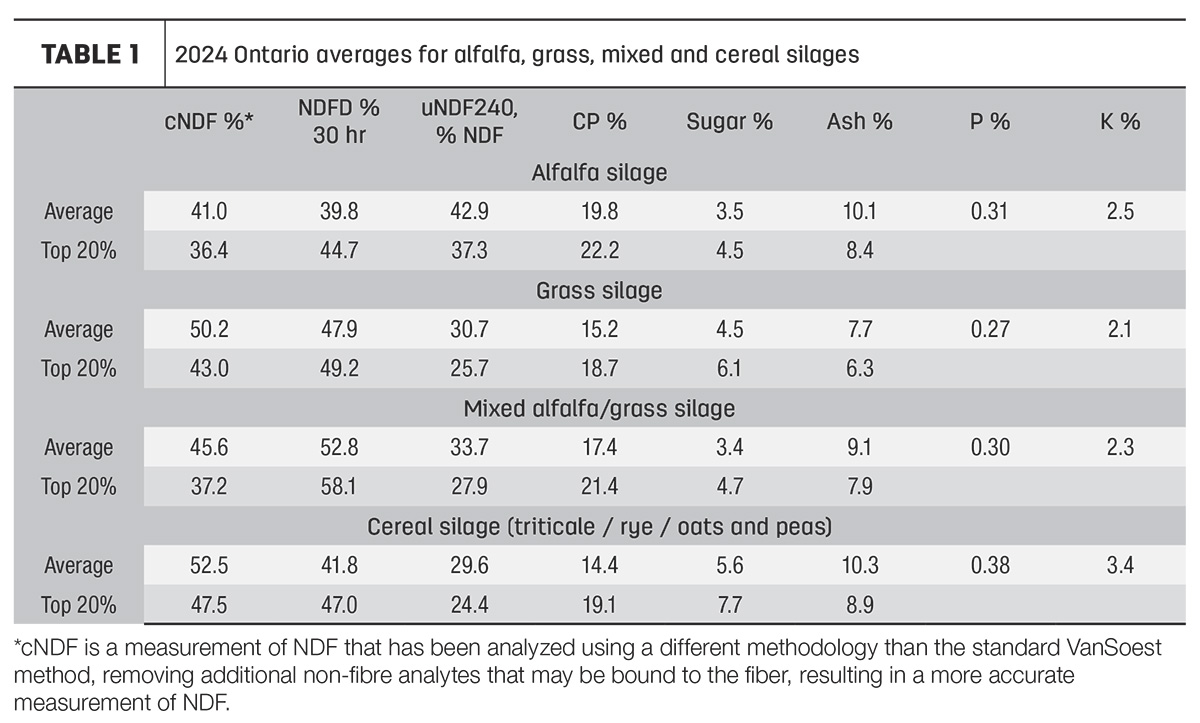
A compilation of 2024 Canadian (Ontario) haylage and cereal silage data shown in Table 1 confirms that when these forages are harvested at a stage for optimal NDF digestibility, the protein level lines up perfectly as well.
The challenge then becomes twofold: hitting the target window to balance the "sweet spot" of quality with quantity, and determining where that "sweet spot" is based on the group of animals consuming that forage.
Lactating cows
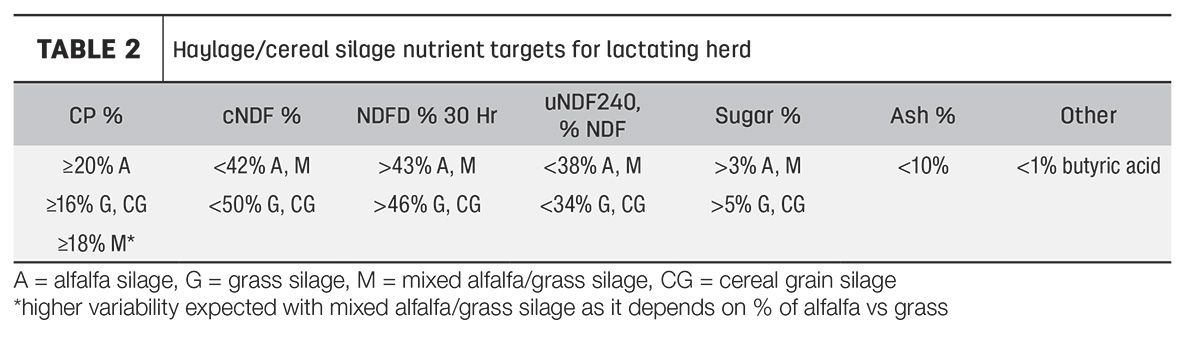
Lactating cows have the highest nutritional demands due to milk production and pregnancy requirements, hence the emphasis on providing them with the highest-quality forage base. There has been a shift more recently to put a greater emphasis on targeting the harvest window and harvest practices that will maximize the nutrients in forages that "fuel" the rumen microbes, support healthy rumen function and encourage higher dry matter intake (DMI). No longer is protein the main driver when it comes to haylage. Instead, optimizing NDF quantity and NDF digestibility (while conversely minimizing the amount of undigestible NDF240) to provide the optimal level of digestible NDF, preserving sugars and achieving an ideal fermentation will maximize the rumen fuel (energy) available to high-producing lactating cows. Table 2 provides targets for some of the key rumen fuel nutrients in a variety of silages for lactating cows.
Dry cows
Dry cows are a special group of animals with their own unique requirements as they prepare for their next lactation (Table 3). While haylage/hay and cereal grain silages can make up a significant portion of a far-off diet, their inclusion in close-up diets is generally quite minimal. Regardless of inclusion level, the amount of digestible NDF (NDF * NDF digestibility) plays a paramount role in supporting high DMI and maintaining excellent rumen fill and function. Since protein requirements are not as high for dry cows, and with variable inclusion levels of haylage/hay in these diets, protein content is of lesser importance and has a wider target range. However, mineral levels, particularly phosphorus and potassium, are much more critical to monitor and measure, as high levels of these minerals can significantly increase the risk of hypocalcemia (milk fever) in transition cows. In situations where haylage/hay does make up a considerable portion of a close-up diet, identifying specific acreage used for dry cow feed only and adapting the fertilization program can have significant payback.

Heifers (post-weaning)
Heifers continue to be, in many cases, the one group of animals on-farm that receives the most variable rations. They commonly will be fed varying amounts of lactating cow TMR refusals or hay/baleage that may not have been analyzed. Considering the impact meeting key growth targets in heifers can have on overall herd lifetime production and profitability, care needs to be taken to ensure balanced growth is occurring throughout their growing period, and that starts with a quality forage base.
For post-weaned heifers less than 6 months old, a very palatable dry hay or drier haylage is preferred for highest intakes to support high rates of gain. This is also a stage where a diet comprised of the correct ratio of chopped straw and a complementary pellet can be highly successful due to the consistency and palatability of that type of diet.
Once heifers have reached 6 months old, their rumen, rumen microflora and gut are developed enough to handle wetter silages without sacrificing intake or gains. While heifers do offer the most flexibility in terms of nutrient target ranges for hay/haylage (Table 4), regular monitoring of heifer growth rates to ensure they are meeting growth targets (55% of mature bodyweight at time of breeding or 95% of mature bodyweight pre-calving) is necessary to ensure they produce more milk, not only in their first lactation but in their lifetime.

Fine-tuning forage quality to meet the specific nutritional needs of different life stages within a dairy herd is crucial for optimizing overall herd health and productivity. By setting targeted haylage quality goals for lactating cows, dry cows and heifers, producers can ensure that each group receives the appropriate nutrients to support their unique requirements. This approach not only enhances the efficiency of feed utilization but also contributes to better animal performance and long-term profitability. As the growing season progresses, maintaining flexibility and adapting to changing conditions will be key to achieving these quality targets and reaping the benefits of a well-nourished herd.