A GPS isn’t just handy when you’re heading somewhere new and need directions. It can be just as useful for trips you’ve made a dozen times. It can alert you to road closures, suggest alternate paths you may not have considered and provide real-time traffic updates to help you reach your destination faster.

Herd management software works the same way. It can guide you in discovering new opportunities, help you optimize your existing protocols and avoid wrong turns or roadblocks – especially in managing your herd’s reproduction when timing is everything.
Like GPS, herd management software provides real-time data to inform your decisions, improve breeding success and keep your dairy on the most efficient path to profitability without costly detours.
Break free from routine
Over my time working with dairies on reproductive management, I found that the most successful farms balance routines and real-time situations. A dairy that strictly sticks to routine might overlook important things like a missed breeding or heat detection, causing delays in pregnancy. Similarly, without a GPS you may miss a recent road closure on your way to the parts store, causing you to arrive as it closes.
One major challenge of manual or inconsistent data management is effectively managing heat detection. Without real-time monitoring and predictive alerts, cows may cycle undetected, delaying breeding. Delayed reproductive interventions contribute to extended open days, increasing costs and reducing milk production. Additionally, inconsistent breeding protocols across teams – especially in larger or multisite operations – can lead to poor synchronization, creating gaps that reduce reproductive efficiency.
I saw this firsthand while working with an 800-cow dairy that relied on paper records. Inconsistent protocols and manual data recording led to inefficiencies that impacted their reproductive program. After implementing a mobile herd management solution, they could enter data cowside and update records immediately after vet checks. This improved data accuracy, increased breeding consistency, reduced open days and enhanced shot compliance – ultimately optimizing their reproductive program.
The value of key reports and lists
If your herd management software is your GPS, think of the reports within that software as the voice telling you to turn left and then right, guiding you closer to your destination – one step at a time. Consider incorporating the following key reports and lists to streamline your breeding strategies, improve protocol compliance and stay on the path to optimal reproductive management.
- Daily action lists: Set up to be automatically generated daily, these lists provide clear, actionable steps for herd managers and employees. They can include shot lists, breeding lists or vet checks.
- Vet summary reports: These reports summarize the outcomes of a vet check, providing a detailed breakdown of pregnancy status, open cows and the next steps in the breeding protocol. Use these reports to catch any discrepancies early – such as a cow diagnosed open but not correctly enrolled in a resynchronization program.
- First-service reproduction schedule reports: Track breeding strategies for different lactation groups with these reports and customize delay enrollment based on milk production or health status. For example, some farmers prefer to wait until cows drop below a specific milk threshold before enrolling them in a first-service breeding program. Others may delay breeding for cows that experienced fresh cow health issues, such as metritis, to improve conception rates.
- Missed breeding lists: These lists identify cows scheduled to be bred but not inseminated. This feature is especially useful on farms where multiple employees are doing the breeding. By automatically generating a report of missed breedings, managers can investigate the cause – whether a simple data entry issue, a logistical bottleneck or a deeper reproductive inefficiency.
- Compliance reports: Ensure that reproductive protocols, including breeding and hormone administration, are followed correctly. This compliance is especially valuable for synchronization programs where precise timing is critical for success.
Tips to maximize reproductive success
The road map to reproductive success looks different for each dairy but always demands a strategic approach. By leveraging your herd management software, you can fine-tune your breeding programs and increase profitability. Start with these three recommendations to ensure your program is on the right track from the start.
Build the foundation first
To make the most of your herd management software, you must start with accurate data and a proper setup. It can help configure breeding schedules, artificial insemination (A.I.) tracking and synchronization protocols. Ensure the software is aligned with your protocols and matches what your team is doing to build consistency across your reproductive program.
Go beyond the basics
GPS technology continues to evolve and today, a GPS system does so much more than get you to and from your destination. It can save your favorite routes, suggest locations based on your appointments and let you know when a sneaky cop is ahead. If you only use it for direction, you’re missing out.
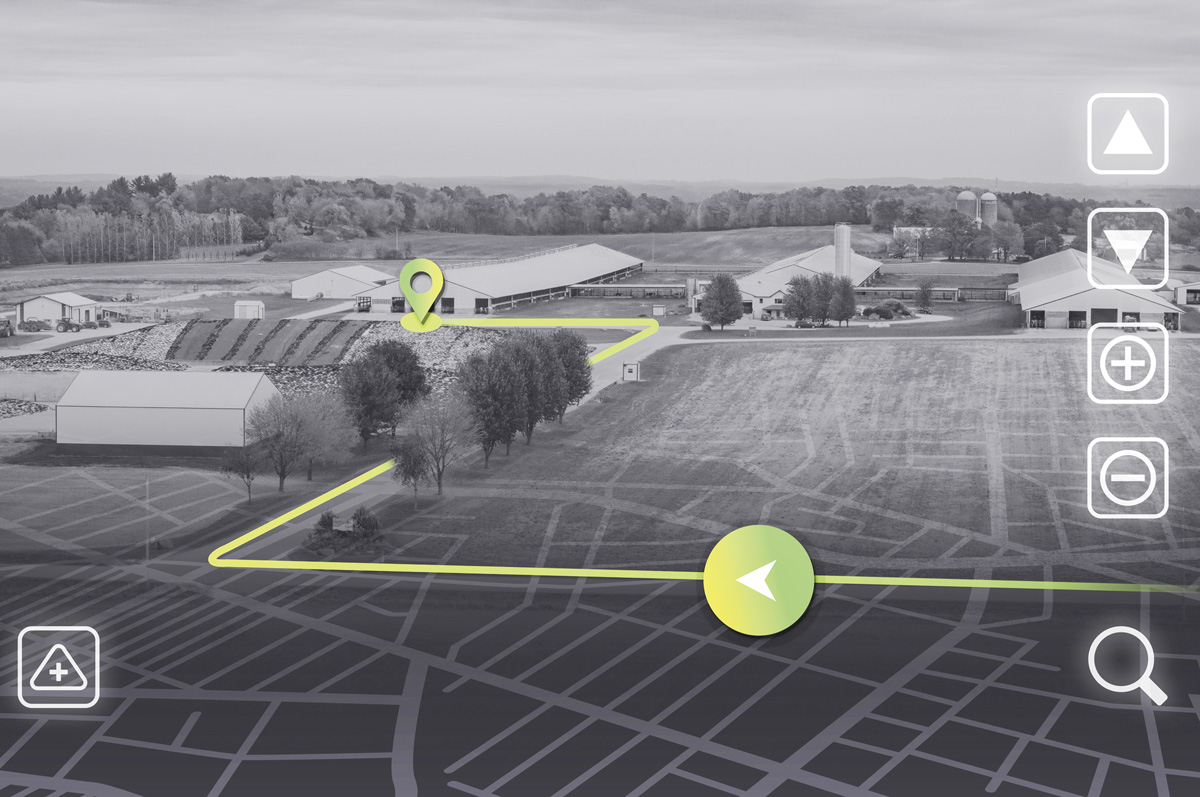
Like a GPS, herd management software provides real-time data to guide your decisions, improve breeding success and keep your dairy on the most efficient path to profitability without costly detours. Image courtesy of VAS.
The same goes for your herd management software. While tracking breeding events, pregnancy checks and daily action lists are widely used, farmers often overlook advanced features that could significantly improve their program.
Integrating tools like automated breeding strategies that rank cows based on genetics, performance and heat detection technology can help inform breeding decisions and improve breeding accuracy. Semen and embryo inventory tracking can also help optimize purchases, ensuring you always have the right semen or embryo for the right cow based on your breeding strategy. Additionally, tracking semen and embryos helps avoid overstocking and shortages. By strategically using these tools, you can harness your herd management software to bring you closer to achieving your reproduction goals.
Leverage the experts
One of the most valuable but often underutilized resources in herd management software is the support and expertise provided by the software team. Just like a GPS benefits from frequent updates and user input, herd management software works best when you collaborate with your software support team to customize and fine-tune your system.
Regularly speak with your software team to assess your current setup, build customized reports and ensure your protocols align with your specific goals. The frequency of these meetings will vary based on your farm’s needs, but at a minimum, I recommend quarterly check-ins. Some farmers prefer monthly or bi-weekly meetings, especially when implementing new protocols or transitioning to a different breeding strategy.
Managing your reproduction program is complex, with many moving parts, but your herd management software can simplify the process. Just as a GPS helps you reach your destination without unnecessary detours, utilizing your herd management software to its fullest potential enables you to achieve your goals without costly missteps or delays.
So, let data be your guide and see how herd management software can steer your dairy toward success.