I asked ChatGPT for a list of things that people upgrade. The artificial intelligence (AI) response gave me four examples: 1) technology and gadgets, 2) personal and professional development, 3) home and lifestyle, and 4) business and productivity. The top technology answers included smartphones, computers and software.

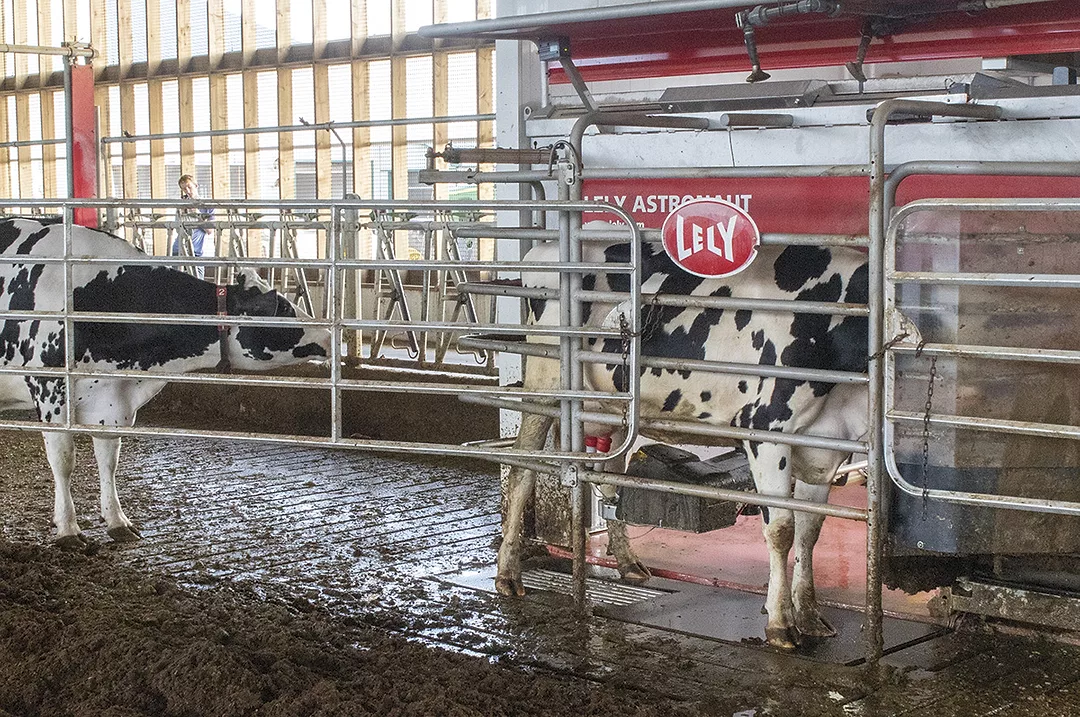
Milking robots would fit into more than one of those categories, but they didn’t make ChatGPT’s top four in any of them. It’s been 25 years since the first milking robots were installed in North America. During those years, automated milking technology has improved, and older milking robots have completed their useful life. Many farmers are upgrading their automated milking systems to the latest models. Some have upgraded more than once.
I continued by asking ChatGPT whether farmers should upgrade their automated milking systems. The AI answer was, “If the current system is outdated and requires frequent repairs; if newer technology offers clear efficiency, milk yield or labor savings; if financing options make the investment viable.” Those are good answers. I talked to several real farmers and got better answers.
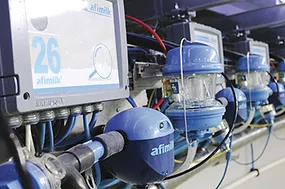
Most farmers who upgrade want the improved performance and added features of the latest model. Those features may include faster and more reliable attachment, lower maintenance, lower operating cost and easier operation. New automated milking systems can monitor things that older ones did not, such as fat, protein, somatic cell count or progesterone.
In some cases, repair costs for the original robots have increased with extended use. We tend to measure the useful life of an automated milking system in years, but it also depends on the number of milkings. Plan for automated milking systems to last 10 to 15 years. That’s about 600,000-800,000 milkings at 150 milkings per day. Some units have milked more than 1 million cows. Paul Walter of Sunshine Colony in Alberta started with one robot in 2012. He expanded to two robots by adding a newer model in 2016. In 2022, he replaced the original robot with the newer model because he saw the performance advantages of the newer model in his own barn.
While new features are important considerations, most upgrades can also involve milking more cows. After eight years, Kayla Coehoorn of Back 40 Acres in Wisconsin knew they had maxed out the capacity of their system. They were able to milk more cows without any changes to the barn footprint by upgrading to a newer model. Mark Van Zeggelaar had bigger expansion plans. His farm, Starlane Holsteins in Alberta, built a new barn. The original plan was to move the old robots into the new barn. They ultimately chose to put new robots in the new barn. Zeggelaar found a ready market for the used robots and got better performance from the new models he installed.
Preparation is the key to a successful upgrade. Mark Gardner has coordinated upgrades for United Dairy Systems in Iowa. Gardner says the most important thing is to understand that the system will be down and there will be a time when cows cannot be milked. The amount of downtime ranges from four to 12 hours, depending on the size of the project and the equipment being upgraded. Some models are completely interchangeable. Other models will require some concrete work and gate modifications. Work with your dealer to predict how long your system will be down. Some upgrades involve shutting down the whole system, while others allow milking with one or more robots while the other robots are switched. If the project involves more than six hours of downtime, Gardner suggests starting to get ahead 12 hours before shutdown by pushing cows through the system as soon as they have milking permission. Some upgrades require a little more creativity. Walter needed to repair the floor in his robot room when he upgraded the robots. He was able to use one of his robots in a temporary location, outside the robot room, while the floor repairs were completed.
The cows have two adjustments going on at the same time. They have to adjust to the new equipment, and they have to catch up following the downtime. Most farmers will push cows through the new robots for the first milking to make sure all are milked. Graham Jespersen upgraded his robots at Glory View Farm in Alberta. Jespersen’s cows adjusted to the new equipment quickly. He said the cows were curious on the first day, and they settled in within three days. Robot-trained cows adapt quickly to new robots. Upgrades with longer downtime take longer to get back to normal. The system can catch up with the overdue cows in a day. Returning to normal cow flow may take longer. Gardner suggests that for every hour of downtime, it may take a full day for the barn to flow as it did before the downtime. Overdue cows can be back on schedule within 24 hours after six hours of downtime, but it could take six days for cows to flow as they did before the downtime.
There is a good market for used milking robots. Some dealers accept used robots in trade and refurbish them for resale. Manufacturers have refurbishing programs too. Other used robots are sold from farmer to farmer through word of mouth or online marketplaces. Buyers can be more confident when used robots just came out of barns where they were recently operated and maintained, compared to robots that have been idle or in storage for a long time.
Farmers have received the improved performance they expected from their new automated milking systems. It may take a little while for them to become as familiar with the new equipment as they were with the old. Walter says it was easier to train heifers in his new milking robots. Zeggelaar and Jespersen both report faster attachment, fewer alarms, less maintenance and lower operating costs. Coehoorn is ready to take the next step with two more robots and new cow monitoring features.
I went back to ChatGPT and asked, “Are customers happy with milking robot upgrades?” The answer was, “In general, farmers appreciate upgrades that improve efficiency, milk yield and cow comfort while reducing maintenance issues.” Anton Borst milks with 20 robots in Manitoba. His assessment of the upgrade process was more concise. “People make too big a deal of swapping robots. With a good team and good preparation, it’s not that big of a deal.”