Dairy producers and industry professionals traveling to the Western Dairy Management Conference were greeted with a familiar sight – a snowy arrival into Reno, Nevada. Despite the weather’s early April Fool’s joke, the networking opportunities and variety of presentation topics provided something for each of the more than 1,100 registered attendees to enjoy.

The preconference sessions presented by platinum sponsors began bright and early on Tuesday, April 1, with 37 topics to choose from during the six 30-minute breakout sessions, including the H5N1 outbreak, dairy nutrition, cow cooling, stray voltage, lameness, herd health, dairy opportunities in Nebraska and more.
After lunch, Dr. Bob Collier took the stage to share a tribute to Dennis Armstrong, one of the conference founders to whom the 2025 Western Dairy Management Conference was dedicated. Read more about Armstrong’s work and his legacy in the dairy industry in the sidebar.
'Future readying' the dairy checkoff
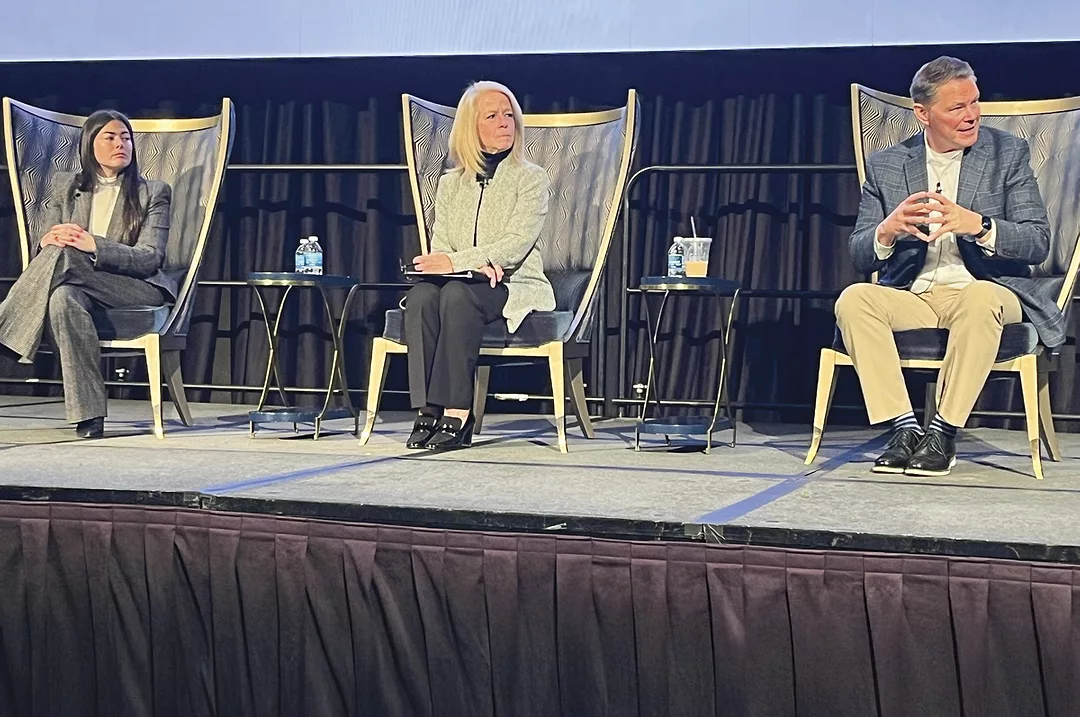
During the dairy checkoff session, Dairy Management Inc. CEO Barb O’Brien updated the industry on the checkoff’s three-year plan, recent campaigns and successes. Additionally, DMI’s Paul Ziemnisky and Eve Pollet presented about partnerships/innovation and the milk molecule initiative, respectively, before they joined O’Brien for a panel Q&A. The milk molecule initiative is a program designed to fuel an artificial intelligence-driven, nutrition and product research and development platform and capability for U.S. farmer-owned entities.
O’Brien described efforts to “future ready” the dairy checkoff in anticipation of the continued acceleration of the dairy and consumer landscapes.
“Nationally, there has been about an 8-billion-dollar investment in dairy processing. That’s all about readying the dairy industry for the future, for serving much-needed global markets and our domestic opportunities here in the U.S.,” O’Brien said.
Some highlights from the current three-year plan include:
- Sustainability. A new conservation navigation tool for farmers and farm advisers where the DMI team summarized 70 practices, looking at both the environmental impact and the economic implications of such practices, tools and technologies
- Innovation. 12 new products launched in the last 12 months in food service, retail and through cooperative partnerships. Domino's, Taco Bell and General Mills are three examples of partners launching new products.
- Science. More than 38 new dairy messaging and claims were validated and launched via a Health and Wellness Playbook, with the purpose of enabling dairy to grow its share of the health and wellness benefits consumers are seeking in food, beverage and supplements. Additionally, 14 new science papers were published in credible professional journals to educate healthcare professionals on dairy's nutrition benefits.
- E-commerce. Last fall, a campaign with Instacart, Walmart, Kroger and Dollar General resulted in a $17.09 return in terms of dairy purchases for every dollar dairy farmers invested in the campaign.
Efforts to continue improving dairy’s relevance and consumer perception included a social digital campaign called “see dairy differently,” that focused on showcasing dairy farmers and the multiple hats they wear running their operations.
“I’m pleased to report we saw a nine-point lift in consumer perceptions of farmers in caring for your animals and natural resources from this campaign,” O’Brien said.
A focus on butter
Corey Geiger, lead dairy economist with CoBank, reviewed the current state of dairy processing, sharing that there are 47 publicly known dairy processing plants coming online through 2027. Rising components – namely, butterfat and protein – are also creating opportunities for the dairy industry.
The two leading growth categories, largely on a full-fat basis, are cheese and butter. Around 2010, butterfat and protein began to change. Geiger described the butterfat growth trend as a “transformational change that is not only impacting our milk checks but also dairy processing.”
“Sometimes when we are busy managing our businesses, we don’t always look at the shift that’s happening,” he said. “If you went back and looked at your milk checks over recent years, you would see the upward shift for butterfat and protein.”
That shift was evident in the graphs and stories Geiger shared throughout his presentation.
“For my generation [and generations before me], 100 pounds of milk made 10 pounds of cheese. That was the standard yield factor until 2010,” Geiger said. “Using 2024 data, we are at 11.41 pounds of cheese per 100 pounds of milk. That’s a 12.5 percent increase.”
Butter was even higher.
“Similarly, 100 pounds of milk made 4.4 pounds of butter,” Geiger said. “The answer now – using a round number – is 5 pounds. This speaks to the improved efficiency taking place throughout the U.S. dairy industry. Last year, we produced a record amount of butter.”
In 2011, the U.S. imported 10 million pounds of butter, mostly from Ireland and New Zealand. By 2020, it was tenfold higher. Last year, we were at 172.6 million pounds of butter and anhydrous butterfat, up 72 million pounds from 2020.
“The U.S. dairy processing community has some opportunity here,” Geiger said. “Most of our butter is 80 percent butterfat. That’s been our processing standard for years. In Europe, the butter is between 82 and 83 percent butterfat.”
Industry hot topics
Group feeding economics, humane cow handling techniques, labor, heifer completion rates, beef-on-dairy, precision calf management, herd health monitoring and building an effective dairy farm management team were some of the breakout sessions offered on April 2 and 3. Labor and workforce development were mentioned by many presenters.
During his breakout session, Dr. Richard Stup, director, Cornell Ag Workforce Development, discussed common labor concerns, the need for policy reform and the importance of workforce and supervisory leadership development. Critical thinking, systems thinking and knowing how to use data to make informed management decisions are key skills to develop.
“If you are going to be effective in the dairy business right now, you’ve got to be thinking about systems, how things relate together, the bigger picture and how one thing moves another piece of the system,” Stup said.
He encouraged dairy owners and managers to look into resources and training to enhance their leadership skills, including those provided by Cornell Ag Workforce Development.
“If we are going to attract and retain the best people, we are going to need leaders on the front lines and all the way up through our farms and organizations that understand people and know how to make these jobs attractive so people want to stay,” he said.
The performance triangle focuses on communicating expectations, relevant training and ongoing feedback.
“I can walk onto many of your farms and talk to your employees and they are not clear about what the expectations are. That’s job 1,” Stup said. “Aside from training, the third one is day-to-day feedback from a supervisor who knows how to be a leader, telling the employee what they are doing right and when they are off track. When you have a strong supervisor, they get really good at feedback because that is their most powerful tool to directly shape behavior.”
During another breakout session, National Milk Producers Federation (NMPF) President and CEO Gregg Doud said if he had to list the top three issues in agriculture today, they would be “labor, labor, labor,” including ongoing immigration challenges.
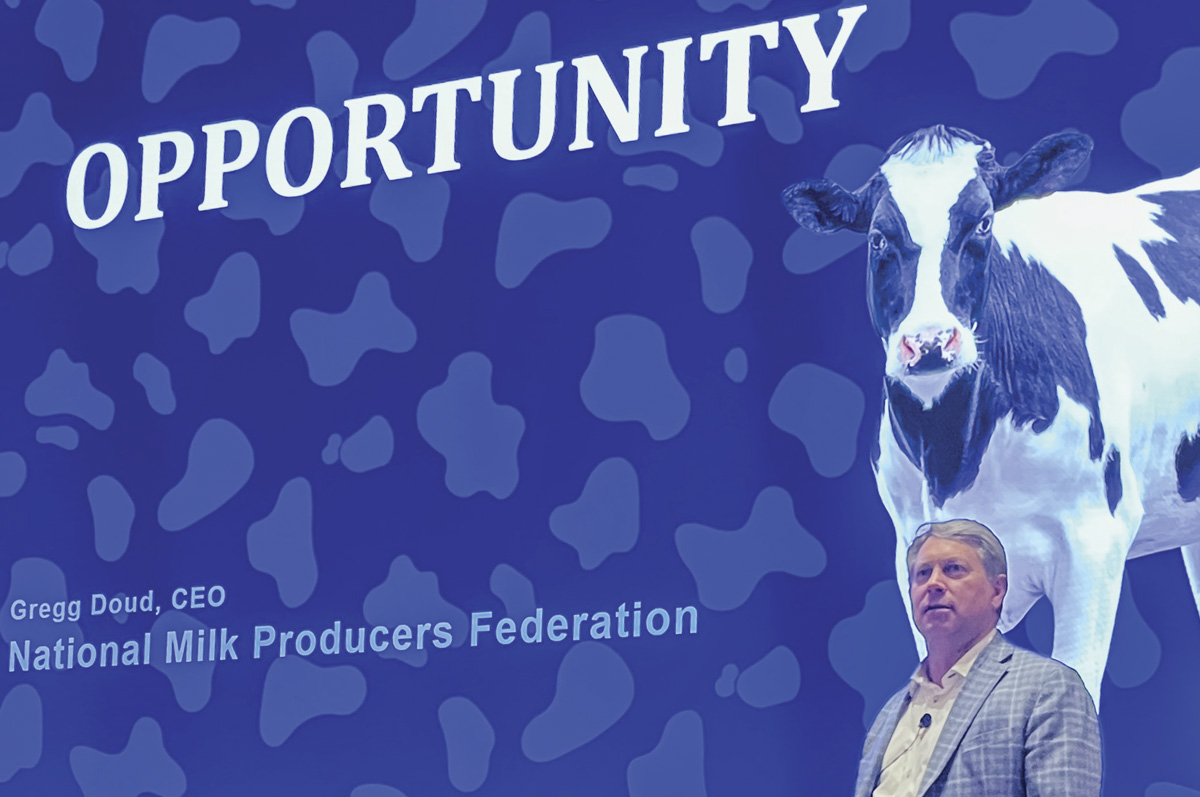
Gregg Doud, president and CEO of National Milk Producers Federation, shared policy and economic updates. Image by Kimmi Devaney.
Amid real-time tariff updates on the day of his presentation, Doud shared his thoughts on various dairy policy topics. While he said he is not optimistic that a farm bill will be completed this year, he is encouraged by the bipartisan support for the bill to get whole milk back into schools.
From an economics standpoint, he encouraged dairy producers to focus on their margin.
“I think you’re still in really good shape in terms of your margin if you watch what you are doing on the inputs side of the equation. But we’re talking about making money on the farm, and we have to keep in mind there’s a couple other ways to do that other than the milk … the dairy industry is at the tip of the spear on this stuff, figuring out how to generate revenue off the farm other than the commodity you are producing,” Doud said.
Beef-on-dairy is another key part of this conversation.
“As a beef guy, we can’t make enough beef calves. We have a supply problem in beef, not a demand problem,” he said. “As a partner in a cow-calf operation in Kansas, we would love to expand. We can’t. We don’t have the rain to make the grass; ponds are weak right now. You’ve got a good runway here on the beef side going forward.”
The next Western Dairy Management Conference will be held April 6-8, 2027, in Reno, Nevada.
A tribute to Dennis Vern Armstrong (July 1, 1935 – Feb. 1, 2024)
Bob Collier for Progressive Dairy
Dennis Vern Armstrong, one of the greatest dairy extension faculty of the 20th century, was born in Big Springs, Nebraska, on July 1, 1935. After graduating high school, he attended Colorado State University (CSU) and graduated with a Bachelor of Science in animal science in 1957.
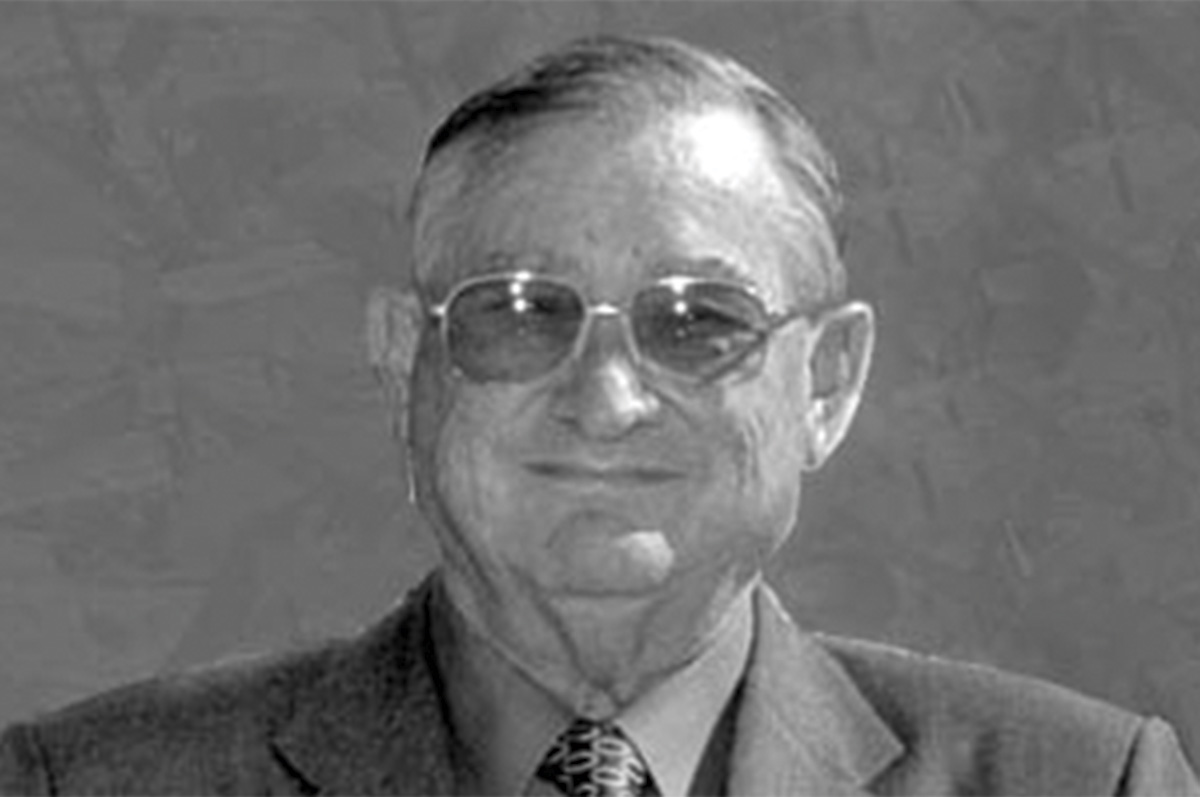
Dennis Vern Armstrong. Courtesy image.
He then took a job as assistant herdsman at Adohr Milk Farm, Camarillo, California (2,600-cow dairy) from 1957-59. He then returned to CSU from 1959-60 when he served as herdsman of the dairy in Fort Collins. He then decided to pursue a Master of Science degree, and from 1960-72 he served as dairy farm manager and instructor in the dairy science department at Michigan State University and also earned his Master of Science in dairy science in 1964. During this period, he became very involved in all aspects of milking parlor performance and published several papers on efficiency of various milking parlor designs. In 1972, he and his family moved to Tucson, Arizona, to manage the Shamrock Dairy. In 1973, he was hired as an extension dairy specialist and research scientist with the department of animal sciences, University of Arizona, Tucson, Arizona.
Dennis began his work at the University of Arizona on milking equipment, parlor layout and parlor efficiency. These studies were pivotal in working out designs for milking systems in large dairies because the Arizona dairy industry was expanding in both herd size and cow numbers. Dennis then began collaborating on developing housing and cooling systems for dairy cattle in the desert Southwest. He was instrumental in the development of the Saudi barn design and also the implementation of Korral Kool coolers for semi-arid environments. The work on parlor efficiency and housing design led Dennis to getting involved in overall dairy design and, in 1990, Dennis teamed up with Jake Martin to form a dairy design team. From 1990 until his death in 2024, Dennis and Jake traveled to over 30 countries and, by Jake’s estimation, assisted in the design of close to 100 dairies. Dennis did not stop his work on evaluating cooling strategies with the Korral Kool system. He went on to test sprinkler systems with and without fans, tunnel- and cross-ventilated barns, and oscillating fan systems with and without water injection as well as different barn and milking parlor designs. All of these approaches are in use on different dairies in the Southwest. Additionally, he maintained his interest in milking parlor efficiency and design. He collaborated or consulted with dairy producers, engineers, animal scientists and veterinarians all over the world to improve dairy production systems.
In summary, Dennis Armstrong was not an inventor or an engineer, but he was a master at translating science into practical solutions for on-farm problems. He not only impacted the dairy industry of the Southwest, but through his collaborations, had worldwide impacts on dairy systems in a host of different environments. He was highly respected by the dairy industry for his untiring efforts to improve dairy design, cow comfort and management.