The decision to invest in a new automated milking barn represents a significant step toward modernizing your operation. With it comes the opportunity for enhanced efficiency, improved cow welfare and higher revenues. The success of a project hinges on meticulous planning that considers the intricate interplay among numerous factors.

Essential considerations for the milking area of a new automated milking barn are emphasizing the critical balance of cow numbers, layout, environmental controls and overall management strategies. Key recommendations include determining optimal pen size, selecting a cow flow strategy that aligns with your management goals, maximizing ventilation and lighting to ensure cow comfort and productivity, manure management options and establishing standard operating procedures (SOPs) that align with automated milking.
The shift toward automated milking in modern dairy farming
The dairy industry is experiencing a significant and accelerated shift toward automated milking systems as producers recognize their potential to enhance operational efficiency.
The transition from traditional milking parlors to automated systems signifies a fundamental change in dairy farming, necessitating a shift in mindset and management strategies. This is not just about implementing robots; it involves a comprehensive rethinking of the entire dairy operation to effectively support voluntary milking and leveraging the wealth of data these advanced systems provide. Dairy managers must evolve into “robot farmers,” learning to interpret the information generated by the robots and adapting their management practices based on observed cow and system performance.
To build or not to build?
The decision of whether to build a new barn or retrofit an existing facility is an opportunity to assess your current facilities to determine their sustainability. The successful integration of automated milking is not merely a matter of installing machinery; it demands careful planning and a deliberate approach that considers all facets of the dairy operation, including management practices, cow behavior and the design of the facilities. The success of an automated milking system requires a collaborative effort involving a multidisciplinary team of experts from the outset, ensuring that all aspects of the project are carefully considered and potential challenges are proactively addressed. Engaging these experts early in the process is crucial for making informed decisions and avoiding potential pitfalls. This team should include:
- Local dealers and their support teams: Their expertise is invaluable for selecting the most appropriate layout and design for your herd size and management goals, as well as providing guidance on installation requirements. These people are directly invested in your success.
- Experienced dairy barn builders: Choose builders with a proven track record in constructing automated milking facilities. They can provide insights into cost-effective building solutions, ensure structural integrity and work closely with equipment suppliers to integrate the automated system seamlessly into the barn design.
- Nutritionists: A nutritionist with experience in automated milking systems is essential for developing feeding strategies that complement voluntary milking, including formulating partial mixed rations (PMRs) and determining the appropriate type and amount of concentrate feed to be dispensed by the robot. Also, it is important to understand the differences between cow management styles and the proper placement of nutrients (bunk versus robot). Success in one style does not automatically transfer to another. The advice of the dealer’s sales and farm management support team can also be valuable here.
- Veterinarians: Consulting with your veterinarian early in the planning process will help to address cow health and welfare considerations specific to automated milking, such as strategies for lameness prevention, mastitis management and overall herd health monitoring.
- Agricultural engineers or dairy barn design consultants: These professionals can provide expertise in optimizing the overall barn layout, ensuring efficient cow flow, designing effective ventilation and lighting systems, and maximizing labor efficiency within the automated milking environment.
You should also consider visiting other dairy farms. Taking the time to visit existing automated milking farms, both new builds and retrofits, allows you to learn firsthand from other producers' experiences, observe different layouts and management practices, and gain valuable practical insights.
Milking area layout and design
The layout and design of the milking area in a new automated milking barn are critical to the system's overall success. The design should prioritize voluntary milking by making the robot easily accessible and attractive to cows, while simultaneously balancing animal needs with the efficient utilization of the facility. Careful consideration must also be given to establishing smooth and low-stress cow traffic flow to and from the milking units.
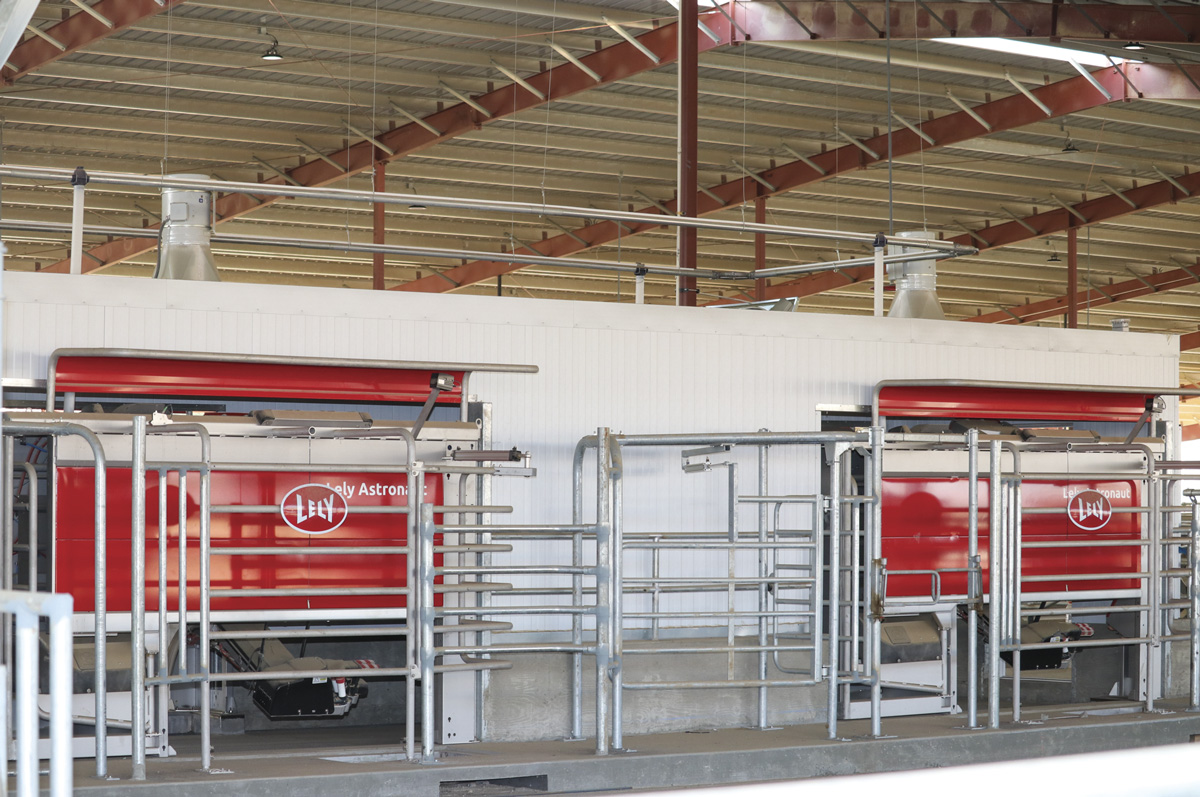
The design should prioritize voluntary milking by making the robot easily accessible and attractive to cows. Image courtesy of Lely.
Cow flow strategies
The selection of an appropriate cow flow strategy is a foundational decision that will significantly impact the entire barn layout and the daily management routines of the automated milking system. There are three primary cow flow strategies commonly employed in automated milking barns: free flow, guided flow and hybrid flow.
- Free flow: In a free-flow system, cows have unrestricted access to all essential resources within the barn, including the automated milking unit, feed and stalls. This strategy typically involves an open layout with minimal barriers or gates controlling cow movement. The primary advantages of free flow include a lower initial cost – due to the need for fewer gates – and increased freedom for the cows, which can lead to more natural behavior and provides the opportunity to maximize their production potential. Due to the relative ease of implementation, free flow is often the preferred strategy. Research shows that herds utilizing free-cow traffic systems gain an additional 2 pounds of milk per cow per day when compared to a guided-cow traffic design.
- Guided flow: Guided-flow systems employ selection gates to direct cow traffic toward the automated milking unit based on predetermined milking intervals. These systems can be further categorized as milk-first, where cows are guided to the robot before accessing feed, or feed-first, where cows access feed before being directed to the robot. However, because guided flow can potentially restrict access to feed, it may lead to issues like ruminal acidosis. Conversely, when guided flow restricts availability to a milking robot, it can cause long wait times similar to the holding area in a conventional parlor or batch milking system.
- Hybrid flow: Hybrid-flow strategies represent a combination of free flow and guided flow principles. These systems often feature an open cross alley that allows cows unrestricted access to fresh feed, like the free-flow design. They also incorporate sorting devices that direct cows to a milking robot when the cow has reached her individual milking permission. Hybrid flow seeks balance by providing freedom of movement for feeding with the efficiency of directing cows toward a robot at regular intervals. Hybrid flow is becoming increasingly popular in large-herd barn designs.
Key recommendations for a successful barn project
Planning a new or retrofit automated milking barn requires a meticulous approach. Designing the milking area with cow comfort as a central principle ensures easy access, sufficient space and a calm environment. Additionally, building future flexibility into the barn accommodates potential herd growth and the integration of emerging technologies. Carefully weighing the pros and cons of a new build versus retrofit by conducting a thorough assessment of your current facilities helps plan for long-term efficiency and sustainability.
Engaging a multidisciplinary team of experienced professionals, including automated milking system dealers, barn builders, nutritionists, veterinarians and agricultural engineers, is crucial for the success of your project. Visiting other successful automated milking farms can provide you with unique and practical insight to assist your decision-making process.
By taking a comprehensive and strategic approach, you can maximize the potential of automated milking to enhance the efficiency, sustainability and profitability of your dairy operation.