It’s probably safe to assume that, at some point, you’ve heard about carbon credits. After all, carbon credits have been utilized by various industries globally for decades as part of efforts to combat climate change. Now, why am I bringing this up in the context of animal agriculture? But more importantly, what do cows have to do with carbon credits? Let me explain.

Cows, methane and carbon
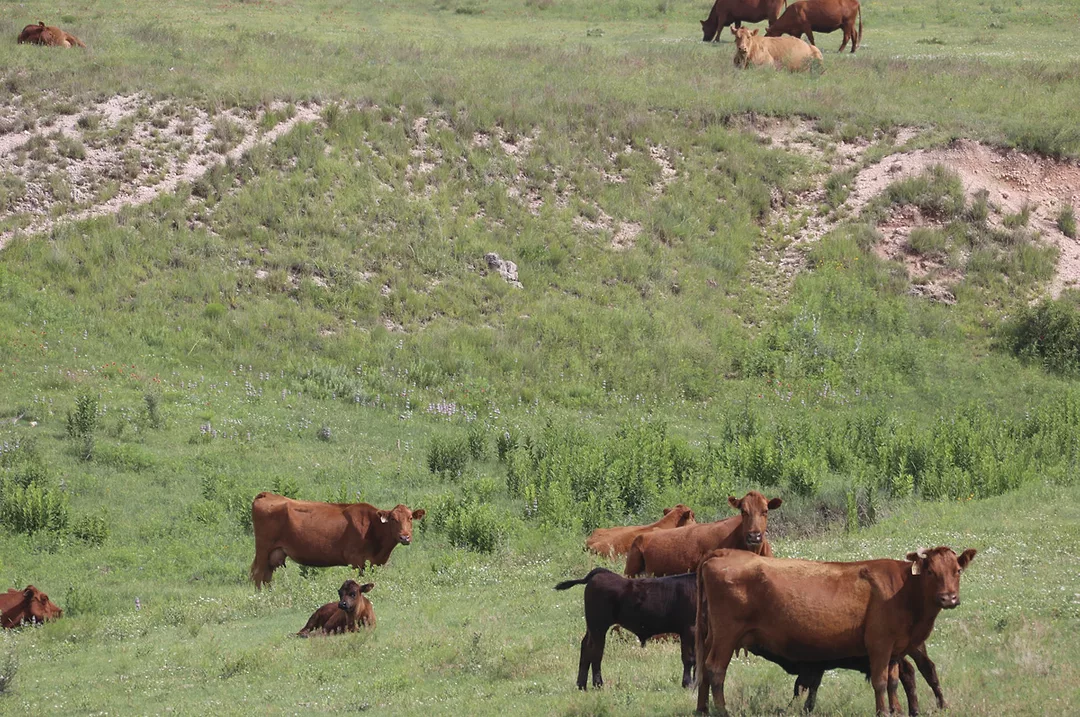
Cows naturally produce methane – a potent greenhouse gas – as a byproduct of their digestive processes. Specifically, during digestion, microbes in the cow’s rumen break down feed, releasing methane, known as enteric emissions. Although methane stays in the atmosphere for a shorter period than carbon dioxide, it’s significantly more efficient at trapping heat, thus contributing substantially to global warming. As a result, reducing livestock methane emissions has become a major focus of sustainability initiatives.
What exactly is a carbon credit?
In simple terms, a carbon credit represents a verified reduction or removal of 1 metric ton of carbon dioxide equivalent (CO2e) from the atmosphere. Many types of carbon credits exist, with tree planting being one of the most familiar. However, in the cattle industry, carbon credits are generated through slightly different approaches. These include practices that reduce greenhouse gas emissions or enhance carbon capture, such as improved grazing management or dietary changes to reduce methane emissions. Organizations and businesses buy these credits to offset their emissions, supporting global efforts to mitigate climate change.
But why is this relevant at the ranch level? It comes down to the different emission scopes from businesses.
Scopes of emissions and why your ranch matters
Emissions are classified into three scopes:
- Scope 1: Direct emissions from sources owned or controlled by an organization (e.g., your tractor emissions or methane from your cattle).
- Scope 2: Indirect emissions from purchased electricity, steam, heating and cooling.
- Scope 3: Indirect emissions not directly controlled by an organization but associated with its activities (e.g., emissions from your feed suppliers or ranches within a food company’s supply chain).
A key to remember is that everyone’s Scope 1 emissions are someone else’s Scope 3 emissions, because we all sell what we produce to someone else. Here’s why your ranch matters: Your operation plays a critical role in addressing Scope 3 emissions of food corporations. For many agricultural and food sector companies, Scope 3 emissions represent over 70% of their total emissions. Thus, cattle producers adopting practices that lower methane emissions or enhance carbon sequestration become highly valuable partners in global climate strategies.
How can you benefit and get involved in carbon markets?
If sustainability is done correctly (with the economic viability of the ranch at the forefront), it will also drive profitability. Participating in carbon markets offers financial incentives for cattle producers. With the carbon market projected to grow significantly – from $534 million in 2024 to over $2.34 billion by 2034 – there’s substantial opportunity for producers to benefit financially. By implementing practices such as improved grazing management, using feed additives to reduce methane emissions or enhancing manure management techniques, ranchers can generate carbon credits while improving the profitability of their operations through these same practices. These credits can then be sold to businesses looking to offset their greenhouse gas emissions, creating an additional revenue stream for the ranch.
Getting involved typically includes a few steps:
- Assessing baseline emissions: Understanding your ranch’s current emissions profile
- Adopting verified practices: Implementing scientifically validated strategies for emissions reductions
- Verification and certification: Working with third-party verifiers to certify emission reductions or sequestration efforts
- Selling credits: Partnering with carbon market platforms or brokers to sell certified credits.
While this process may sound complicated, many organizations in the cattle industry are already working to simplify it and support producers. Integrating these practices not only contributes to global sustainability efforts but also strengthens your operation’s economic resilience, positioning your ranch as a leader in the industry.
The influence of politics on carbon markets
“What about politics?” is one of the most frequent questions I receive, and understandably so. Politics and an administration’s position on these matters can certainly influence markets, the development of credit and progress. However, given the long-term perspective and the fact that we operate in a truly global economy, the carbon market is expected to continue to grow and evolve regardless of political fluctuations. Six thousand companies worldwide have committed to emission reductions or net zero goals, and accessing key markets such as Europe or California means adhering to these commitments. Moreover, if these sustainability practices and interventions pay for themselves in real time – through improved animal health and performance, soil fertility, forage quality or other quantifiable metrics – producers should seize these opportunities to mitigate the risks associated with the transition to decarbonization.
A few final thoughts
Carbon markets are here to stay. With growing consumer awareness about climate issues and corporate commitments increasing, private investments in carbon reduction goals will only expand. Does this present a risk or an opportunity for you as a cattle producer? My answer is always that I think the greater risk lies in not engaging. The demand for carbon offsets will keep increasing, and carbon credits represent an innovative tool to generate additional revenue for your operation. Even though adopting new practices raises a lot of questions, I encourage you to remain curious and proactive. This is part of the future, and you have an opportunity to be a key player in it.