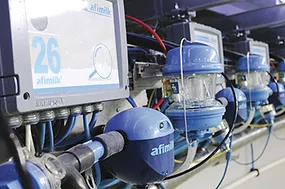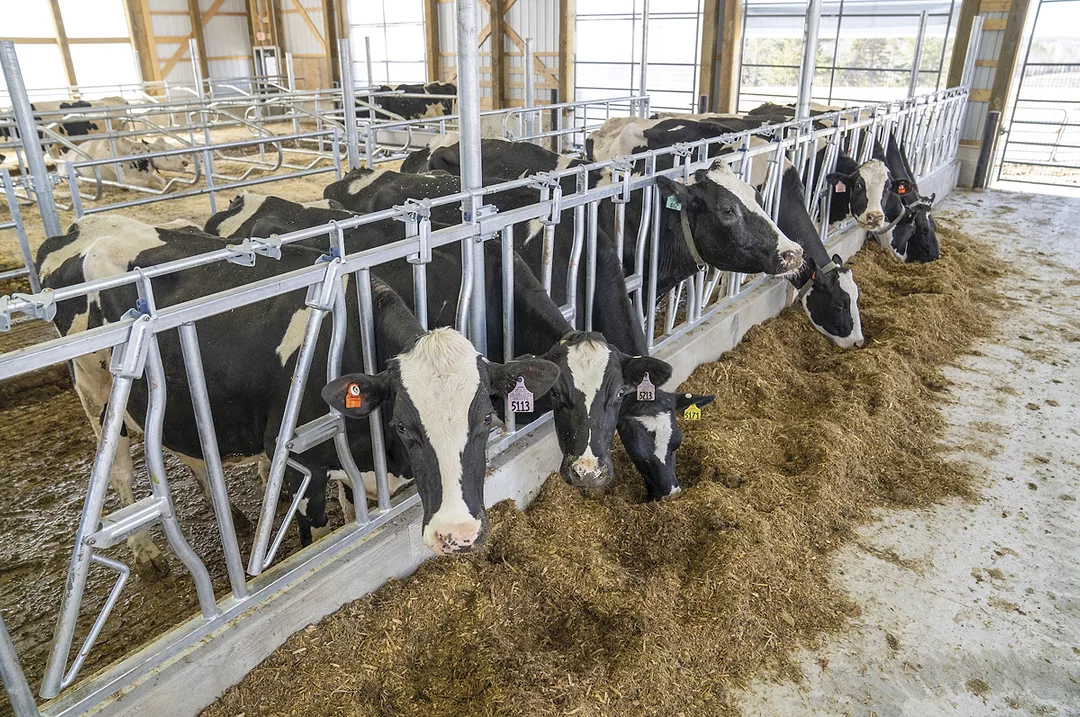
Replacing labor-intensive tasks with technology was one of the goals when building a new three-row freestall barn with 50 stalls to replace the older tiestall barn at the University of Maine’s Witter Farm in Old Town. The new barn features one DeLaval VMS Series V300 robot for the 61-cow herd (30 lactating as of May 2025) as well as automatic ventilation. The sidewall curtains and fans will operate based on air temperature and humidity to further improve cow comfort. While the robot regularly milks all lactating cows, farm staff have the option to milk sick and fresh cows individually, as needed.

“The University of Maine; the College of Earth, Life and Health Sciences (ELH); and the Maine Agricultural and Forest Experiment Station (MAFES) decided to push the investments toward new technology that is allowing our students to broaden their education and research opportunities,” says Diane Rowland, dean of ELH and director of MAFES.
Patricia Henderson, superintendent of Witter Farm, adds, “Freestalls are what is most commonly used in the industry and what was going to be the most functional option for our farm.”
Students and other employees at Witter Farm can now focus on cow health and performance in a new way, instead of prioritizing milking shifts every day.
“We can take a step back and use this data to make better management decisions for the cows and improve our genetics for high productivity,” Henderson says. “The barn is so much more efficient with the automation of ventilation, and our typical milking shift times are freed up for us to focus on improving our forages, fields and other things that often get set to the side in dairy farming.”
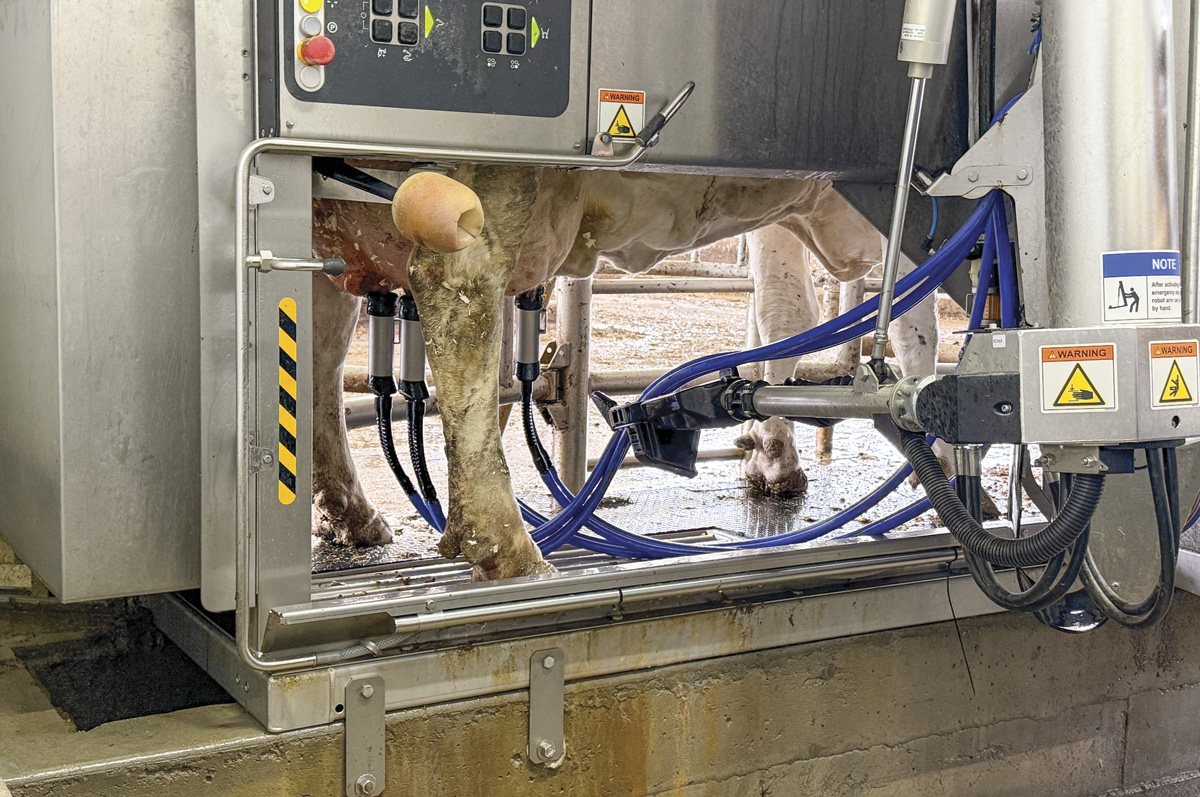
The new barn features one DeLaval VMS Series V300 robot. Since students working at the dairy will no longer be tied to a set milking schedule, it frees up their time to learn how technology can be used in the dairy industry. Image by Lee Hecker.
Research and teaching opportunities
With the new technology, researchers will be able to collect real-time daily data instead of waiting for the milk tester to come once a month or doing the milk sample collections themselves. Henderson says they can use the data to make better management decisions for the cows and improve genetics, and that there was “a lot of consideration” that went into how to accommodate research needs for different feed trials.
“We wanted this barn to be free flow, rather than guided flow, to the robot, which helped minimize the actual footprint of the barn,” she says. “We only had so much usable space to build the new facility, and the footprint needed to remain fairly small. We compromised on the square footage of space around the robot itself to make it all work. We worked with an ag engineering company from Texas that had helped design several other robot dairy barn facilities for universities across the country, and we felt confident in the recommendations they gave us. It was truly a group effort, with a lot of time and consideration put into the overall design of the barn.”
Since student workers and other employees are no longer tied to a 4 a.m. and 4 p.m. milking schedule, it frees up their time to learn how technology can be used in the dairy industry. Students in the animal and veterinary science program taking classes at the Witter Center or any student doing research can also use the data from the robot.
“Students will be able to take the data from the robot, study it and then apply it by physically going into the barn, looking at individual cows and understanding what’s happening that is causing abnormalities in the data. That could be metabolic concerns, mastitis or something else. The students get to walk through the process from the computer screen to the cow,” Henderson says. “Aside from the technology piece of it, students still get hands-on experience as part of the UMaine Applied Dairy Cooperative of Organized Working Students by pushing cows through the robot, cleaning their stalls and feeding them.”
Response from Maine’s dairy community
Henderson says the local dairy community has been “so supportive and impressed.”
“They are happy to see UMaine’s investment and are looking forward to having usable research that they can apply to their own farms,” she says. “Our new dairy barn has many applications for Maine’s dairy industry, both in developing the workforce and addressing industry challenges. Robotic milking not only frees up staff time and is more comfortable for the cows, but it also records data that can help farmers understand the impact it could have on their own farms. It is an opportunity for farmers who have considered moving to robotic milking systems to understand how these systems work before making the investment.”
Construction timeline
They began discussing renovations to the outdated tiestall facility in September 2021, before eventually deciding to build a new facility. The timeline for completion changed multiple times due to adjustments to the overall plans and waiting on renderings and designs from the engineers. Construction began in May 2023 and finished in June 2025. An official ribbon-cutting was held in April 2025.
“We learned that patience is the most important thing when it comes to construction of a new facility, because it all has to be done from scratch. From when we first decided it was time to make the investment and build a new facility, it took three-and-a-half years to actually move the cows into the new barn. It felt like a lifetime, but there were many versions of the barn designed in this time frame before we landed on a final design that was most efficient for us,” Henderson says.
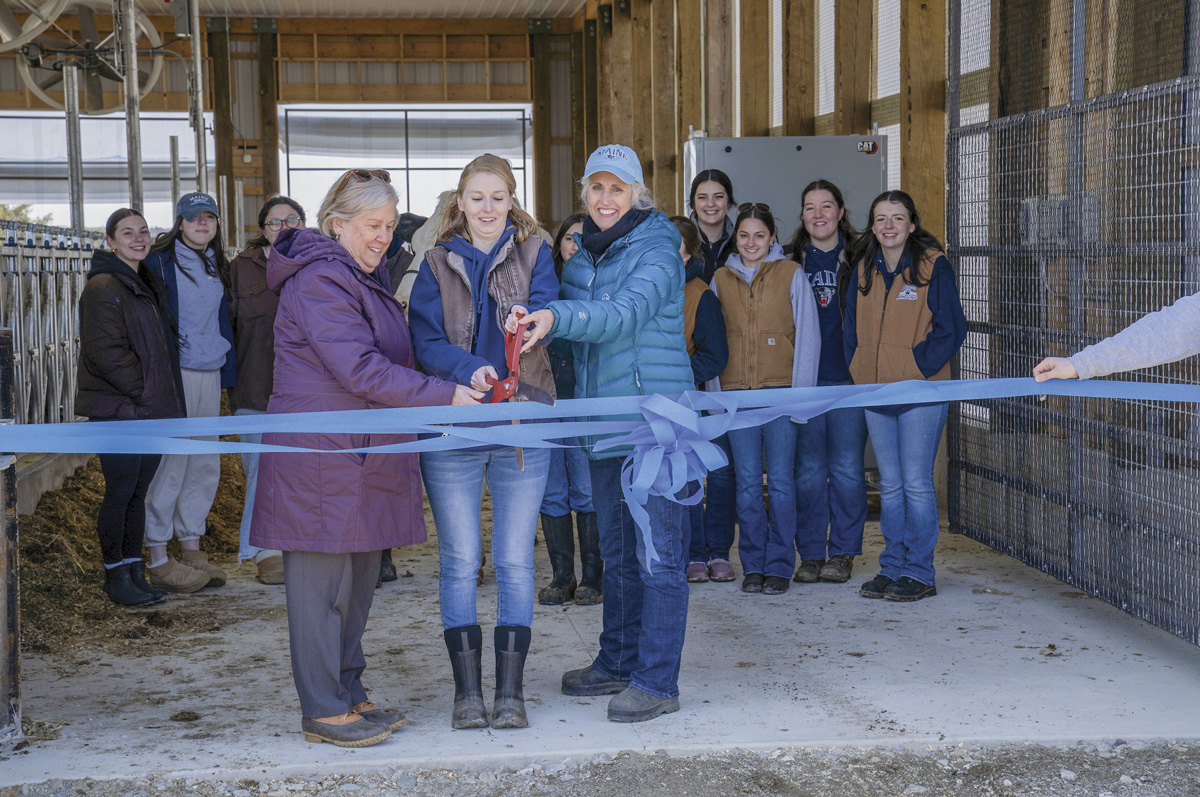
An official ribbon-cutting was held in April 2025. Image by Ron Linset.
Other modernization updates to the Witter Center
While this upgrade was solely focused on the dairy barn for lactating cows, they are also working to modernize other areas of the Witter Center, including improvements to heating efficiency at the farmhouse, building new staff offices and student workspaces, and testing novel research equipment, such as the sensors that evaluate gait as part of the equine research program.
Dean Rowland is looking forward to the facility allowing faculty to expand their research while also encouraging new opportunities for use across campus. In the meantime, everyone – including the cows – is enjoying the new barn.
“The robot barn is the best thing we ever did for our cows!” she says. “It’s truly amazing how much milk production can improve when you let cows choose when they get milked. The cows love the consistency of the robot and that it does it the exact same way every single time. It is truly amazing to see how well the cows thrive when they get to choose rather than us choosing for them.”