Today’s commercial hay operations are navigating a complex landscape. Narrow harvest windows, rising input costs and persistent labor shortages make it harder than ever to keep pace with demand. For commercial producers relying on small square bales, the challenge is not just to work harder – but to work smarter.

That’s where double small square baler technology comes into play. While the concept has been around for some time, it has been gaining attention from leading original equipment manufacturers (OEM) for its ability to double output with fewer field passes and half the operator input. By streamlining bale production and enhancing consistency, these systems offer a practical, scalable solution. This article examines the measurable efficiency gains offered by double balers, the types of operations that benefit most from this technology and how thoughtful investments can improve margins and return on investment.
Born from real-world challenges
Modern hay producers face a growing list of obstacles. Time is limited, harvest windows are short, and weather patterns remain unpredictable. For large commercial operations, the pressures are amplified by labor shortages, increasing wage demands and the difficulty of retaining skilled operators.
Some producers have run two balers in tandem or modified equipment to increase capacity. While these workarounds offer improved capacity, they often add complexity, require more maintenance and need specialized skills. Ultimately, the need for a simpler, scalable solution became clear.
The answer came in the form of the double baler – a purpose-built machine designed to increase output, simplify operation and reduce labor reliance. Rather than improvising with modified equipment, producers now have access to a system engineered for high-efficiency haymaking in demanding environments.
A more efficient solution
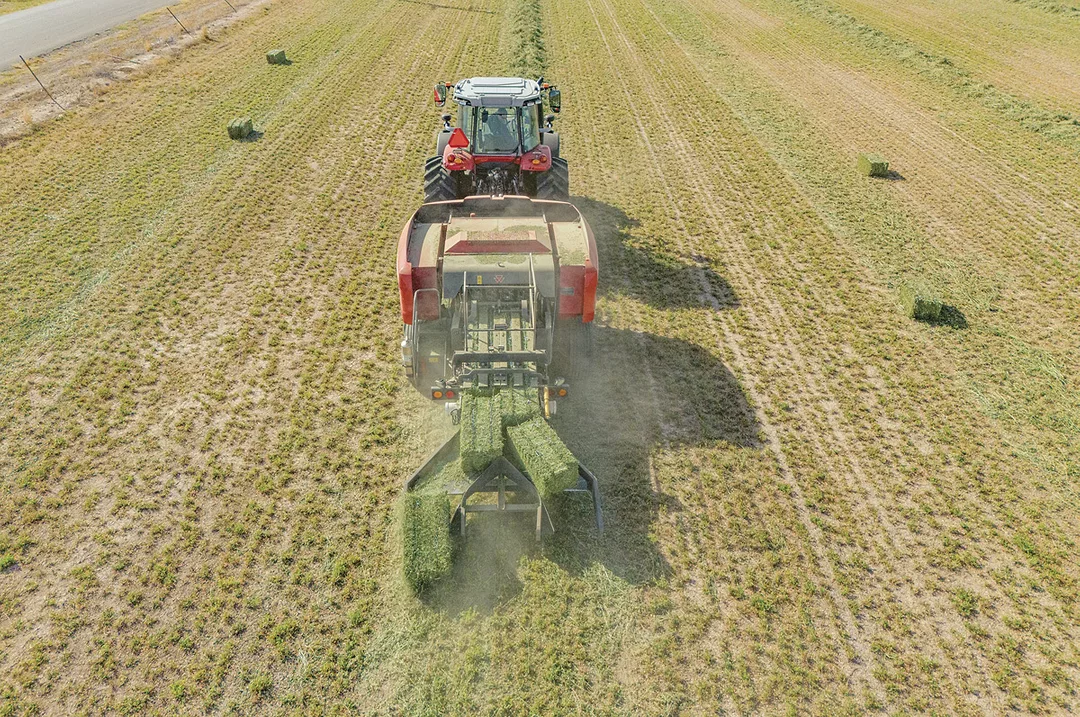
Double balers achieve their productivity gains by producing two 14-by-18-inch bales simultaneously – effectively doubling throughput with each pass, without requiring additional crews or equipment. This allows high-acreage operations to reduce baling time by nearly half. For example, a producer managing 500 acres who previously needed 10 days and two crews might now complete the same job in just five days with one crew – dramatically lowering labor costs and fuel consumption.
Beyond labor savings, the reduced number of field passes minimizes fuel use, mechanical wear and soil compaction. And because these systems are designed for simplicity, less experienced operators can achieve consistent results – helping offset labor shortages and reducing training time.
These gains extend to forage quality, too. Baling fields faster allows operators to capitalize on ideal harvest conditions, from catching early morning dew to finishing ahead of a storm. That improved timing preserves the nutritional value and appearance of each bale, both key factors for pricing power in premium markets.
Altogether, the impact on return on investment (ROI) is significant. Higher output, reduced operational delays and better bale quality combine to accelerate payback – often within just a few seasons. For producers seeking to balance performance and profitability, double balers offer a compelling, scalable solution.
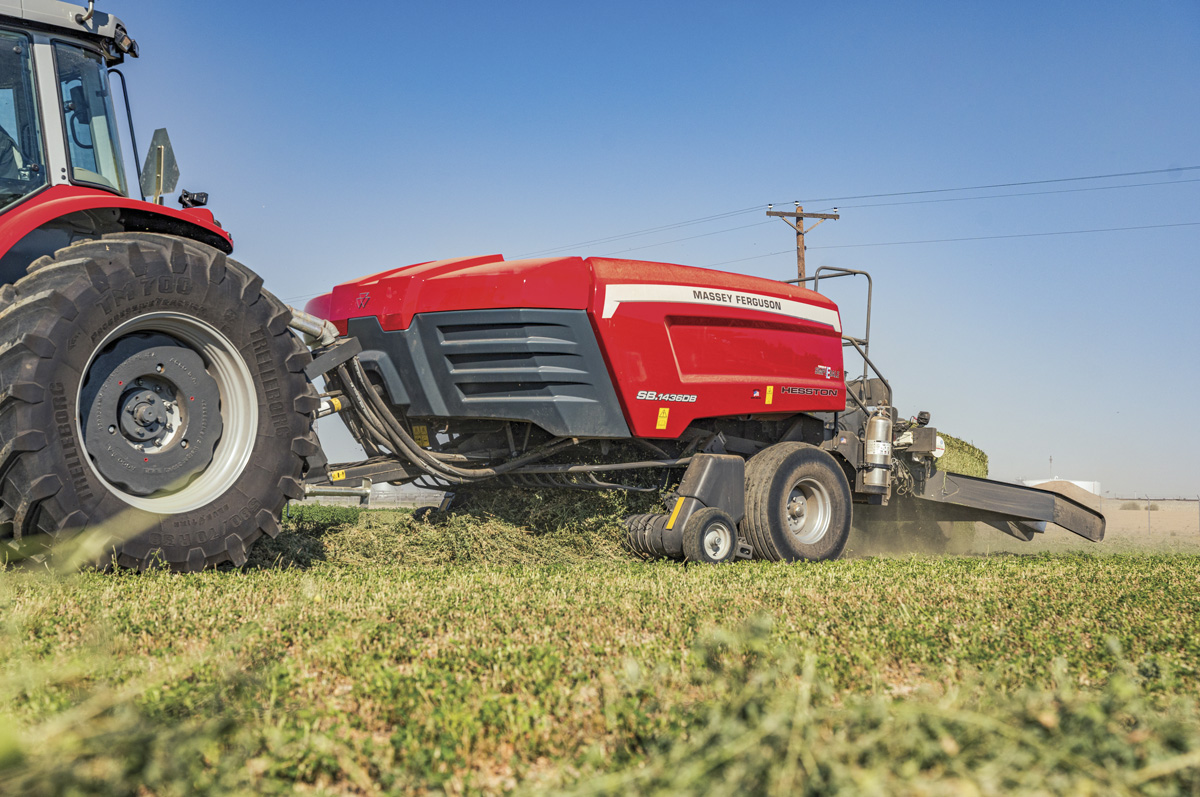
Independent knotter systems tie each bale based on individual bale lengths, allowing for more precise bale formation. Image courtesy of Massey Ferguson.
What to look for in a double baler
To get the most out of a double baler investment, producers must consider how well the machine matches their unique operation. Factors like workflow integration, bale-handling systems, chamber design, technology features and long-term serviceability all contribute to overall return on investment.
For operations using bundlers or accumulators, compatibility with existing equipment is essential. A baler that offers flexible drop options can streamline bale collection and protect productivity from field to storage.
Design matters too. While some models use dual chambers with individual plungers, others feature a single 36-inch-wide chamber with one plunger that slices the crop into two distinct bales using a splitting knife. This configuration simplifies the overall mechanism, reducing the number of moving parts and minimizing opportunities for wear and failure. A single plunger design also supports more synchronized bale formation and better long-term durability – especially important in high-output operations where uptime is paramount.
Technology features further enhance performance by delivering consistency and control. Real-time monitoring systems provide in-cab visibility and adjustments in bale metrics such as flake count, weight and density. This level of precision helps operators maintain target specifications and reduce variability, even as field conditions change. Systems with adaptive feedback loops can prompt real-time adjustments, keeping the baling process on track with less guesswork. For operations with high expectations around bale quality and consistency, these tools support better results with less reliance on operator expertise.
Another advanced feature to consider is an independent knotter system. Unlike synchronized tying mechanisms, these systems tie each bale based on individual bale lengths. This allows for more precise bale formation, especially in fields with inconsistent windrows or variable crop flow. The result is improved bale uniformity and greater consistency from bale to bale – key for meeting the expectations of premium markets.
Pickup width is another critical factor. By helping the baler stay full and maintaining consistent crop flow into the chamber, they support uniform bale formation and maximize throughput. This capability is particularly important in heavy windrows like early-season hay, where throughput and capacity are often limiting factors during baling. The ability to work faster with more efficiency enables operators to capitalize on narrow harvest windows and make the most of ideal baling conditions. As many hay producers say, they live and die by the dew – having a machine that can take full advantage of those early evening and early morning hours can mean the difference between completing a field in one day or waiting for the next favorable weather window. That kind of efficiency not only protects forage quality but also reduces operational costs and minimizes scheduling disruptions.
Efficiency-focused features like high-capacity twine storage and auto-lubrication systems extend operating time and reduce service interruptions. Machines designed for ease of maintenance help operators spend more time baling with less downtime.
When capacity, smart design, automation and serviceability align, the result is more than increased output – it’s a system that supports consistent quality and better economics for hay operations of scale.
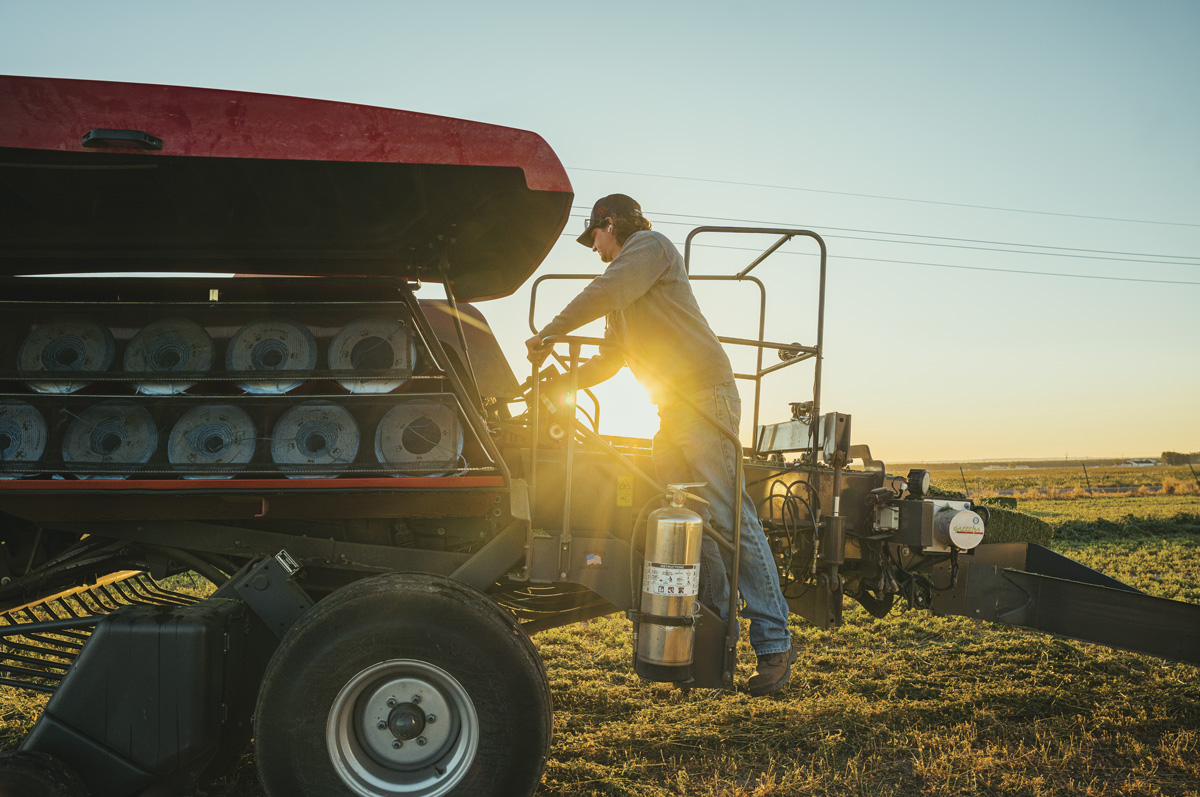
Equipped with precision tying and advanced monitoring systems, double balers help ensure that every bale meets tight specifications regardless of field or crop variability. Image courtesy of Massey Ferguson.
Precision that pays off
In high-volume operations supplying premium hay markets – such as equine facilities, export channels and specialized feed programs – bale consistency is not just a preference; it’s a requirement. Customers in these segments expect uniform, high-quality bales in every load, and fulfilling that expectation is critical for building long-term relationships and maintaining pricing power.
Options from leading OEM meet this challenge by delivering repeatable results. Equipped with precision tying and advanced monitoring systems, these machines help ensure that every bale meets tight specifications regardless of field or crop variability. For operations aiming to differentiate through quality and consistency, this capability turns a mechanical function into a market advantage.
What sets these advanced systems apart is their ability to combine mechanical performance with intelligent automation. In premium models from forward-thinking OEM, the hardware itself plays a major role – integrating high-precision sensors, ruggedized knotter assemblies and finely-tuned bale chamber mechanics to deliver consistent results under tough conditions. Paired with real-time software that monitors flake count, bale density and weight from the cab, these tools help operators maintain consistency across changing windrow thickness and forage types. Adjustable target settings and automated feedback loops enable real-time adjustments, reducing waste and ensuring each bale meets precise market expectations.
These features are especially beneficial for less experienced operators. By simplifying the decision-making process and automating key functions, advanced baling technology reduces the learning curve and ensures high-quality output regardless of who’s behind the wheel. The result is greater confidence in the field and fewer rejected loads at delivery.
Altogether, this automation doesn’t just save labor; it elevates the standard of the entire operation, turning consistency into a reliable profit driver. For many operations, the time saved, waste reduced and quality improved can make the investment in a double baler pencil out faster than expected.
Maximize return on investment with equipment that fits your operation
Double baler technology presents a compelling opportunity for hay producers to do more with less – less time, labor and field passes. In a production environment shaped by tight windows, rising costs and high buyer expectations, maximizing output without sacrificing quality is essential.
Return on investment depends on how well equipment fits the operation. Large-scale producers with high volumes and limited labor often see fast payback through lower costs, better uniformity and smoother workflow integration.
Success requires more than capacity alone. It takes alignment between equipment, process and goals. When those elements come together, double balers offer a scalable, cost-effective path to improved efficiency and profitability.