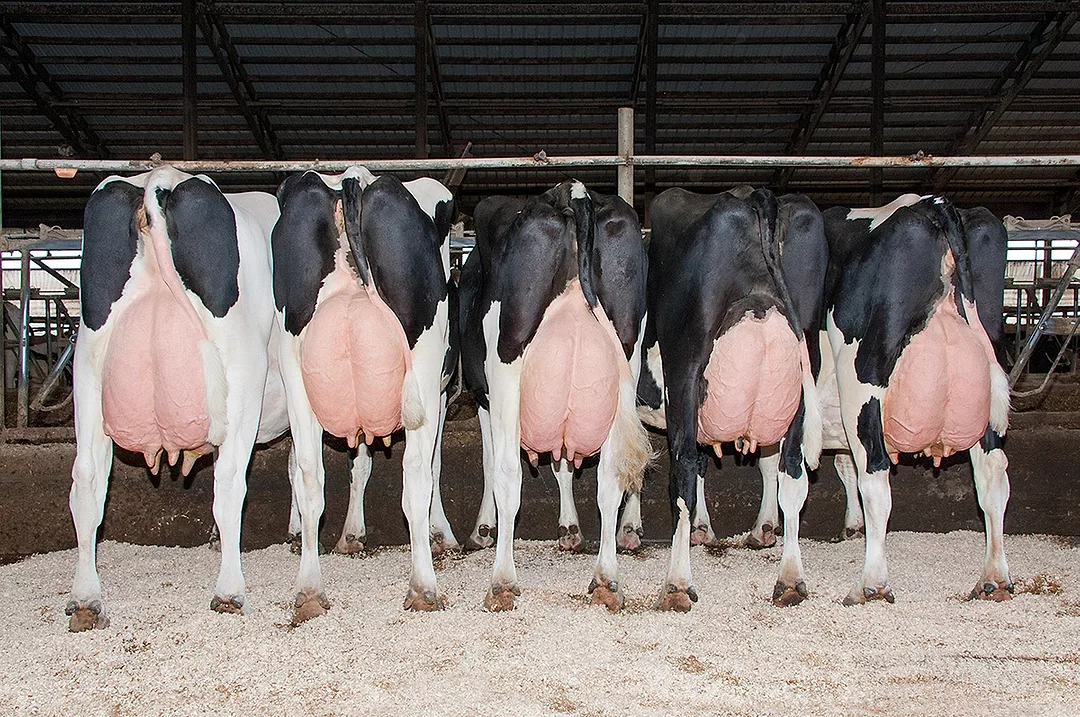
The launch of genomics in 2009 has reinforced the investment that concise genetic selection plays in today’s profitable herds. The race toward utilizing or owning the top-ranking sires and dams has never been stronger. Commercial producers now utilize seedstock producer strategies, both in terms of reproductive methods and genetic selection principles, to build their future dairy enterprises. The days of just making dairy replacement females as fast and furious as possible have taken a back seat to making just enough of the “right” replacement heifers to minimize rising raising costs and maintaining the proper heifer inventories for replacing milking cows that leave the herd.

So, is superior genetics the sole key to success? Not hardly. Management practices must be optimized to fully utilize the jet-powered engines that today’s elite genetic animals are born with to maximize their full genetic potential. Technology advancements available to today’s dairy operations have never been more sophisticated. Today, when I visit high-performance herds, I’m in awe of the knowledge dairy producers have about each individual cow, regardless of herd size. While human eyes watching cows in the barns are still helpful, the use of motion detection devices and simple phone applications, combined with artificial intelligence, simplifies all the complex details available to drive profitability and success.
A step back
The formula for genetic improvement was founded by Jay Lush in 1942 where generation interval, or younger animals, will have the best odds of carrying genes for the greatest success. To put it simply, under this guideline for genetic improvement, you should use high-ranking artificial insemination (A.I.) sires, milk as many young cows as possible, use today’s best herd management technology – and the money trees will grow at your dairy. Not so fast!
The buzz topics in the dairy industry today are feed efficiency, reduced methane production and the extreme prices beef-on-dairy calves are garnering as day-olds or at auction. This brings us full circle back to the purpose of this article. The day we forget about achieving peak milk production from every cow will be the same day that all this technology and fast-paced genetic improvement will not achieve the payback that is truly possible. Peak milk happens when cows hit their third and greater lactation. Thus, we should focus all our efforts as an industry on tools that will assist producers in getting the highest percentage of cows in their herds to at least a third calf, and hopefully more. Of course, selecting for fat and protein yield will continue to be the main driver of profitability, since that impacts our paycheck. However, udder health, reproductive performance, locomotion, overall cow and calf health, and adequate body size to consume large quantities of forage and compete in pen sizes of 400-plus cows must be in proper focus as well.
Looking forward
The purpose of a dairy cow is to consume feed sources that are nonedible by humans and create the most complete protein – milk – to feed humans. The North American heifer replacement population continues to decline, yet the global human population continues to rise. We need to maximize the milk-producing performance of the limited supply of heifers we have. Optimizing management practices is critical, and ensuring every cow makes it to a profitable age for peak milk production will not only cover the cost to raise her to a mature lactation age but also maximize her daily milk production.
The Council on Dairy Cattle Breeding, dairy breed associations, bull studs and genomic testing companies provide a plethora of tools to help you make that third-and-greater-lactation cow. Keep your eye on the target. Breed for high volumes of high-component milk to maximize profits. Work on reproductive principles that allow your cows to produce a calf annually, be it dairy or beef. Minimize the expensive health events that are a financial debt to your enterprise by utilizing health and mastitis resistance traits, choosing appropriate genetics to keep your cows from becoming lame, and don’t forget that healthy calves turn into profitable, healthy cows. Don’t cut corners and ignore calf health traits that genetically provide thrifty calves that do nothing but grow and then anxiously await their turn to someday lead the pack to the milk parlor.
As I hope you’ve noticed, it’s not just a herd of “old” cows that is always a profitable herd. It’s older, healthy, reproductively sound, high-producing cows that fertilize those money trees so your operation is successful for you and future generations of your family.